Iran rocked by violent protests over inflation as unrest spreads nationwide

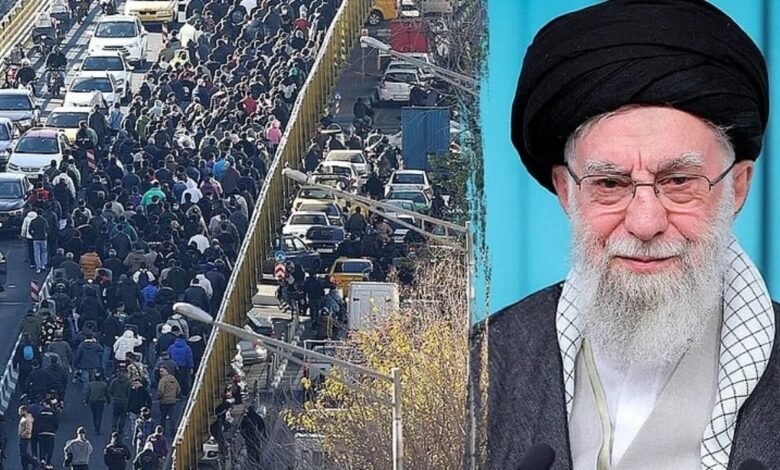
Iran has entered the new year of 2026 amid escalating nationwide protests against soaring inflation, rising prices and a deepening economic crisis, posing one of the most serious challenges to the country’s religious leadership in recent years. What began as scattered demonstrations over cost-of-living pressures has rapidly turned violent, with reports of deaths among protesters and security personnel.
For over a week, demonstrators have been openly raising slogans against Supreme Leader Ayatollah Ali Khamenei, reflecting growing public anger over economic mismanagement and the impact of Western sanctions. The protests, which initially erupted in Tehran, have now spread to several provincial and rural areas, indicating widespread discontent cutting across social and geographic lines.
Protests continued well into the night inside Iran, as seen here in 1. Isfahan 2. smashing down gates of a governmental building in Fars province and 3. the seizure and burning of a Basij headquarters in Asadabad, Hamadan last night. Most significantly however in 4. Baghmalek,… pic.twitter.com/OVCRfLXwbx
— Omid Djalili (@omid9) January 1, 2026


Iran’s economy remains under severe strain, with inflation officially recorded at 42.5 per cent in December 2025. The sharp decline of the national currency, combined with rising food and fuel prices, has pushed many families to the brink. Protesters have taken to the streets demanding relief, chanting slogans against authoritarian rule and calling for the removal of clerical leadership.
University students have emerged as a key force in the unrest, staging demonstrations in Tehran and other major cities. In a significant political signal, some student groups were heard chanting slogans in support of the former Shah, highlighting a growing nostalgia for pre-revolutionary Iran among sections of the younger generation. Slogans such as “Down with the mullahs” and “Kick out the dictator” have echoed through campuses and city centres.
The violence associated with the protests has intensified since the start of the new year. Initial reports indicate that at least seven people have been killed since the demonstrations began, with casualties reported among both protesters and security forces. Clashes have been recorded in several regions, including Lohdegan, Kuhdasht and Isfahan, as security personnel attempted to disperse crowds.
Iranian media linked to the Islamic Revolutionary Guard Corps, including the Fars News Agency, along with human rights group Hengaw, have reported deaths in the western city of Lohdegan. Authorities have also confirmed at least one fatality each in Kuhdasht and Isfahan provinces. As confrontations spread to new areas, tensions continue to rise across the country.
Adding to the political pressure, Reza Pahlavi, the exiled son of Iran’s last Shah, has publicly expressed support for the protesters from the United States. In a statement shared on social media, he said he stood with the Iranian people, describing their demands as just and legitimate. Pahlavi warned that Iran’s economic situation would continue to deteriorate as long as the current leadership remains in power, urging unity among protesters.
The ongoing unrest marks the largest wave of protests against inflation in Iran in the past three years. Analysts say the scale and intensity of the demonstrations reflect deep-rooted frustration, particularly among youth and urban populations, over shrinking economic opportunities and political repression.
Despite heavy deployment of security forces, protests have continued to flare up, underscoring the fragile state of public order. The developments have raised concerns within Iran’s ruling establishment, as sustained economic hardship and growing dissent threaten to further destabilise the country in the months ahead.