Congress faces internal storm over minority leader suspensions after Davanagere bypoll fallout

Bengaluru : A fresh wave of internal discord has erupted within the Indian National Congress in Karnataka following the Davanagere South by-election, with disciplinary action against minority leaders triggering sharp divisions and exposing widening factional fault lines in the party’s state leadership.
The controversy began after allegations surfaced that a section of Muslim leaders did not actively support the Congress candidate in the bypoll and were instead accused of working against the party’s interests. Acting on these complaints, the party suspended MLC Abdul Jabbar from primary membership and removed Naseer Ahmed from his position as Chief Minister’s political secretary.
The decisions have sparked strong resentment within sections of the minority community, with several leaders warning that the move could have long-term political consequences for the party. The issue has quickly escalated into a broader debate over internal democracy, representation, and handling of minority leadership within the state unit.
The developments have also placed senior minister Zameer Ahmed Khan under political spotlight, as voices within the party and community question the fairness and timing of the disciplinary action.

Amid the growing unrest, Minister Satish Jarkiholi has openly intervened, signalling support for the suspended leaders and urging a reconsideration of the party’s decision. His involvement has added a new dimension to the crisis, given his influence within the Congress ecosystem and his often independent political positioning.
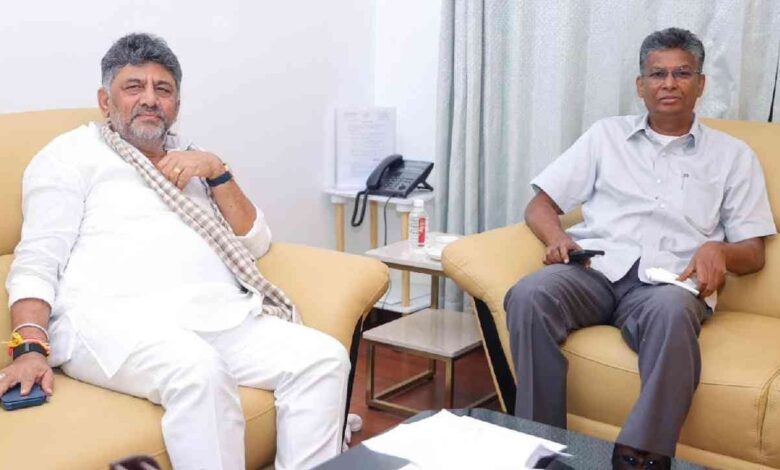
Jarkiholi recently met KPCC president D K Shivakumar, in a meeting that was officially described as routine but is now being widely interpreted as politically significant. Party insiders suggest that the discussion focused on growing dissatisfaction among minority leaders and the need to prevent further escalation of tensions.
“I have requested that the suspension of Abdul Jabbar be reviewed,” Jarkiholi reportedly said, adding that he would escalate the matter to the party high command if required. His remarks have intensified speculation about a possible rethink within the leadership.
The meeting is being closely watched within political circles, especially due to the known leadership competition between Jarkiholi and Shivakumar within the Karnataka Congress structure. While both leaders remain influential, they are often seen representing different power centres within the party.
Sources indicate that Jarkiholi cautioned that continued disciplinary action without broader consultation could alienate minority voters and damage the party’s prospects in future elections. He is believed to have pressed for internal reconciliation rather than punitive measures.
The issue also found resonance during recent cabinet discussions, where concerns were reportedly raised over the handling of the suspensions. Minister Priyank Kharge is said to have warned that the party risks losing trust among minority communities if corrective steps are not taken, while Jarkiholi described the decision as “politically premature and avoidable.”
The growing unrest highlights deeper organisational challenges within the Congress, where competing factions continue to influence decision-making and disciplinary actions. Analysts say the situation reflects a broader struggle for balance between leadership authority and coalition management within the party.
Jarkiholi has confirmed that he plans to travel to Delhi next week to meet the party high command and present his concerns directly. His move is expected to further intensify internal discussions at the national level.
As the controversy unfolds, the Congress leadership faces increasing pressure to either uphold its disciplinary action or initiate a reconciliation process to contain factional damage. The outcome is likely to have a significant impact on the party’s internal stability and minority outreach strategy in Karnataka.