Study Suggests Possible Transfer of Earth Life to Venus Clouds
New research presented at a major planetary science conference explores the possibility that microbial life detected in Venus clouds may have originated from Earth through interplanetary transfer mechanisms

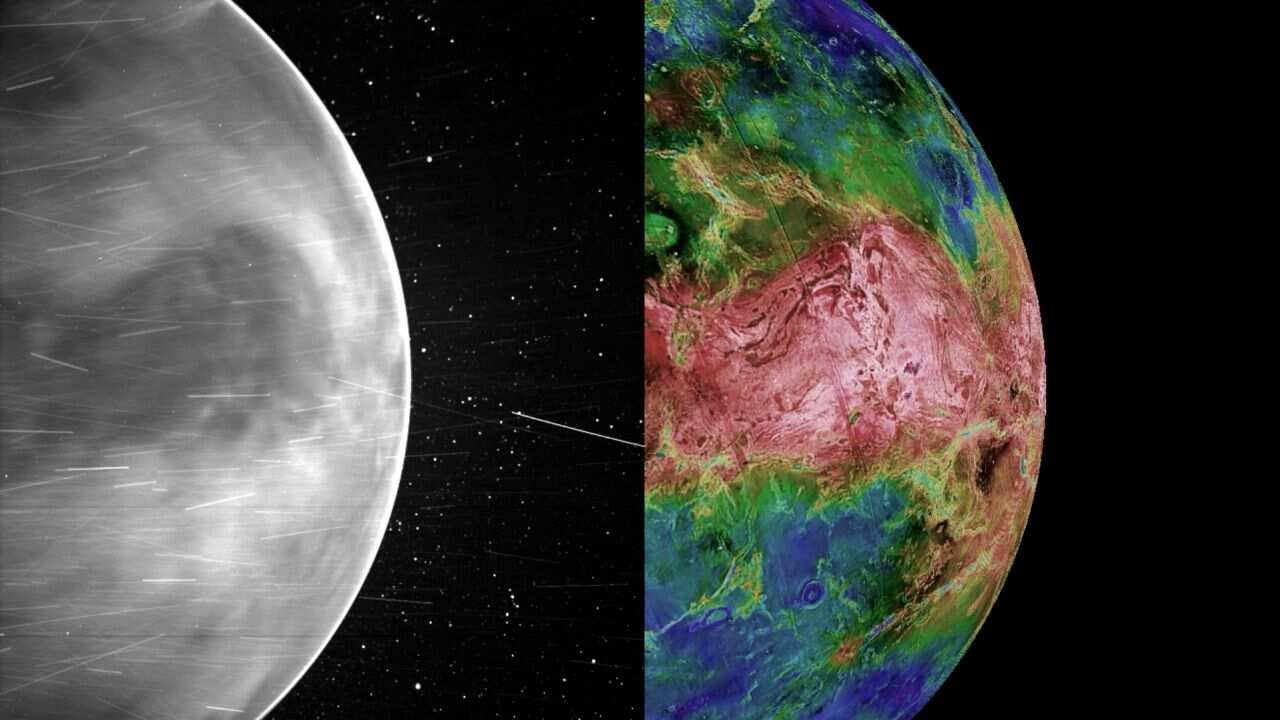
A fresh scientific debate has emerged around the possibility of life beyond Earth, with new findings suggesting that microscopic life forms on Venus may not be native to the planet at all. Instead, researchers are exploring whether these life forms could have originated on Earth and traveled across space.
The idea builds on the long discussed concept of Panspermia, which proposes that life can spread between planets through natural carriers such as asteroids and comets. According to this theory, once life begins on one celestial body, it can potentially be transported to others over time, seeding new environments across the universe.
This hypothesis gained renewed attention after a study presented at the Lunar and Planetary Science Conference 2026 examined the possibility of interplanetary transfer between Earth and neighboring planets. Researchers from Johns Hopkins University Applied Physics Laboratory and Sandia National Laboratories used advanced models to simulate how biological material could survive extreme conditions in space.
Their analysis considered multiple challenges such as intense heat from planetary impacts, exposure to radiation, vacuum conditions, and extreme temperature fluctuations. Despite these obstacles, previous studies of meteorites found on Earth have shown that organic material can endure such journeys under certain conditions.


Using a framework known as the Venus Life Equation, scientists estimated that material ejected from Earth could reach Venus and temporarily sustain microbial presence in its dense cloud layers. The findings suggest that billions of microscopic cells could potentially be transferred, with some surviving for short durations under favorable conditions.
The discussion has also reignited comparisons with Mars, another neighboring planet often linked to theories of life transfer. Scientists have long debated whether life could have moved between Earth and Mars in either direction, but Venus is now becoming a key focus due to its atmospheric conditions.
While there is no direct confirmation of life on Venus yet, the study adds a new dimension to ongoing research. It suggests that if microbial life is ever detected in Venusian clouds, its origin may not necessarily be local, but part of a larger cosmic exchange of life across planets.
Researchers caution that more observational data and future missions will be needed to confirm these possibilities. However, the findings highlight how interconnected planetary systems could be, and how life, if it exists beyond Earth, might travel in ways scientists are only beginning to understand.