
Four cheetahs arrive in Bengaluru; minister Khader assures strict monitoring and care

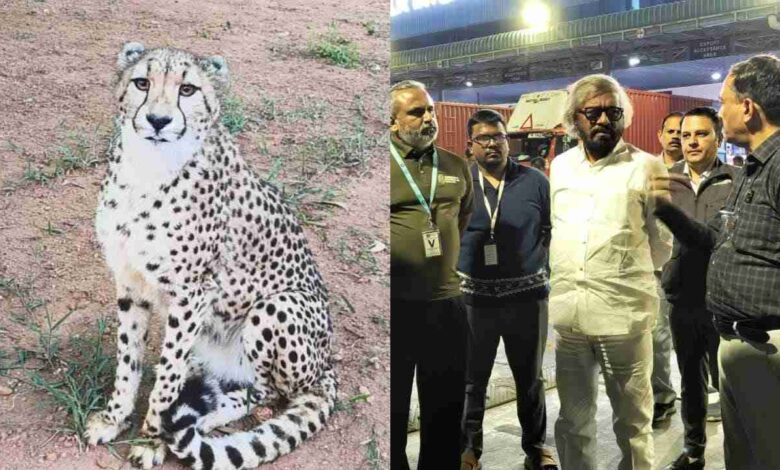
Bengaluru : In a significant development for wildlife conservation and public awareness, Karnataka Forest Minister Eshwar B Khandre personally received four cheetahs that arrived from South Africa at the Kempegowda International Airport late Friday night.
The minister, who reached Bengaluru via Hyderabad after attending an official programme in Kalaburagi, went directly to the cargo terminal to oversee the arrival and handling of the animals. The cheetahs have been brought to the Bannerghatta Biological Park, where they will be housed under strict supervision.
Officials said elaborate arrangements have been made to ensure that the animals do not face any stress due to climate and environmental changes. The minister directed authorities to strictly follow quarantine protocols, including a mandatory 30-day isolation period, regular health monitoring, and a carefully planned diet schedule.
“Ensuring the safety and well-being of these cheetahs is our top priority. All veterinary and safety protocols must be followed without any compromise,” Khandre said during the inspection. He also reviewed transportation arrangements to ensure the animals were safely shifted to their enclosure.


Once native to Indian forests, cheetahs have long been extinct in the wild in the country, including Karnataka. The state government has now taken steps to at least introduce them in controlled environments like zoos, enabling the public to witness these rare animals.
In a social media post, the minister said the initiative aims to revive awareness about cheetahs and strengthen conservation efforts. He also instructed officials of the Karnataka Zoo Authority to prioritise the animals’ safety and long-term care.
The move comes against the backdrop of mixed outcomes from the Centre’s Project Cheetah launched in 2022, under which 20 cheetahs were translocated from Namibia and South Africa to Kuno National Park in Madhya Pradesh. Several of those animals later died due to factors such as infections caused by radio collars, extreme heat, and territorial conflicts.
Learning from those challenges, Karnataka authorities have reportedly taken additional precautions to avoid similar setbacks. Experts believe that if managed carefully, the initiative could help in education, conservation awareness, and possibly future rewilding discussions.