New York Mayor Zohran Mamdani backs Umar Khalid, calls for fair probe amid rising international pressure

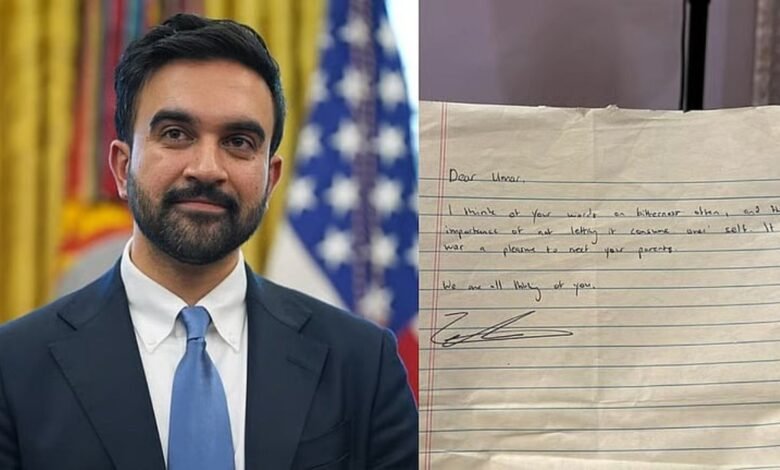
New York:The case of jailed human rights activist Umar Khalid has once again drawn international attention, with growing calls for a fair and transparent investigation under international legal standards. Eight members of the US Congress have urged India to ensure due process in the case, while New York City’s newly elected mayor, Zohran Mamdani, has written a letter expressing solidarity with Khalid.
Umar Khalid has been lodged in Delhi’s Tihar Jail under the Unlawful Activities (Prevention) Act (UAPA) in connection with the 2020 Delhi riots. Mamdani’s letter, shared by Khalid’s friends on social media, recalls his recent meeting with Khalid’s parents and conveys moral support to the imprisoned activist.
“Dear Umar, I often remember your words about how important it is not to allow the bitterness of life to push us towards self-destruction. Meeting your parents brought me great happiness. We are all thinking along the same lines as you,” Mamdani wrote in the letter, according to posts circulating online.


The letter has added momentum to international concern over Khalid’s prolonged incarceration. In December, eight US lawmakers met Khalid’s parents and later wrote to India’s Ambassador to the United States, Vinay Kwatra, expressing concern over the activist’s continued detention and urging a fair investigation consistent with human rights norms.
Umar Khalid is among several accused in a case alleging a larger conspiracy behind the 2020 communal violence in Delhi. He was arrested nearly six years ago under the stringent anti-terror law, and his bail plea remains pending before the Supreme Court. Recently, a Delhi court granted him interim bail from December 16 to 29 to attend his sister’s wedding, after which he returned to Tihar Jail.
With support now coming from prominent political figures in the United States, Khalid’s case has increasingly moved beyond India’s domestic legal framework into the realm of international human rights discourse. The latest developments underline how the case continues to spark debate over civil liberties, preventive detention laws, and the balance between national security and individual rights.