Xiaomi Pad 9 Series Launches With 144Hz Display and Large Battery
Xiaomi Pad 9 and Pad 9 Pro launch in China with high resolution displays, powerful Snapdragon processors, large batteries, fast charging and upgraded cameras for demanding tablet users.

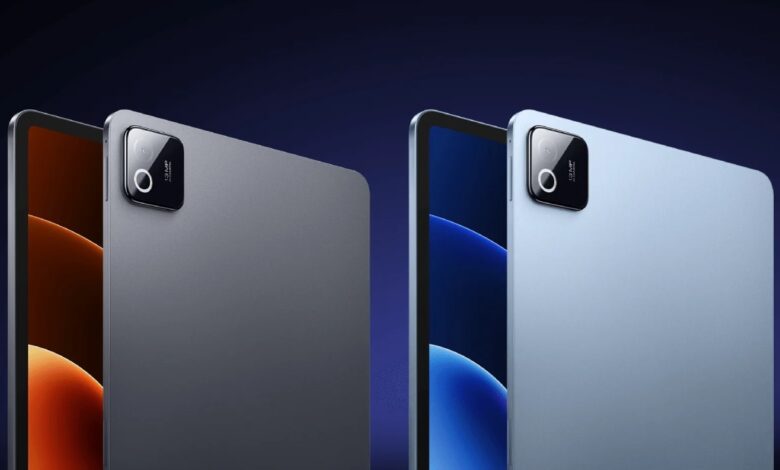
Xiaomi has officially launched its new Pad 9 series in China, introducing the Xiaomi Pad 9 and Xiaomi Pad 9 Pro at the companys Autumn New Product Launch Event on September 23. Both tablets are now available for purchase in the Chinese market.
The new tablets are aimed at users who want a larger screen without giving up performance. Xiaomi has equipped both models with high resolution displays, 144Hz refresh rates and support for features designed to improve viewing and stylus use.
The Xiaomi Pad 9 starts at 2999 yuan, which is approximately Rs 42800 based on the supplied conversion. The entry model comes with 8GB RAM and 128GB storage. The 8GB RAM and 256GB version costs 3299 yuan, while the Soft Light Edition with the same memory configuration is priced at 3499 yuan.
The top Xiaomi Pad 9 configuration with 12GB RAM and 256GB storage costs 3799 yuan. The tablet is available in Ice Peach Pink, Spruce Green, Black and Silver.


The Xiaomi Pad 9 Pro begins at 3799 yuan for the 8GB RAM and 128GB storage version. The 8GB RAM and 256GB model costs 4099 yuan, while the 12GB RAM and 256GB variant is priced at 4599 yuan. The highest configuration comes with 16GB RAM and 256GB storage and costs 4999 yuan.
Xiaomi has also introduced a Soft Light Edition of the Pad 9 Pro with 12GB RAM and 256GB storage. This version costs 4799 yuan and is designed for users who prefer a display with reduced reflections.
The display is one of the biggest attractions of the new tablets. The standard Pad 9 features an 11.2 inch screen, while the Pro version gets a larger 12.5 inch panel. Both models use a 3200 by 2136 pixel resolution, a 3 to 2 aspect ratio and a 144Hz refresh rate.
The screens also support a 360Hz touch sampling rate and 240Hz sampling for stylus input. HDR10, Dolby Vision and DCI P3 colour support are included, while TÜV certification for reduced blue light exposure adds another display focused feature.
Users who spend considerable time reading or working on a tablet may find the Soft Light Edition particularly interesting. Its matte anti reflective screen is designed to reduce reflections from surrounding light, making the display easier to view in brighter environments.
Performance is where the two models take different approaches. The Xiaomi Pad 9 uses the Snapdragon 8s Gen 4 chipset, while the Pad 9 Pro moves to the more powerful Snapdragon 8 Gen 5 mobile platform.
The Pro model is based on a 3nm manufacturing process and includes an Adreno 829 GPU. Memory options extend up to 12GB on the Pad 9, while the Pad 9 Pro offers a 16GB RAM configuration. Storage choices include 128GB and 256GB, with the Pro model also using faster UFS 4.1 storage in supported configurations.
Battery capacity is another area where Xiaomi has focused heavily. The Pad 9 comes with a 9720mAh battery and supports 45W fast charging. The Pad 9 Pro increases the capacity to 11000mAh and supports 67W fast charging.
Both tablets also support reverse charging, allowing them to provide power to compatible accessories and other devices. Xiaomi says the Pad 9 Pro can deliver up to 14.5 hours of short video playback and as much as 20 hours of online meeting use under its stated testing conditions.
The camera hardware is noticeably different between the two tablets. The Xiaomi Pad 9 has a 13MP rear camera and an 8MP front camera. The Pad 9 Pro receives a much higher resolution 50MP rear camera and a 32MP front camera.
Both models support 4K, 1080p and 720p video recording. For video calls and multimedia use, Xiaomi has included four speakers and four microphones on each tablet. Dolby Atmos, Hi Res Audio and noise reduction support are also available.
Connectivity options are designed for modern tablet use. Both devices support WiFi 7, Bluetooth 6.0 and USB Type C 3.2 Gen 1. Xiaomi has also included a fingerprint sensor, gyroscope, accelerometer, ambient light sensor, hall sensor and infrared support.
Despite the similarities, the Pad 9 Pro is clearly positioned as the more advanced member of the series. Its larger screen, higher capacity battery, faster charging, more capable processor and upgraded camera system give it a broader specification package.
The standard Pad 9, meanwhile, offers a slightly more compact design and lower entry price while retaining the high refresh rate display and powerful Snapdragon platform. This gives Xiaomi two different options within the same tablet family.
For now, the new tablets are available in China, and Xiaomi has not announced their launch plans for India or other international markets. This means Indian buyers will have to wait for official information about availability and local pricing.
The Xiaomi Pad 9 series adds another strong tablet offering to the companys portfolio, with the Pro model particularly focused on performance, battery life and premium display features. More details about international availability are expected from Xiaomi in the future.