US navy’s MQ-4c Triton drone goes missing near Iran, raises fresh tensions

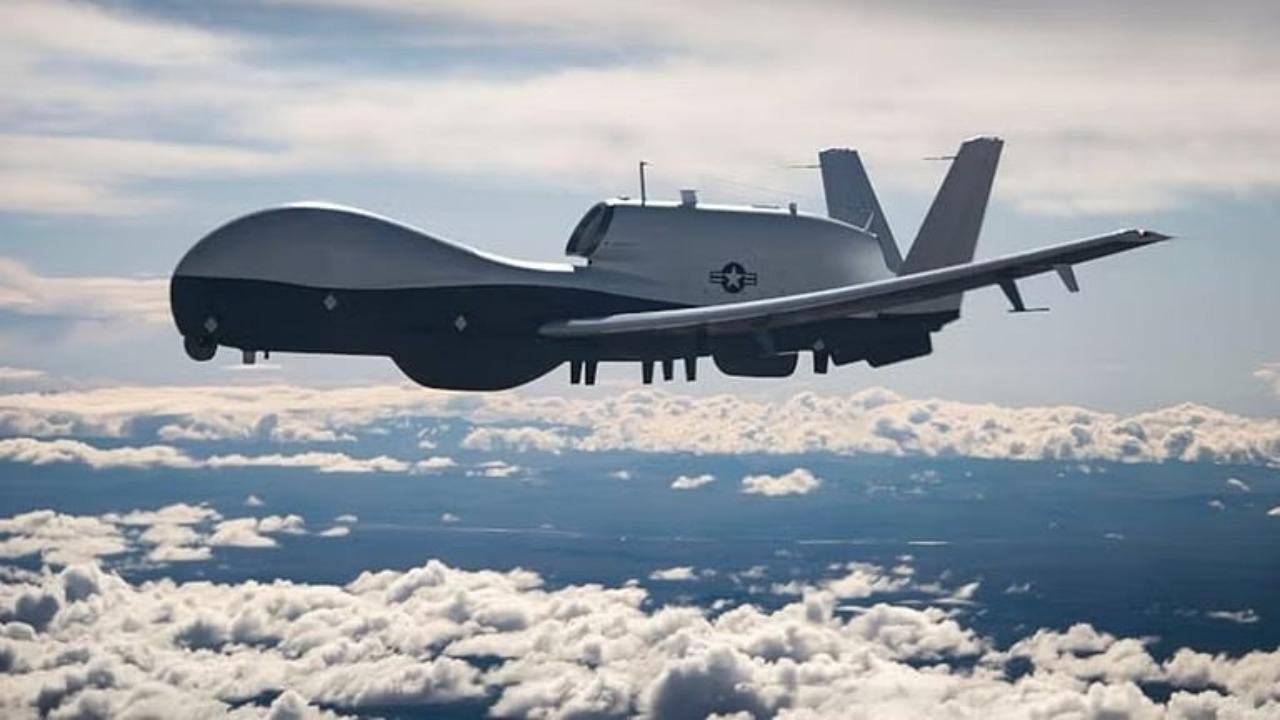
Washington : A high-value American surveillance drone, MQ-4C Triton, has gone missing near Iranian airspace, triggering fresh concerns amid already sensitive geopolitical conditions in the region. The incident reportedly occurred shortly after the drone declared an in-flight emergency over the strategically critical Strait of Hormuz.
According to initial reports, the unmanned aerial vehicle had completed nearly three hours of surveillance operations over the Persian Gulf and the Strait of Hormuz. It was believed to be returning to its base at Sigonella Naval Air Station in Italy when it suddenly deviated from its course and transmitted an emergency squawk code “7700,” typically used to signal distress.
Flight tracking data suggests that the drone briefly turned toward Iranian territory before rapidly losing altitude. Within moments, it disappeared from radar, raising speculation about whether it crashed due to a technical failure or was brought down by hostile action. However, there has been no official confirmation from US or Iranian authorities regarding the exact cause of the disappearance.

The incident is particularly significant as it comes just days after reports of a ceasefire understanding between the United States and Iran, and Iran’s decision to reopen the Strait of Hormuz for global shipping. The region remains one of the world’s most sensitive maritime corridors, crucial for international oil trade.
The MQ-4C Triton is considered one of the most advanced and expensive drones in the US Navy’s arsenal, with an estimated value exceeding $200 million. Designed for long-endurance, high-altitude maritime surveillance, it plays a critical role in monitoring vast oceanic regions and supporting naval operations.
Unlike conventional aircraft, the Triton can operate at altitudes above 50,000 feet and remain airborne for over 24 hours continuously. It has a range of approximately 7,400 nautical miles and is often deployed alongside the P-8A Poseidon, acting as a high-altitude surveillance complement.
Reports indicate that by 2025, the US Navy had around 20 Triton drones in service, with plans to expand its fleet further. The drone’s disappearance could have strategic implications, especially if sensitive surveillance technology is compromised.
Meanwhile, defence analysts note that ongoing tensions in the region continue to impose heavy financial burdens. Estimates suggest that US military operations related to Iran cost over $10,000 per second, with significant expenditures on weapons systems, air operations, naval deployments, and missile defence mechanisms.
As investigations continue, the disappearance of the Triton drone adds another layer of uncertainty to an already volatile geopolitical landscape, with global attention now focused on developments in the Gulf region.