Comet Burned to Ash Near the Sun NASA Captures Stunning Cosmic Destruction
NASA has recorded a rare cosmic event where a comet disintegrated near the Sun, offering scientists a detailed look at how intense solar heat can completely destroy icy space objects.

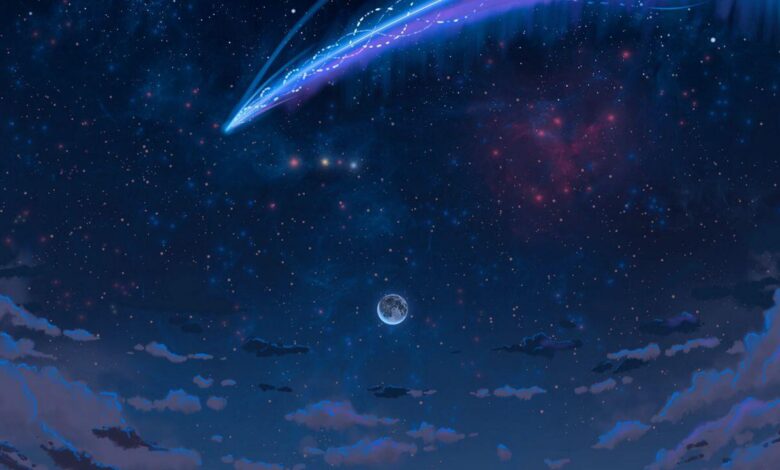
A dramatic space event has caught the attention of scientists after a comet was seen breaking apart near the Sun and turning into a cloud of dust and gas. NASA has released striking images showing the object moving toward the Sun before gradually losing its structure and disappearing under extreme heat. The event has provided a rare opportunity to observe how fragile cosmic bodies behave when exposed to intense solar radiation.
The comet, identified as C/2026 A1 (MAPS), was traveling through the inner region of the solar system when it came dangerously close to the Sun. Although it never directly collided, it passed at a distance roughly twice that between Earth and the Moon, which was still too close to survive the Sun’s extreme temperature and radiation.
Scientists closely tracked its journey as it moved toward the Sun, observing how rapidly it began to break down. The intense heat eventually caused the comet to disintegrate completely, turning what was once a solid icy body into a glowing trail of dust and debris.
The entire event was captured on April 4 using a specialized instrument aboard NASA’s Solar and Heliospheric Observatory, commonly known as SOHO. This mission is operated jointly by NASA and the European Space Agency and uses a coronagraph to block direct sunlight, allowing faint objects like comets to become visible for study.


According to NASA, the images clearly show the comet approaching the Sun before gradually fading into a cloud like formation, confirming its total destruction. The visual sequence has helped researchers better understand how such objects react when exposed to extreme solar conditions.
Carl Battams from the US Naval Research Laboratory noted that the comet likely began breaking apart several hours before reaching its closest point to the Sun. By the time it reached that stage, it had already lost its structural integrity and ceased to exist as a single object.
Events like this continue to provide valuable insights into the behavior of comets and the powerful forces at work in our solar system, reminding scientists how dynamic and unpredictable space can truly be.