Patna jewellers ban entry of hijab, niqab, and helmets in stores amid security concerns

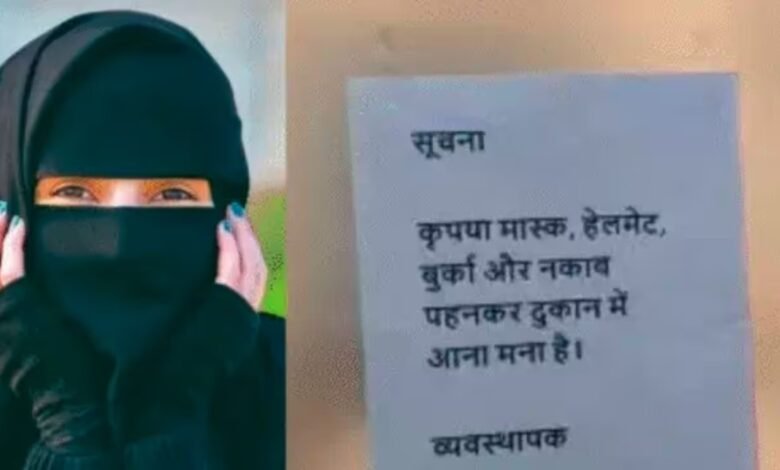
Patna : In a major development affecting Bihar’s jewellery trade, the Bihar Jewellers’ Association has prohibited entry to individuals wearing hijabs, niqabs, or helmets in gold and silver jewellery stores across the state. The decision comes shortly after a similar rule was implemented in Jhansi, Uttar Pradesh, prompting Bihar’s jewellers to reassess their security measures statewide.
The association announced on Wednesday that anyone covering their face with a hijab, niqab, burqa, or helmet will no longer be allowed inside jewellery outlets. Notices are already being displayed outside stores, clearly stating that masks, burqas, helmets, or niqabs are prohibited inside.


Security vs. controversy
The new rule has sparked political debate in Bihar. The Rashtriya Janata Dal (RJD) criticized the measure, claiming that targeting hijabs and niqabs under the pretext of security is discriminatory and unconstitutional. Responding to the criticism, the Bharatiya Janata Party (BJP) questioned the relevance of hijabs in India, emphasizing, “This is India, not an Islamic country. Why the special consideration for hijabs?” However, jewellers have defended the move, insisting that it is not aimed at any specific community but is purely a security precaution.
Bihar’s jewellery stores have seen a rise in robberies and thefts in recent months. Reports indicate that many offenders conceal their identities with face coverings before entering stores to commit crimes, making it difficult for staff and security personnel to identify them. The decision is therefore intended to protect store owners, employees, and customers.
Ashok Kumar Verma, State President of the All India Gold and Jewellery Traders’ Association, said, “Gold and silver outlets have always been a target for criminals. Security is our priority, and this step is necessary. Looting incidents are occurring almost daily. When faces are covered, identifying offenders becomes extremely difficult. This rule aims to prevent such crimes.”
Mixed responses from traders
Reactions among jewellers across Bihar have been mixed. In Gaya, jeweller Neeraj Kumar Verma welcomed the decision, stating, “There should be no objection to removing burqas, helmets, or masks inside stores. It is a matter of our safety. What will we tell the police if they ask for identification tomorrow? This measure ensures the safety of everyone.”
In Katihar, Kalyan Jewellers owner Mohammad Ashfaq also supported the ban from a security perspective. Although his store has not yet displayed a notice, he confirmed that staff and security personnel are being sensitized to the new rules and are vigilant about potential risks.
While the debate continues, jewellers insist the policy is strictly a security measure rather than a discriminatory act. The move reflects the growing emphasis on safeguarding high-value establishments in the state, balancing business interests with public safety.