ISRO’s LVM3 rocket successfully places BlueBird Block-2 satellite in orbit, ushering in direct-to-mobile connectivity era

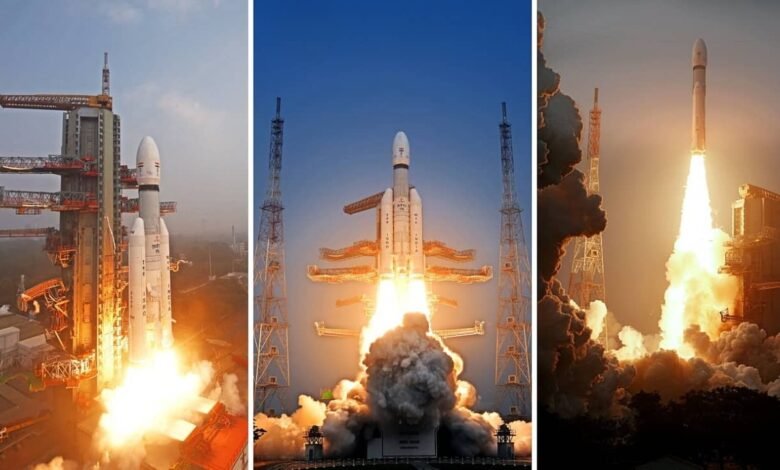
New Delhi: In a major milestone for India’s space and telecom ambitions, the Indian Space Research Organisation (ISRO) has successfully placed the massive BlueBird Block-2 communication satellite into orbit using its heavy-lift LVM3-M6 rocket. The launch, conducted on December 24 from the Satish Dhawan Space Centre at Sriharikota in Andhra Pradesh, marks a significant step towards enabling mobile connectivity directly from space, without the need for ground-based towers or cable infrastructure.
The mission was carried out as part of a commercial agreement with US-based AST SpaceMobile. Weighing around 6,100 kg, BlueBird Block-2 is among the heaviest commercial communication satellites ever deployed into low Earth orbit. ISRO’s LVM3 rocket, often referred to as “Bahubali” for its heavy-lifting capability, injected the satellite into its designated orbit within just 15 minutes of liftoff, underlining the reliability and precision of India’s launch systems.
Why BlueBird Block-2 is significant
BlueBird Block-2 is designed to function as a space-based mobile tower. Unlike conventional satellites that provide connectivity through specialised ground equipment, this satellite is built to deliver 4G and 5G signals directly to standard smartphones. The technology, described as “direct-to-mobile,” is expected to revolutionise global telecommunications by eliminating dependence on terrestrial towers and underground cables.


The satellite is not just large in size but also represents cutting-edge technology. Its antenna spans nearly 223 square metres, making it the largest commercial communications antenna ever deployed in low Earth orbit. From its position in space, the satellite will beam signals straight to mobile phones on the ground, overcoming obstacles such as terrain, forests and remoteness that have traditionally hindered network expansion.
Bridging the connectivity gap
One of the most transformative aspects of this technology is its potential to bring mobile connectivity to regions that have remained beyond the reach of traditional networks. Remote villages, dense forests, mountainous terrain and disaster-prone areas could soon receive uninterrupted mobile coverage. Experts believe this could significantly reduce the digital divide between urban and rural areas, ensuring equitable access to communication, education, healthcare and emergency services.
For India, where several remote and border regions still face patchy or non-existent mobile coverage, satellite-based broadband could be a game-changer. Direct-to-mobile connectivity would support digital governance, telemedicine, online education and economic inclusion, particularly in underserved regions.
Boost to India’s space economy
The successful launch further strengthens ISRO’s reputation as a reliable and cost-effective launch service provider. Over the years, ISRO has placed satellites for numerous countries into orbit, earning global trust and generating revenue for the country. The BlueBird Block-2 mission reinforces India’s growing role in the global commercial space market.
To expand its commercial footprint, ISRO has also established NewSpace India Limited (NSIL), which handles commercial launches and satellite services. Partnerships with global companies like AST SpaceMobile highlight India’s increasing competitiveness in high-end space missions.
What lies ahead
With the satellite now securely in orbit, the next phase involves deploying its massive antenna, conducting connectivity tests and verifying signal strength across different regions. Once fully operational, the BlueBird satellite constellation aims to provide seamless mobile connectivity across the globe.
Scientists and industry experts view this mission as a symbol of what international collaboration, advanced engineering and innovative thinking can achieve. If the satellite performs as expected, it could redefine how the world stays connected, proving that in the near future, the sky itself could become the network.