Jewellers in Varanasi and Jhansi follow Bihar’s lead, deny transactions to customers wearing burqa, hijab, masks, or helmets

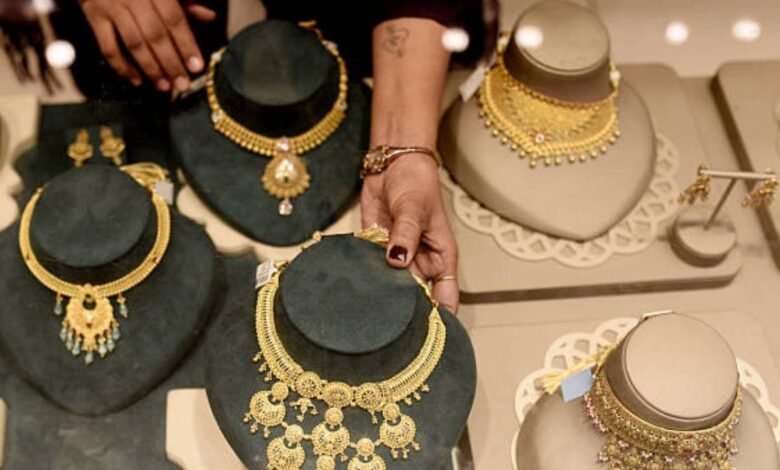
Varanasi: Following a similar move by jewellers in Bihar, traders in Uttar Pradesh’s temple city of Varanasi and the historic town of Jhansi have announced that customers wearing burqa, hijab, face masks, or helmets will not be permitted to conduct transactions in jewellery shops. The decision, taken by local traders’ associations, has triggered debate while drawing attention to growing security concerns faced by jewellery merchants across several states.
According to trader bodies, the decision has been prompted by a recent rise in incidents of theft, robbery, and fraud involving individuals whose faces were allegedly concealed using burqas, masks, or helmets. Jewellers claim that such concealment makes identification difficult and increases the risk of criminal activity inside high-value establishments such as gold and silver stores.
Representatives of the jewellery traders’ unions in Varanasi and Jhansi said the measure was adopted purely as a preventive step to safeguard shop owners, employees, and customers. “In recent months, there have been multiple cases where criminals entered jewellery stores with their faces covered and carried out theft or cheating. Our intention is not to target any community but to ensure security,” a traders’ association member said.


Boards displayed outside jewellery shops
To formally communicate the decision, jewellers in both cities have begun displaying boards outside their shops stating that no sale or purchase of gold or silver will be conducted if customers enter wearing face-covering attire such as burqas, masks, or helmets. The boards also urge customers to cooperate with shop staff in the interest of safety and vigilance.
Traders said similar boards have already been installed in several parts of Bihar, where the decision was first implemented after reports of gold thefts involving individuals wearing hijabs and masks. Encouraged by what they describe as a reduction in suspicious activity, jewellers in Uttar Pradesh decided to adopt the same approach.
Security concerns cited by traders
Jewellery traders argue that gold shops are especially vulnerable to crime due to the high value of merchandise on display. They say concealed identities complicate CCTV surveillance and hinder immediate identification in case of suspicious behaviour or criminal acts.
“In many cases, criminals take advantage of social sensitivity and security loopholes. We are responsible for the safety of our staff and customers. This is a precautionary step, not a judgment against any religion or attire,” another trader said.
The decision applies to both gold and silver transactions, traders clarified, and customers are being requested to remove face coverings temporarily for identification before entering shops.
Debate and mixed reactions
The move has sparked mixed reactions on social media and among civil society groups. While some sections of the public have supported the decision, citing law and order concerns, others have questioned whether such measures could lead to discrimination or profiling.
Legal experts note that private businesses are permitted to set reasonable security-related conditions for entry, but caution that such policies must be implemented carefully to avoid violating constitutional principles or provoking communal tensions.
So far, there has been no official response from the state government or police authorities regarding the jewellers’ decision. However, police sources indicated that traders are free to take precautionary measures within the bounds of law and have encouraged the installation of CCTV cameras, alarm systems, and coordination with local police stations.
With jewellers in Bihar, Varanasi, and Jhansi adopting similar rules, the issue highlights a broader trend of security-driven decisions by trade bodies amid rising concerns over organised retail crime. Whether other cities will follow suit remains to be seen, as authorities balance security needs with social harmony.