Bengaluru Metro Blue Line May Run On Solar Power And Save Rs 61 Crore Annually
Bengaluru Metro may soon explore solar power for its upcoming Blue Line, with an IISc study suggesting the 58 kilometre route could cut electricity costs and carbon emissions significantly.

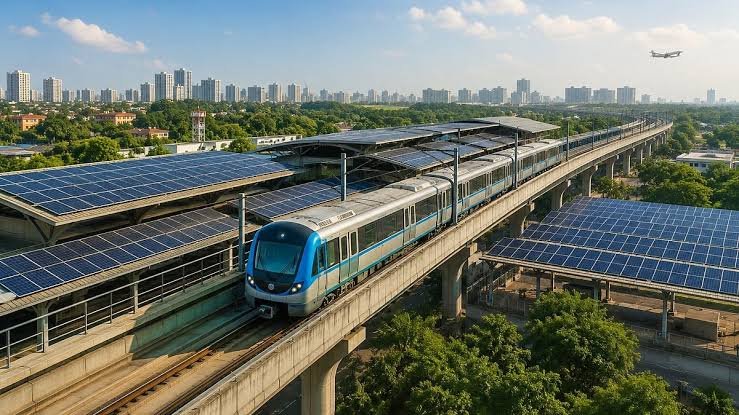
The upcoming Bengaluru Metro Blue Line could take a major step towards cleaner public transport if a proposal to use solar energy for train operations gets the green signal. A study conducted by experts from the Indian Institute of Science has suggested that the entire route could potentially be operated using solar power.
The proposed line will connect Central Silk Board with Kempegowda International Airport through KR Puram. The route stretches for about 58.19 kilometres and is being developed as one of Bengaluru’s important new Metro corridors. The Bangalore Metro Rail Corporation Limited is preparing to open the line in phases, with the first stretch expected to be ready around December this year.
According to the IISc study, using solar energy could bring substantial financial and environmental benefits to the Metro system. The estimated annual saving for BMRCL could reach around Rs 61 crore if the plan is implemented as proposed.
The study was prepared by a team of five experts from IISc under the leadership of Professor Ashish Verma, who heads the Sustainable Transportation Laboratory. The team examined the possibility of using solar energy to meet the power requirements of Metro trains operating on the Blue Line.

The proposal is particularly significant because the route is one of the longest upcoming Metro corridors in Bengaluru. The Central Silk Board to KR Puram section covers about 19.75 kilometres and includes 13 stations. From KR Puram to the airport, the line extends another 38.44 kilometres with 17 stations. Altogether, the corridor will have 30 stations.
The Blue Line is being constructed at an estimated cost of around Rs 14,788 crore. Given the size of the project and its expected electricity requirements, reducing energy expenses could make a noticeable difference to its long term operating costs.
The environmental benefit is another major part of the proposal. The IISc study estimates that the use of solar power could prevent around 44,526 tonnes of carbon dioxide emissions from entering the atmosphere every year. That would add to the environmental gains expected from expanding Metro connectivity across the city.
The researchers have also suggested that solar energy should be considered for other Metro corridors being planned in the future. If adopted on a wider scale, the approach could help Bengaluru reduce its dependence on conventional electricity sources while making public transportation more environmentally friendly.
The proposed solar powered operation has also been compared with the environmental impact of removing thousands of petrol cars from Bengaluru’s roads. According to the study, the reduction in emissions would be comparable to permanently taking around 19,000 petrol cars off the city’s roads.
However, the proposal is not yet a final decision. BMRCL has received the IISc report and is currently expected to examine its findings before deciding whether the suggested approach can be implemented.
BMRCL Chief Public Relations Officer said the organisation had received the report from the IISc expert team. The corporation will study the recommendations and take a decision after examining the technical and other aspects involved.
If the proposal eventually receives approval and the required infrastructure is put in place, Bengaluru could gain a Metro corridor powered substantially by renewable energy. The project could also become an important example of how large public transport systems can combine infrastructure expansion with cleaner energy solutions.
For a city dealing with growing traffic, rising transport demand and concerns over pollution, the possibility of powering Metro operations through solar energy could offer benefits beyond simply reducing electricity bills. The Blue Line therefore has the potential to become an important test case for renewable energy use in urban rail transport.