Dharwad Agricultural University Wheat Variety Selected for Export to Indonesia Under Bilateral Agreement
A wheat variety developed by Dharwad Agricultural University has been selected for export to Indonesia, strengthening agricultural cooperation and supporting regional food security through scientific innovation and research excellence together.

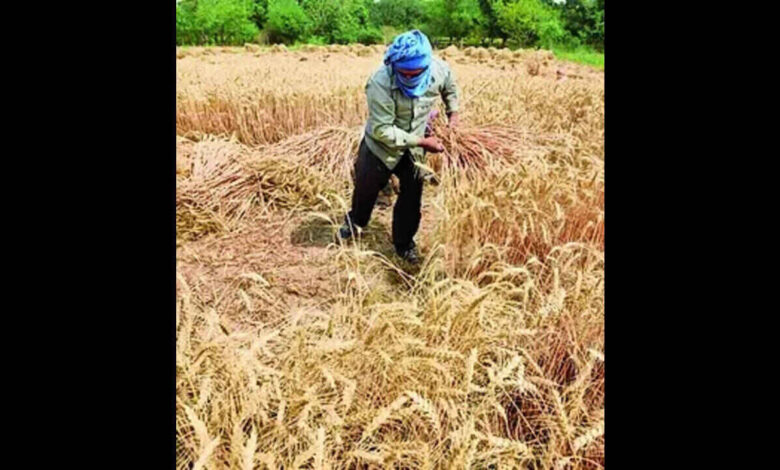
A wheat variety developed by the University of Agricultural Sciences in Dharwad has earned international recognition after being selected for export to Indonesia under a bilateral agreement between the two countries. The decision marks a significant achievement for the university and highlights the growing global acceptance of Indian agricultural research.
The export of the DWR 162 wheat variety forms part of a broader initiative aimed at strengthening agricultural cooperation and improving regional food security. The agreement was signed during Prime Minister Narendra Modi’s recent visit to Indonesia, where both nations agreed to enhance collaboration in the agricultural sector through the exchange of high quality crop varieties.
The DWR 162 wheat variety has been recognised for its strong performance under warm climatic conditions. Researchers say it offers high yield potential, good grain quality and resistance to common wheat diseases such as leaf rust and stem rust. These qualities make it suitable for cultivation in regions that experience higher temperatures during the growing season.
Scientists at the University of Agricultural Sciences began work on developing improved wheat varieties during the 1980s. At that time, researchers focused on creating crops that could tolerate heat stress, adapt to shorter growing periods and perform well in the climatic conditions of Karnataka and Maharashtra, where wheat cultivation is widespread.


The DWR 162 chapati wheat variety was officially released in India in 1993 after being developed using the shuttle breeding method. Even after more than three decades, it continues to remain one of the preferred wheat varieties among farmers because of its stable performance and consistent productivity. Demand for breeder seeds of this variety has also remained strong over the years.
Indonesia had previously evaluated several wheat varieties developed by Indian research institutions and the International Maize and Wheat Improvement Center to identify crops suitable for its tropical climate. During these trials, DWR 162 reportedly delivered better yield and grain quality than the other varieties tested, making it a preferred choice for further cultivation.
The impressive results prompted the Indonesian government to import seeds of DWR 162 for large scale field trials as early as 2000. Indonesian authorities also invited agricultural scientist Dr RR Hanchinal to provide technical guidance on crop management and cultivation practices associated with the variety.
The supply of seeds later faced delays because of legal and regulatory requirements related to India’s Plant Variety Protection and Farmers Rights legislation as well as biodiversity regulations. To address these issues, both governments continued discussions to establish a framework for the lawful transfer of seeds.
As part of the latest agreement, India has now decided to supply 100 tonnes of high quality DWR 162 wheat seeds produced by the University of Agricultural Sciences in Dharwad. The initiative is expected to support Indonesia’s food security programmes while opening new opportunities for agricultural collaboration between the two countries.
The development represents a major milestone for the Dharwad institution, whose research has gained recognition beyond India. The successful export of the DWR 162 wheat variety demonstrates how scientific innovation developed for Indian farming conditions can also contribute to agricultural productivity and food security in other parts of the world.