Sonabai Rajwar Turned Fifteen Years of Isolation Into an Extraordinary Artistic Legacy
Confined for fifteen years in a dark room, tribal artist Sonabai Rajwar transformed clay into remarkable sculptures that earned national recognition and inspired generations across Chhattisgarh and beyond.

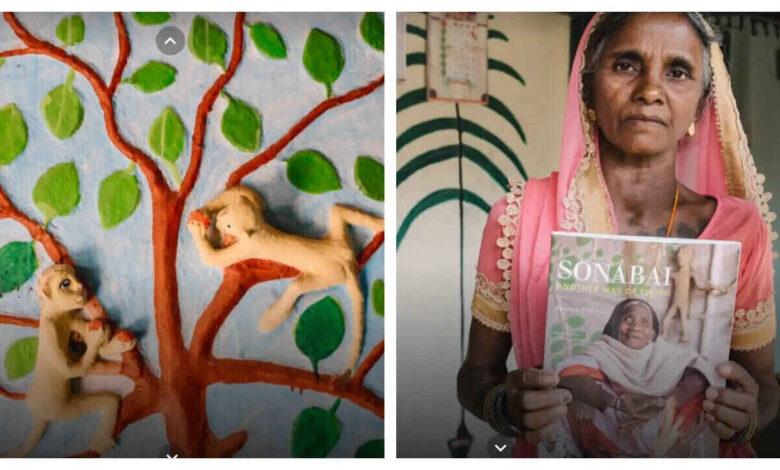
The life of tribal artist Sonabai Rajwar from Chhattisgarh is a remarkable story of resilience, creativity and hope. Forced to spend fifteen years in isolation inside a dark room, she turned hardship into an extraordinary artistic journey that later received national recognition and continues to inspire artists across India.
Born around 1930 in Puhputra village of Surguja district, Sonabai belonged to the Rajwar community, where decorating mud houses with traditional art was part of everyday life. She was married at the age of fourteen to a man much older than her, following local customs.
Her life changed dramatically after the birth of her son. According to accounts of her life, she was confined by her husband to a windowless room, cut off from the outside world and unable to meet or speak with others. The isolation lasted for nearly fifteen years, leaving her and her young son in extremely difficult circumstances.
To keep her child entertained and to cope with loneliness, Sonabai began shaping figures from the clay scraped from the walls and floor of the room. She created sculptures of animals, people, gods and goddesses. Using bamboo strips, she crafted decorative patterns and coated them with clay before colouring them with natural pigments prepared from herbs, spices and minerals. Over time, the room was transformed into a breathtaking display of three dimensional clay art.


Her extraordinary talent remained unknown until 1983, when a research team from Bharat Bhavan in Bhopal visited her village. They were amazed to discover the stunning artwork created without any formal training. That same year, Sonabai received one of the country’s prestigious national honours for folk art along with the Tulsi Samman, bringing her work to national attention.
Sonabai Rajwar passed away in 2007, but her legacy continues to flourish. Her son Darog Ram and many young people from the village learned the craft and turned it into a source of livelihood. In 2015, the Chhattisgarh government named the largest art gallery at Indira Kala Sangeet Vishwavidyalaya after her. It became the state’s first museum dedicated to the work of an individual artist, ensuring that her inspiring story and artistic contribution will be remembered for generations.