PAN Card Rules 2026 New Guidelines Make Documentation Stricter for Applicants
Government introduces updated PAN card rules with stricter verification new forms mandatory documents and revised financial thresholds impacting transactions tax compliance and application process across India from April 2026

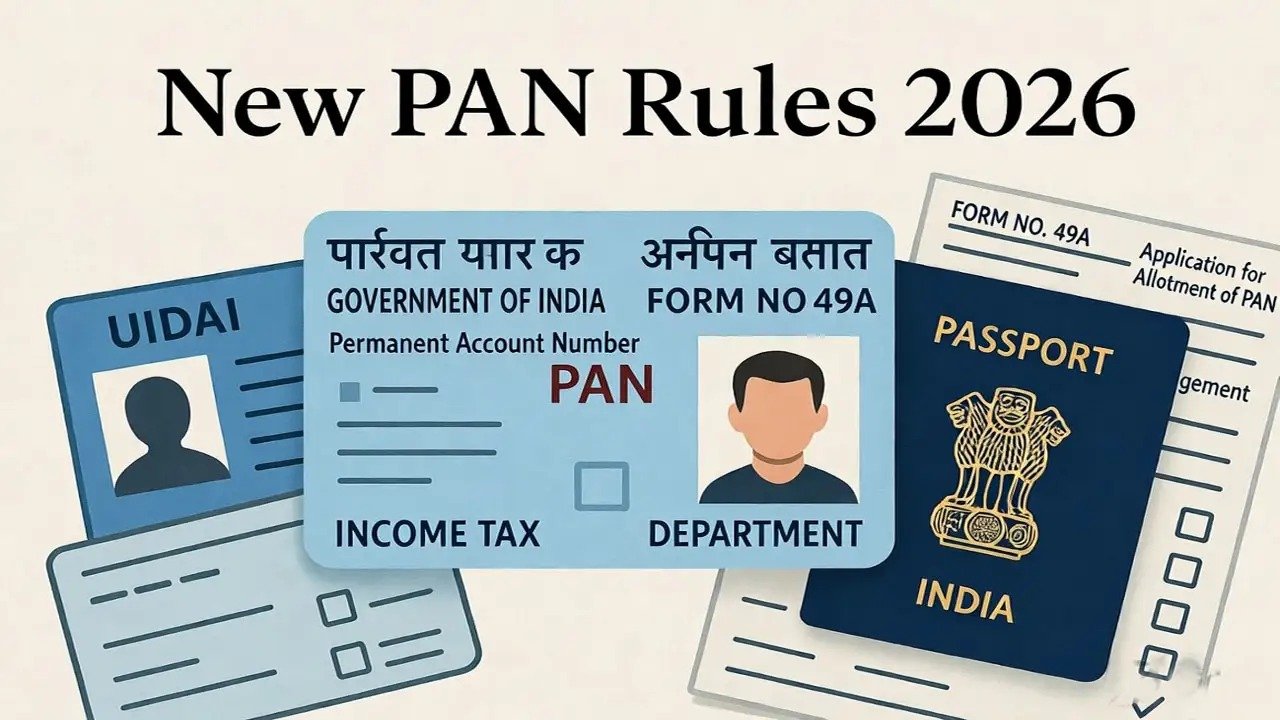
Starting April 2026, getting a new PAN Card has become more structured, with the government rolling out updated rules that tighten documentation and verification requirements. The move is aimed at improving transparency and strengthening tax compliance across the country.
One of the most significant changes is that Aadhaar alone is no longer sufficient for obtaining a PAN. Applicants must now submit additional supporting documents along with their Aadhaar details, ensuring that identity verification is more robust. Authorities have also emphasized that personal details, especially names, must match exactly across all submitted documents to avoid rejection.
The application process itself has been revised with new forms replacing the older ones. Indian citizens and entities are now required to fill Form 93 instead of the earlier Form 49A. Similarly, non resident applicants must use Form 95, replacing Form 49AA. These changes are part of a broader effort to standardize and streamline the application system.
Another key update is the mandatory requirement of valid proof of date of birth. Applicants must provide documents such as a birth certificate, passport, driving licence, voter ID, Class 10 marksheet or a government issued affidavit. Without these, applications will not be processed.


Applying for a PAN card remains largely digital. Applicants need to visit official portals like NSDL or UTIITSL, select the appropriate form, fill in personal details, upload required documents and complete the payment process. Once submitted, an acknowledgement number is issued, which can be used to track the application status.
Beyond the application process, the government has also revised rules related to financial transactions where PAN is required. These updates are expected to impact individuals and businesses alike.
For cash deposits, the threshold has shifted from a daily limit to an annual one. PAN is now mandatory if total cash deposits exceed Rs 10 lakh in a financial year. Similarly, in the case of vehicle transactions, PAN is required only if the value exceeds Rs 5 lakh, offering some relief for smaller purchases.
Changes have also been made for high value spending. Payments at hotels or restaurants will now require PAN only if the bill exceeds Rs 1 lakh, compared to the earlier limit of Rs 50000. In the real estate sector, the threshold for mandatory PAN usage is proposed to increase from Rs 10 lakh to Rs 20 lakh, reflecting rising property values.
Insurance related transactions have also come under tighter scrutiny. Earlier, PAN was required mainly for high premium payments, but under the new framework, it may be needed for a broader range of insurance activities to ensure accurate income reporting.
Officials say these measures are designed to curb tax evasion, track large financial activities and improve the overall efficiency of the tax system. While the new rules may make the application process slightly more demanding, they are expected to create a more reliable and transparent financial environment in the long run.
For applicants, the message is clear careful documentation and accurate information are now more important than ever when applying for or using a PAN card in India.