Special intensive revision begins in Karnataka; voter data mismatch raises concerns

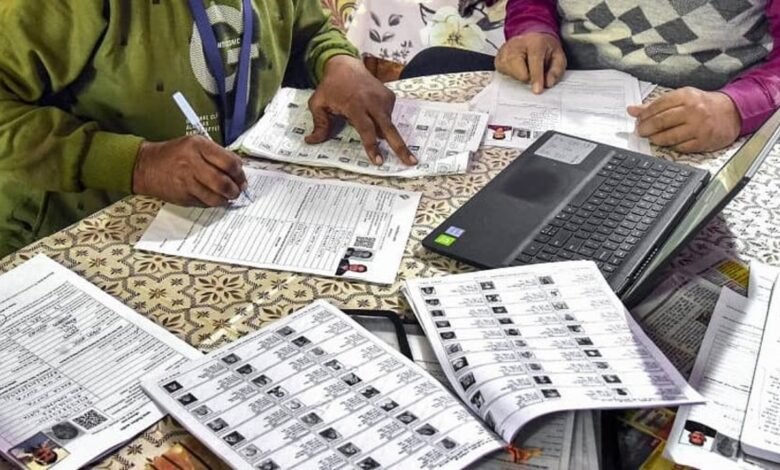
Bengaluru: The preparatory process for the Special Intensive Revision (SIR) of electoral rolls has begun in Karnataka, revealing significant discrepancies in voter data across the state. Of the total 5.57 crore registered voters, details of only 3.05 crore have been successfully matched so far, leaving as many as 2.51 crore voter records unmatched during the preliminary verification exercise.
The Election Commission of India (ECI) is undertaking the SIR process in several states, with Karnataka initiating groundwork by comparing the 2002 electoral rolls with the latest 2025 voter list. This comparison exercise is nearing completion, but the scale of mismatched data has drawn attention, particularly in urban centres. Bengaluru alone accounts for 85.14 lakh voters whose details do not match between the two lists.
Within the Bengaluru city limits, there are around 1.03 crore registered voters. However, data matching has been completed for only 17.86 lakh voters so far, indicating a substantial gap that election authorities will need to address during the full-scale SIR exercise.


As per ECI guidelines, the 2002 voter list is being treated as the base document for the SIR. Voters whose details match with the 2002 rolls will not be required to submit any additional documents. Those whose details do not match will have to furnish supporting documents to establish their eligibility once the SIR formally begins.
The Karnataka Chief Electoral Officer’s (CEO) office had launched this preparatory exercise as early as December 2025. A progress report prepared by the CEO’s office outlines the current status of data verification. In the first phase, details of voters aged above 40 years were compared. Out of 3.12 crore voters in this age group, records of only 1.87 crore have matched, leaving 1.25 crore unmatched.
Subsequently, voter details across all age groups were cross-verified at multiple levels, including polling station, assembly constituency, district and inter-district stages. Despite these layered checks, the total number of unmatched voters remains at 2.51 crore, of which 1.25 crore are aged 40 years and above.
An official from the CEO’s office clarified that this is only a preparatory exercise. “Once the SIR begins, booth-level officers will conduct door-to-door verification. Details of deceased voters, those who have changed addresses, and individuals holding multiple voter IDs will be collected. Eligible voters who submit valid documents will continue to remain on the rolls. Only after this process will the actual and accurate voter count emerge,” the official said.
Attempts to seek a response from Karnataka Chief Electoral Officer V. Anbukumar were unsuccessful, as calls to his office and mobile phone went unanswered.
Meanwhile, officials have flagged a technical gap in accessing older voter data. While details from the 2025 electoral roll can be searched on the CEO’s website, information related to the 2002 voter list for Bengaluru Urban district’s then undivided Uttarahalli Assembly constituency is not available online.
“Several representations have been submitted to the CEO’s office seeking these records. However, the issue remains unresolved, causing delays in comparing the two voter lists,” an official noted, underscoring challenges that could impact the pace of the SIR process in certain constituencies.