Karnataka Government to Challenge KPSC SIT Order in Supreme Court
Karnataka government plans to challenge the High Court ordered SIT investigation into alleged KPSC recruitment irregularities, citing concerns over the ongoing CID probe and appointment of specific officers.

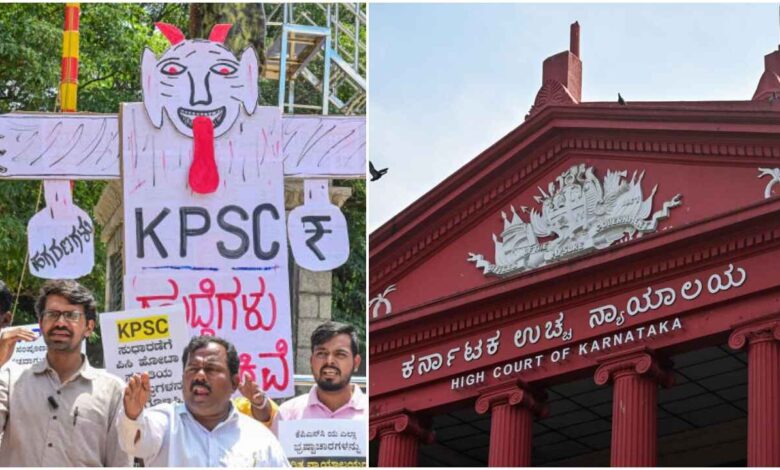
The Karnataka government has decided to approach the Supreme Court against the Karnataka High Court order directing the formation of a Special Investigation Team to investigate alleged irregularities in the Karnataka Public Service Commission recruitment process.
The decision comes soon after the High Court ordered a five member SIT headed by senior IPS officer Alok Kumar to take up the investigation into the alleged veterinary officer recruitment scam. The court gave the team 100 days to complete the investigation and directed periodic progress reports.
The government has taken legal advice before deciding to challenge the order, according to reports. Its main objection is not to investigating the allegations themselves, but to the manner in which the High Court directed a particular group of officers to conduct the probe.
Chief Minister D K Shivakumar has also commented on the issue, saying that state investigating officers were already working on the case. His concern, as reported, was about the court specifically naming officers for the new investigation rather than allowing the government to determine the investigating team.


The High Court had ordered the new SIT after hearing petitions seeking a deeper investigation into alleged irregularities in KPSC recruitment. The five member team is headed by Alok Kumar, DGP of Prisons and Correctional Services, with IPS officers Divya V Gopinath, Anup A Shetty, Kushal Chouksey and Kshama Mishra as members.
The court also directed the state government to issue a notification giving the SIT police station status for the investigation. It further said that no officer or authority should interfere with, obstruct or influence the investigation entrusted to the team.
The government has pointed to the work already carried out by the Criminal Investigation Department. The CID investigation into the alleged recruitment irregularities has involved questioning candidates, examining financial transactions and collecting documentary and technical evidence.
Recent reports have said investigators have traced financial transactions involving candidates and alleged middlemen. The CID has also reported evidence concerning alleged advance access to examination questions and money transfers connected with the recruitment process. These remain allegations under investigation and have not been established as facts against every person named in the case.
The controversy began after allegations surfaced around the recruitment of 400 veterinary officers through KPSC. The final selection list was announced in July, after which allegations of serious irregularities emerged. The state government subsequently handed the matter to the CID for investigation.
The High Court later decided that a fresh investigation by a separate SIT was necessary. The court declined requests to transfer the matter to the Central Bureau of Investigation and instead placed the probe under the newly constituted team led by Alok Kumar.
Another important aspect of the High Court order is the wider scope of the investigation. Reports indicate that the court has asked the SIT to examine alleged irregularities beyond the immediate veterinary recruitment issue, including other recruitment examinations connected to the KPSC during the relevant period.
This broader scope has increased the importance of the case. If investigators identify evidence involving additional examinations, officials or other individuals, the investigation could expand further. However, allegations or names emerging during an investigation should not be treated as proof of wrongdoing unless established through the appropriate legal process.
The government now faces a legal challenge of its own. By deciding to approach the Supreme Court, it will seek judicial consideration of its objections to the High Court directions. The outcome of that legal process could determine how the investigation proceeds and whether the newly formed SIT continues its work in the manner ordered by the High Court.
Meanwhile, the KPSC case continues to attract attention because public recruitment examinations directly affect candidates competing for government positions. Questions over examination integrity can have consequences for both successful and unsuccessful candidates, making a transparent investigation important for determining what happened and who, if anyone, was responsible.
For now, the immediate development is the governments decision to challenge the SIT order before the Supreme Court. The High Court has already set a 100 day period for the SIT investigation, while the state governments proposed legal challenge adds another layer to the ongoing case.
The next steps will depend on proceedings before the Supreme Court and the legal response to the High Court order. The investigation into the alleged KPSC recruitment irregularities is therefore entering another significant stage, with both the probe and the legal challenge expected to remain under close watch.