Karnataka Dam Water Levels On August 28 KRS Inflow Falls While Alamatti Nears Full Capacity
Karnataka’s major reservoirs show varied water levels today as KRS sees lower inflow while Alamatti remains nearly full and Linganamakki continues to hold substantial storage.

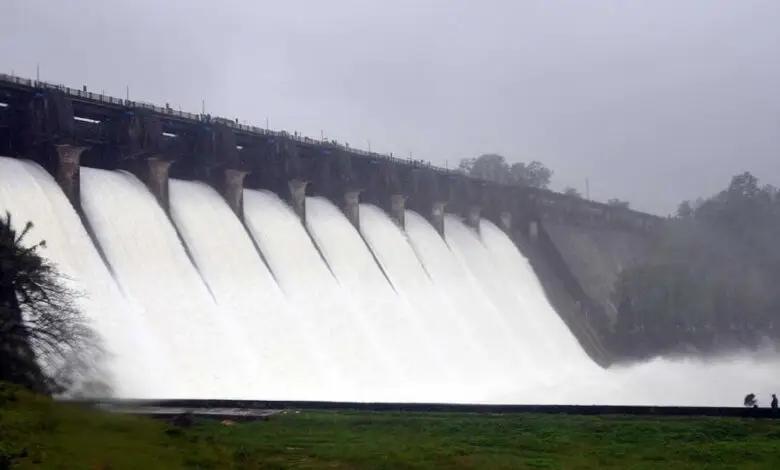
Water levels across Karnataka’s major reservoirs are showing mixed trends as rainfall patterns differ from one region to another. On August 28, the Kaveri basin has recorded a reduction in rainfall, leading to a noticeable fall in the inflow reaching the Krishna Raja Sagara reservoir, commonly known as KRS.
The situation is different in parts of North Karnataka and the Malnad region. Reservoirs including Alamatti, Basava Sagara, Bhadra and Linganamakki continue to maintain substantial water storage. The latest figures also show differences in inflow and outflow depending on the requirements of each reservoir.
KRS reservoir
KRS has a maximum storage level of 124.80 feet, while the water level recorded today stands at 110.20 feet. Its storage capacity is 31.923 TMC.


The inflow into KRS has dropped to 10,028 cusecs. This is considerably lower than the 17,427 cusecs recorded the previous day. The decline comes as rainfall activity in the Kaveri catchment has reduced.
The change in inflow will be closely watched because KRS plays an important role in meeting water requirements in the region.
Hemavathi reservoir
The Hemavathi reservoir has a maximum level of 2,922 feet, corresponding to a storage capacity of 37 TMC. Its current water level is 2,913.94 feet, with storage standing at 29.788 TMC.
The reservoir is receiving an inflow of 2,040 cusecs. The current outflow includes 1,800 cusecs released into the river and another 3,700 cusecs through the canal system.
For comparison, the water level at Hemavathi on the same date last year was 2,921.78 feet, with storage recorded at 36.890 TMC.
Alamatti remains almost full
The Alamatti reservoir continues to be one of the notable points in Karnataka’s current water storage situation. The maximum level of the dam is 519.60 metres, while today’s level has reached 519.58 metres.
The reservoir is receiving 26,883 cusecs of water, while the outflow is also 26,883 cusecs. The figures indicate that incoming water is currently being released at the same rate.
Basava Sagara reservoir
Basava Sagara has a maximum water level of 492.25 metres. The reservoir is currently at 492.22 metres, leaving only a small difference from its maximum level.
Its present inflow stands at 24,000 cusecs, while the outflow is 19,000 cusecs. The figures indicate that the reservoir continues to receive a strong flow of water.
Kabini reservoir
Kabini has a maximum level of 84 feet, while its current water level is 72.46 feet. The reported storage is 12.92 TMC, with live storage listed at 3.11 TMC.
The total outflow from the reservoir is 7,760 cusecs. Rainfall recorded in the area is 12 millimetres.
Bhadra reservoir
Bhadra reservoir has a maximum level of 186 feet, with a total capacity of 71.535 TMC. The current water level is 177 feet, while the reported storage is 60.663 TMC.
The reservoir is receiving an inflow of 4,640 cusecs. Its current outflow is much lower at 207 cusecs.
The water level on the same date last year stood at 184 feet 10 inches, meaning the present level is lower than the corresponding figure from last year.
Linganamakki continues to hold substantial water
The Linganamakki reservoir has a maximum level of 1,819 feet. Its water level today is 1,797.40 feet, with the reservoir reported to be at 59.14 percent of its capacity.
The water level has increased by 0.20 feet today. Inflow into the reservoir is currently 8,955 cusecs.
Last year on the same date, Linganamakki recorded a water level of 1,817.70 feet. The current figure therefore remains below last year’s level, although the reservoir continues to receive a steady inflow.
Overall, Karnataka’s reservoir situation remains uneven. While KRS is experiencing a clear reduction in inflow following weaker rainfall in the Kaveri basin, reservoirs such as Alamatti and Basava Sagara are holding levels close to their respective maximum marks.
The latest figures also highlight why rainfall distribution remains important for the state’s water position. A change in rainfall across individual catchment areas can quickly influence inflows, storage and releases from major reservoirs. Authorities and farmers will continue to keep a close watch on these levels as the monsoon season progresses.