Bengaluru east civic body presents ₹3,889 crore budget with focus on welfare and infrastructure

bengaluru east civic body presents ₹3,889 crore budget with focus on welfare and infrastructure
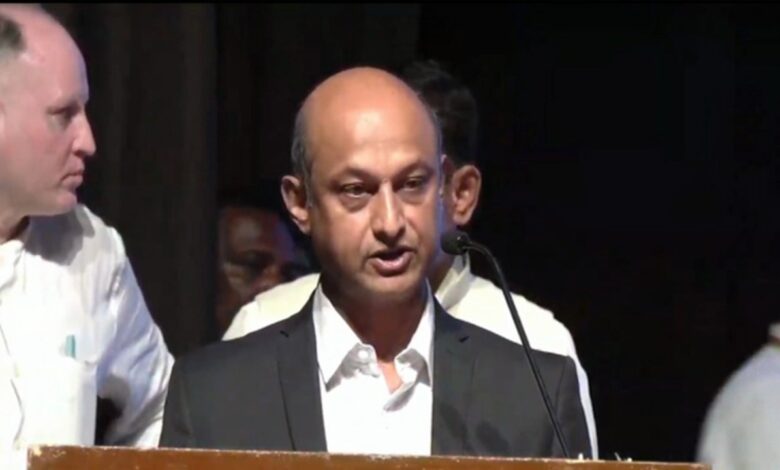
Bengaluru: The newl y formed Bengaluru East City Corporation has presented its first-ever budget after the creation of the Greater Bengaluru Authority, outlining an ambitious roadmap for development and welfare. The ₹3,889 crore budget for 2026–27 aims to balance infrastructure growth with social welfare initiatives.
Officials stated that the budget allocates ₹302 crore for staff expenses and ₹82 crore for administrative costs. A significant ₹300 crore has been earmarked for solid waste management, while ₹342 crore will be spent on operations and maintenance. The civic body has also set aside ₹267 crore for health, education and welfare programmes, ₹240 crore for public development works, and ₹193 crore towards loan repayment.
A key highlight of the budget is the target to collect ₹1,500 crore through property tax. The corporation also expects ₹68 crore in revenue from advertisements. In a push towards digital governance, authorities plan to digitise 4.5 lakh property records and deploy artificial intelligence to identify tax defaulters.
The budget outlines a broader vision of ensuring that rapid urbanisation does not come at the cost of infrastructure stability or environmental sustainability. It also emphasises integrating technology with human-centric governance.

Major welfare and development initiatives
The civic body has earmarked nearly 7% of the total budget for trader welfare programmes and ₹221 crore for welfare schemes targeting Scheduled Castes, Scheduled Tribes, backward classes, minorities, sanitation workers, senior citizens, women, street vendors and the transgender community.
Under housing initiatives, the much-awaited single-house scheme will be revived, with a subsidy of ₹5 lakh for purchasing 1 BHK houses or flats. Special focus will be given to economically weaker sections, including sanitation workers and persons with disabilities.
In education, fee reimbursement schemes will be extended to children of SC/ST, backward class families and civic workers. Financial support will also be provided for higher education and overseas studies.
Healthcare provisions include reimbursement of medical expenses for those suffering from serious illnesses, particularly among marginalised communities.
Women empowerment programmes include free two-wheelers for working women and sanitation workers, along with sewing training and distribution of sewing machines. For persons with disabilities, electric wheelchairs and specially designed vehicles will be provided.
Additionally, e-vending vehicles will be distributed to street vendors to boost livelihoods, while students from disadvantaged backgrounds will receive free laptops. Plans are also in place to upgrade six existing shelters for the homeless and establish two new centres.
Skill development and self-employment schemes, including subsidies for auto-rickshaws and cars, have also been announced.