Saif al-Islam Gaddafi, son of former Libyan dictator, shot dead at home

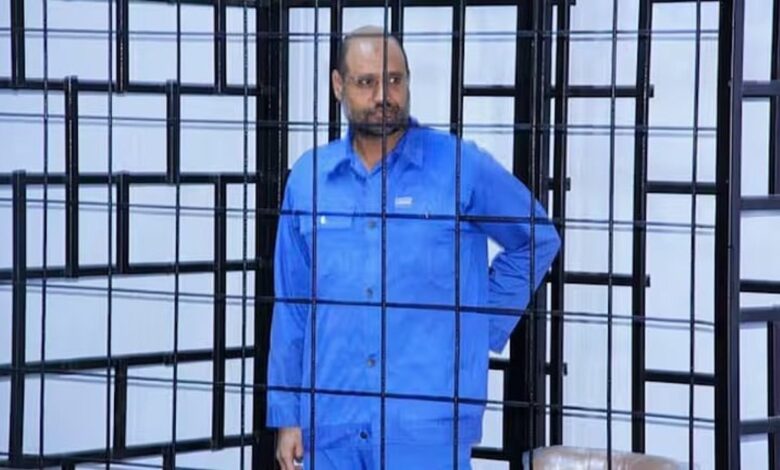
Tripoli: Saif al-Islam Gaddafi, son of former Libyan dictator Muammar Gaddafi and once considered his political heir, has been shot dead inside his residence, his office confirmed on Monday. The shocking incident has once again pushed Libya into the international spotlight, raising fresh concerns about political instability in the country.
According to officials from his political office, the 53-year-old leader was killed by unidentified gunmen who stormed his home. His death was confirmed by the head of his political bureau, who described the attack as a targeted assassination. Saif al-Islam was living in the western Libyan city of Zintan at the time of the incident.
Speaking to AFP news agency, his lawyer stated that a group of four armed men entered the residence and carried out the killing. “It was a planned and organized attack by a commando-style unit,” the lawyer said, adding that the assailants fled immediately after the shooting.


However, authorities have not yet revealed who was behind the murder or what the exact motive was. No organization or group has claimed responsibility so far. Confusion has also emerged regarding the exact location of his death, as Saif al-Islam’s sister told Libyan television that he died near the Algerian border, contradicting earlier reports.
Saif al-Islam Gaddafi was widely regarded as the most influential of Muammar Gaddafi’s children and was often seen as his political successor. During his father’s rule, he played a key role in shaping Libya’s international relations and was known as the more reform-minded face of the regime.
Following the 2011 uprising that led to the downfall of Muammar Gaddafi’s four-decade rule, Saif al-Islam was captured by rebel forces and imprisoned. He spent nearly a decade in detention before being released. Since then, he had been trying to re-establish himself as a major political figure in Libya.
Although he did not hold any formal government position in recent years, he remained a powerful and influential personality in Libyan politics. Analysts say he had the ability to negotiate alliances and influence talks between rival factions in the war-torn nation.
His supporters viewed him as a potential unifying leader who could bring stability to Libya, which has been plagued by internal conflict since 2011. At the same time, critics accused him of trying to revive his family’s authoritarian legacy.
The assassination has sent shockwaves across Libya and is expected to further deepen political tensions. Security agencies have launched an investigation into the killing, but with the country still divided among rival power centers, finding those responsible may prove to be a difficult task.
Observers fear that the incident could trigger fresh violence in a nation already struggling to rebuild after years of turmoil.