Karnataka Agrees to Release Krishna Water to Telangana Farmers
Karnataka has agreed to release Krishna river water from the Narayanpur reservoir after Telangana sought assistance to protect standing crops and meet drinking water needs in Mahabubnagar.

The Karnataka government has agreed to release Krishna river water to Telangana following a request from the neighbouring state to protect crops in the erstwhile Mahabubnagar region. The decision comes as farmers dependent on the Jurala irrigation system face growing concerns over water availability.
According to The New Indian Express, Telangana had requested a continuous release of 5,000 cusecs a day for 30 days. The proposed supply is intended to support standing crops spread across around 5.5 lakh acres under the Jurala, Bhima, Nettempadu and Koilsagar irrigation projects.
The issue gained urgency after Telangana Chief Minister A Revanth Reddy and state ministers sought help from Karnataka Chief Minister D K Shivakumar. A delegation led by Telangana ministers Jupally Krishna Rao and Vakiti Srihari met Shivakumar and requested the release of Krishna water from Karnataka reservoirs.
The Karnataka government responded positively to the request, following discussions between officials and political representatives from the two states. Telangana officials subsequently moved to release water from the Jurala project for farmers after receiving the assurance from Karnataka.


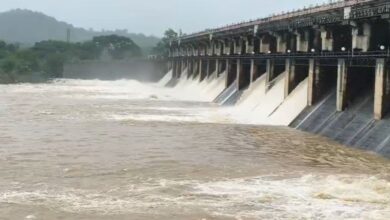
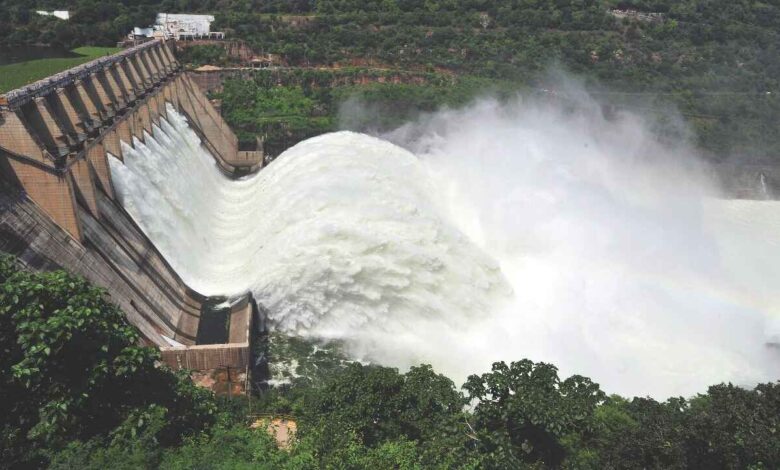
The water is expected to be supplied from the Narayanpur project in Karnataka before reaching the Jurala system in Telangana. Following the assurance, officials in Telangana opened the Jurala gates and began releasing water towards irrigation channels serving farming areas.
For farmers, the timing of the decision is important. A shortage of water during the crop season can put standing crops under considerable pressure, particularly in areas that depend heavily on irrigation projects. The proposed release is therefore expected to provide some relief to farming communities waiting for additional water.
The request also comes at a time when water management has become a sensitive issue across the Krishna basin. Telangana has been seeking greater availability for agriculture and drinking water, while Karnataka is simultaneously dealing with its own water requirements and a separate dispute concerning the release of Cauvery water to Tamil Nadu.
Earlier this month, Karnataka Water Resources Minister N Chaluvarayaswamy said the state planned to approach the Supreme Court over directions concerning the release of Cauvery water to Tamil Nadu. The minister said Karnataka had concerns about meeting its own drinking water and other requirements.
Against that background, Karnataka’s decision to assist Telangana with Krishna water is a separate river basin matter, but it highlights the competing demands that states face during periods of limited water availability.
The Jurala project, officially known as the Priyadarshini Jurala Project, is an important irrigation project in Telangana. It is located on the Krishna river near Kurvakonda in the Mahabubnagar region and plays a significant role in supplying irrigation water to farming areas downstream.
The project is also connected with drinking water requirements and power generation. Water entering Jurala from upstream sources can therefore support more than one need, with irrigation being particularly important during the crop season.
Telangana ministers have said that discussions with Karnataka had been underway for several days before the latest assurance. The state had formally approached Karnataka seeking water from the Almatti and Narayanpur reservoirs.
The Karnataka assurance was followed quickly by action on the Telangana side. Vakiti Srihari directed irrigation officials to release water to farmers under the Jurala project, after which the gates were opened.
The development has also become part of a wider political discussion in Telangana. Opposition leaders have raised questions about water availability and the management of the Jurala project, while ruling party ministers have defended the government’s efforts to secure water from Karnataka.
Telangana ministers Jupally Krishna Rao and Vakiti Srihari have said that the state approached Karnataka because farmers needed water for their crops. They have also criticised opposition claims about the availability and management of water at Jurala. Those political claims remain part of the ongoing debate between the parties.
For farmers in the Palamuru region and other areas dependent on the connected irrigation systems, the immediate focus is much simpler. They need water to reach their fields at the right time.
The proposed Krishna water release from Karnataka could provide temporary support to these agricultural areas, while also helping meet some drinking water requirements in villages dependent on the irrigation network. The actual benefit will depend on the quantity released, the duration of the supply and how efficiently it reaches the downstream canals.
Water sharing between neighbouring states often involves competing demands, reservoir conditions and regulatory considerations. The present development shows how inter state coordination can become important when farming communities face water shortages.
For now, Telangana has begun drawing water through the Jurala system after Karnataka’s assurance. The next stage will depend on the release from Karnataka and the movement of water through the connected irrigation network.
The development offers short term relief to farmers in parts of Telangana, while also keeping attention focused on how Karnataka manages its own water requirements alongside requests from neighbouring states.