Kejriwal escalates standoff with Delhi high court judge in liquor policy case

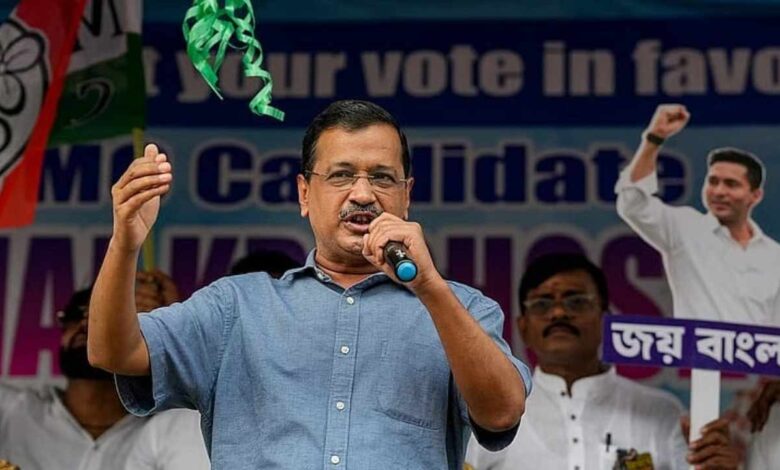
New Delhi: A fresh legal and political confrontation has emerged in the national capital as former Delhi Chief Minister Arvind Kejriwal has raised objections once again to the bench hearing the Delhi excise policy case, signalling a rare direct standoff with the judiciary.
Kejriwal, who is currently facing proceedings in connection with the liquor policy case, has formally communicated his refusal to participate in hearings before Justice Swarana Kanta Sharma of the Delhi High Court. In a letter addressed to the judge, the Aam Aadmi Party (AAP) chief stated that he would neither appear personally nor through legal counsel in further proceedings before the bench.
This is not the first time Kejriwal has objected to Justice Sharma presiding over the matter. Earlier, his plea seeking recusal of the judge was rejected by the High Court, which had clearly stated that the same bench would continue to hear the case.
Despite that setback, Kejriwal has now escalated his stance, invoking the path of “satyagraha” as a form of protest. In his communication, he expressed a loss of faith in receiving justice from the current bench and described his decision as a matter of “conscience.” He also indicated that he reserves the right to challenge recent High Court rulings before the Supreme Court.
At the core of Kejriwal’s objections are allegations of perceived bias. Citing RTI data, he claimed that the judge’s son had been assigned a significant number of cases by the prosecuting authority between 2023 and 2025, raising concerns of a potential conflict of interest.


He also pointed to the judge’s participation in events organised by certain legal bodies, arguing that such associations could create an impression of partiality, particularly given ideological differences with his party.
Justice Swarana Kanta Sharma, however, strongly dismissed these allegations while rejecting Kejriwal’s earlier plea. In a sharply worded order, the court termed the claims as based on “assumptions and insinuations” rather than concrete evidence.
The judge emphasised that yielding to such demands would amount to “surrender” and could set a dangerous precedent, allowing influential litigants to attempt to influence judicial proceedings through pressure tactics. The court also clarified that the professional engagements of a judge’s family members cannot be used to question judicial independence.
The development comes after a trial court, on February 27, 2026, discharged Kejriwal and 22 others in the excise policy case, citing insufficient evidence presented by the Central Bureau of Investigation (CBI). The agency subsequently challenged the order in the Delhi High Court.
During initial hearings in March, the High Court stayed certain observations made by the trial court against the investigating officer, describing them as prima facie flawed. This marked the beginning of a series of legal exchanges between the parties.
Legal experts note that Kejriwal’s refusal to participate in court proceedings represents an unusual and serious escalation. While litigants have the right to seek recusal of a judge under specific circumstances, outright non-participation could complicate legal proceedings and invite further judicial scrutiny.The move has sparked debate within legal and political circles about the limits of protest within judicial processes and the importance of maintaining institutional respect.
With Kejriwal indicating a possible challenge before the Supreme Court, the matter is expected to enter a new phase of legal scrutiny. The High Court, meanwhile, is likely to proceed in accordance with established legal procedures.As the standoff unfolds, the case continues to draw national attention, not only for its legal implications but also for the broader questions it raises about the relationship between political leadership and judicial institutions.