India–EU free trade agreement set to make cars, wine and medicines cheaper after 18-year wait

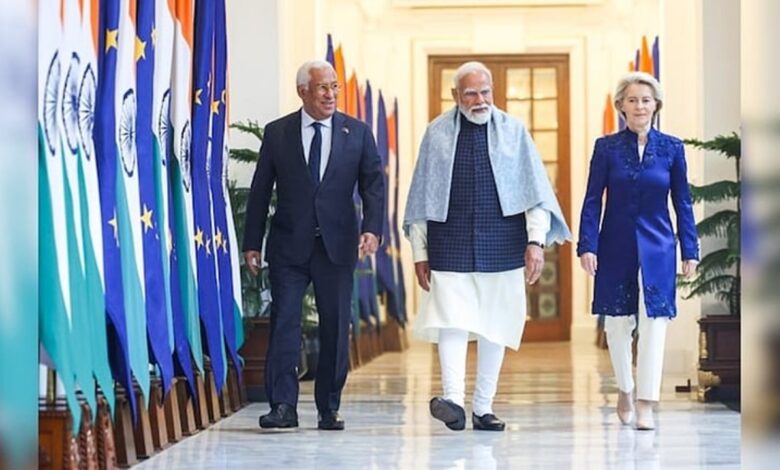
New Delhi: After nearly 18 years of negotiations, the long-awaited India–European Union Free Trade Agreement (FTA) is finally set to become a reality, promising wide-ranging benefits for consumers, exporters and key industries on both sides. Dubbed the “mother of all trade deals” by European Commission President Ursula von der Leyen, the agreement aims to significantly reduce tariffs, open up markets and deepen economic ties between India and the 27-member EU bloc.
One of the most visible impacts of the FTA will be on the automobile sector. Luxury European cars such as Mercedes-Benz, BMW and Audi currently attract import duties of over 100 per cent in India, making them prohibitively expensive. Under the agreement, cars priced above 15,000 euros (around ₹16 lakh) will see duties reduced from about 40 per cent initially to as low as 10 per cent over time. This phased reduction is expected to bring down prices by several lakhs, making premium vehicles more accessible to Indian buyers.
However, the concessions will be quota-based. According to officials from the commerce ministry, this approach has been adopted to protect India’s fast-growing domestic automobile industry, which is largely dominated by small and mid-sized cars priced between ₹10 lakh and ₹25 lakh. European manufacturers will not export cars priced below ₹25 lakh to India, though they are free to manufacture such models locally.


Another major beneficiary of the agreement will be the alcoholic beverages segment. Imported wines from France, Italy and Spain, which currently face import duties as high as 150 per cent, will become significantly cheaper. The FTA proposes reducing these duties to around 20 per cent, though the cuts will be implemented gradually over a period of five to ten years to cushion the impact on domestic producers. Notably, wines priced below 2.5 euros will not receive any tariff concessions, ensuring protection for India’s local wine market. In return, Indian wines will gain preferential access to EU markets.
The pharmaceutical and healthcare sectors are also poised for gains. Europe’s advanced medical technologies and specialty drugs, including treatments for cancer and other critical illnesses, are expected to become more affordable in India as import duties are reduced. At the same time, Indian pharmaceutical companies will gain improved access to all 27 EU markets, strengthening India’s position as a global supplier of affordable medicines.
The agreement further covers electronics and high-tech goods. Duties on aircraft, mobile phones and high-end electronic components imported from Europe are set to be eliminated or sharply reduced. This is likely to lower manufacturing costs for electronics produced in India and could eventually translate into cheaper gadgets for consumers.
In addition, zero-duty or low-duty access is proposed for key industrial inputs such as iron, steel and chemical products. This could reduce raw material costs for construction and manufacturing sectors, with potential downstream benefits for infrastructure development and housing.
Overall, the India–EU FTA is being seen as a major win for Indian exports, offering preferential access to one of the world’s largest and wealthiest markets. Sectors such as textiles, garments, leather goods and jewellery are expected to see a significant boost. As the agreement moves toward implementation, policymakers believe it could mark a turning point in India’s integration with global value chains, while delivering tangible benefits to consumers at home.