UPI Transactions Remain Free for Customers as Government Clarifies Charges
The government has clarified that customers will not be charged for making UPI payments, while India continues to expand its digital payment ecosystem and explore offline transaction technology.

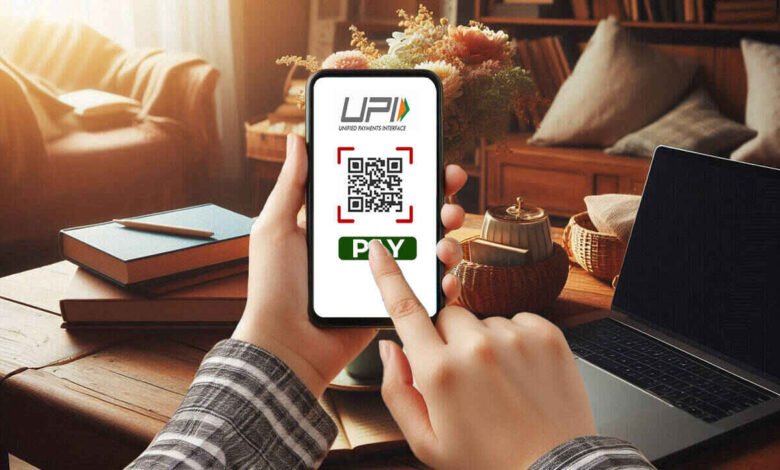
The central government has put to rest concerns over possible charges on Unified Payments Interface transactions, confirming that customers will not have to pay fees for person to person UPI payments. The clarification comes after recent discussions around changes to the Payment and Settlement Systems Act created uncertainty about whether users could eventually face charges for using UPI.
According to the information provided, the Ministry of Finance has made it clear that person to person transactions through UPI will remain free for customers. This means people sending money to friends, relatives or other individuals through UPI should not be required to pay a separate transaction fee.
The clarification is significant because UPI has become a routine part of everyday payments in India. From small purchases at local shops to larger digital payments, the platform has steadily become one of the country’s most widely used payment methods. The continued availability of free person to person transactions is expected to maintain confidence among users who rely on UPI for regular money transfers.
Government Clarifies Position on UPI Charges
The recent concern about possible UPI charges was linked to changes involving the country’s payment and settlement framework. This led to questions about whether transaction costs could eventually be passed on to customers.


The government has now clarified that customers will not be charged for UPI transactions. In particular, person to person payments will continue without a transaction fee.
The government has also explained the position regarding Merchant Discount Rate, commonly known as MDR. If such a charge is introduced for certain merchant transactions, it would apply only within specified limits and at a relatively low rate. The rate would also be significantly lower than MDR associated with some traditional card based payment transactions.
For ordinary UPI users, the key message remains straightforward. Sending money to another person through UPI will not result in a separate charge for the customer.
UPI Continues to Drive Digital Payments
India’s digital payment ecosystem has expanded rapidly over the past few years, with UPI playing a central role in that growth. The payment system has made it possible for users to transfer money almost instantly using smartphones and participating banking applications.
The supplied figures indicate that UPI processed approximately 2,366 crore transactions worth nearly Rs 29.9 lakh crore during July. These numbers highlight the enormous scale at which digital payments are being used across the country.
UPI has also attracted international attention as India continues to develop one of the world’s largest real time digital payment networks. The system has expanded beyond domestic use, with UPI based payment services becoming available in selected overseas markets.
The growth has also changed the way smaller businesses accept payments. Local retailers, street vendors, restaurants and service providers can accept digital payments without requiring customers to carry cash. For consumers, scanning a QR code or entering a UPI ID has become a familiar part of everyday transactions.
Offline UPI Payments Could Expand Access
Another development that could further increase the reach of UPI is the proposed ability to make payments without an active internet connection.
Offline payments could be particularly useful in locations where mobile connectivity is unreliable. Rural areas, remote regions and places with weak network coverage could benefit if users are able to complete transactions without depending on a continuous internet connection.
The proposed system is expected to use Near Field Communication technology. With compatible hardware, users could potentially tap an NFC enabled smartphone against a supported point of sale terminal to complete an offline UPI payment.
This approach could also prove useful in situations where internet connectivity is unavailable for temporary reasons. Travel environments and certain locations with limited network coverage are among the areas where such a system could provide an alternative payment option.
NPCI Certification Will Be Important
The proposed offline payment system will require compatible point of sale terminals to meet the necessary technical requirements. The National Payments Corporation of India is expected to play an important role in certifying terminals that can support the technology.
Certification will be important because offline transactions require additional safeguards. Unlike a conventional online UPI payment, an offline transaction cannot immediately depend on a live connection with the payment network for verification.
Reports cited in the supplied information suggest that the offline facility could initially have a transaction limit of up to Rs 2,000 per payment. Such a limit would help keep the feature focused on smaller everyday transactions while providing an additional layer of convenience.
The exact rollout, availability and operating conditions of the offline facility would depend on the final implementation and certification process.
What the Clarification Means for Users
For consumers, the government’s latest clarification provides reassurance that UPI will continue to remain a convenient payment option without direct charges for person to person transfers.
The development is particularly relevant because UPI has become deeply integrated into daily financial activity. People use it to divide expenses, send money to family members, pay service providers and make purchases at physical stores and online platforms.
Keeping person to person payments free also supports the broader objective of encouraging digital transactions. Customers are more likely to continue using digital payments when the process remains simple, quick and affordable.
At the same time, the discussion around merchant charges shows that India’s digital payment ecosystem is continuing to evolve. As transaction volumes increase, payment infrastructure must balance affordability for users with the costs involved in maintaining and expanding the system.
The next phase of UPI development is therefore expected to focus not only on transaction volume but also on accessibility, reliability and new payment technologies. Offline UPI could become particularly important in areas where internet connectivity remains a challenge.
With the government reaffirming that customers will not be charged for person to person UPI transactions, the platform’s role in India’s digital economy remains strong. The possible introduction of offline payment capabilities could further extend its usefulness, giving consumers another way to make digital payments when conventional internet connectivity is not available.