Bengaluru Traffic Congestion Ranks First in India and Second Globally
Bengaluru continues to face severe traffic congestion as rising vehicle numbers and busy roads make daily commutes longer, with the city recording one of the highest congestion levels worldwide.

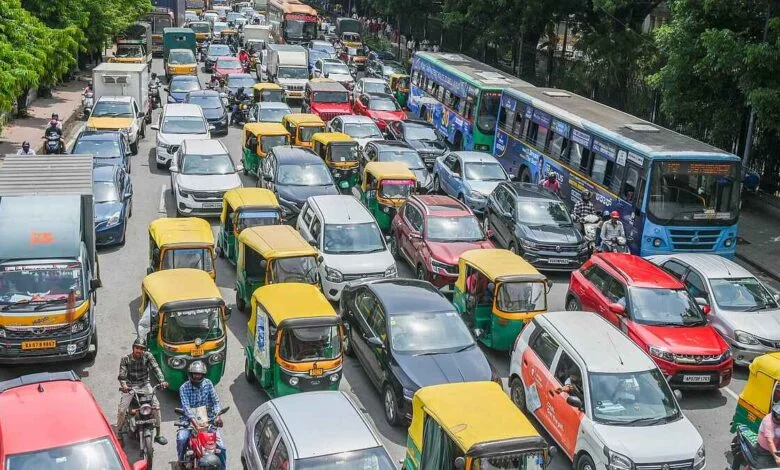
Bengaluru has once again drawn attention for its traffic situation, with a recent traffic report placing the city at the top of the list in India and second globally for congestion. The findings highlight the growing challenge faced by commuters across the city as increasing numbers of vehicles compete for limited road space.
According to the report, travelling a distance of 10 kilometres in Bengaluru takes about 35.18 minutes on average. This places the Karnataka capital ahead of other major Indian cities included in the study. Kolkata reportedly follows Bengaluru, while Pune occupies the third position, with commuters in Pune taking around 33.20 minutes to cover 10 kilometres.
For people who travel through Bengaluru regularly, the findings may not come as a surprise. Long queues during peak hours have become a familiar part of everyday life, particularly on major roads connecting residential neighbourhoods with business districts and technology corridors. A journey that appears short on a map can often take considerably longer because of traffic signals, bottlenecks, road works and the sheer volume of vehicles.
The report is based on research by TomTom, a navigation technology company that studies traffic conditions across cities around the world and publishes its Traffic Index. The index examines factors such as travel times and congestion levels to provide a broader picture of urban mobility.


Bengaluru has already developed a reputation as one of the world’s most congested cities. The latest ranking once again puts the spotlight on the difficulties faced by commuters and the need for long term solutions rather than temporary traffic management measures.
One of the major factors behind the situation is the continuous growth in the number of vehicles on Bengaluru roads. Reports indicate that thousands of new vehicles are being added to the city every day. With the total vehicle population already estimated to be extremely high, the pressure on existing roads continues to increase.
The growing number of private vehicles is particularly challenging during office hours. Bengaluru is home to a large technology and business ecosystem, and thousands of employees travel across the city every day. The concentration of workplaces in certain areas means that traffic can become particularly heavy during morning and evening commuting periods.
The traffic problem is not limited to one part of Bengaluru. Major stretches connecting the central parts of the city with areas such as the technology corridors regularly experience heavy vehicle movement. Residential expansion has also increased travel demand as more people live farther from their workplaces.
Authorities have been taking several steps to improve road conditions and manage congestion. Urban development officials have been looking at removing obstructions from footpaths and improving pedestrian movement. The objective is to make roads more efficient while ensuring that footpaths remain available for people rather than being occupied by parked vehicles or other obstructions.
Action has also been taken against abandoned vehicles occupying valuable road space. Notices have been issued to owners of vehicles that have been left unattended for extended periods. Vehicles that were not removed within the specified period have faced further action, including seizure and possible auction procedures.
Such measures could help create additional usable road space in areas where abandoned or improperly parked vehicles contribute to bottlenecks. However, traffic experts and commuters generally recognise that these steps alone cannot solve Bengaluru’s larger congestion problem.
The city needs a broader approach involving public transport, better road planning, traffic management, parking facilities and improved connections between different parts of the metropolitan region. The continued growth of the city means that simply adding more vehicles to existing roads is unlikely to provide a sustainable answer.
Public transportation will remain particularly important in reducing pressure on Bengaluru’s roads. A larger and more convenient public transport network can encourage commuters to leave private vehicles at home. Better coordination between different forms of public transportation could also make daily travel easier for people who currently depend heavily on cars and two wheelers.
The latest congestion ranking is therefore more than just another traffic statistic for Bengaluru. It reflects a problem that affects working professionals, students, business owners, delivery workers and families travelling across the city every day.
The situation also has an economic impact. Longer travel times mean that people spend more hours commuting, while businesses face challenges related to employee travel, deliveries and logistics. Increased congestion can also affect fuel consumption and add stress to daily journeys.
Bengaluru’s position as India’s technology capital makes the issue even more significant. The city continues to attract businesses, workers and new residents, which means travel demand is likely to remain high. Without matching improvements in transport infrastructure, congestion could become an even bigger challenge in the coming years.
The latest report should therefore serve as a reminder that Bengaluru’s traffic problem requires sustained attention. Clearing footpaths, removing abandoned vehicles and improving traffic enforcement can provide local benefits, but the larger issue will require coordinated planning across transport and urban development.
For commuters, the immediate reality remains difficult. Covering just 10 kilometres can take more than half an hour under average conditions, and the journey can become much longer during peak periods or when heavy rain, road incidents or construction disrupt traffic flow.
As Bengaluru continues to expand, managing mobility will become increasingly important for the city’s future. The challenge now is to ensure that economic growth does not come at the cost of increasingly difficult daily travel. The latest ranking has once again placed Bengaluru’s traffic problem on the global map, but it also underlines the need for practical solutions that can make everyday movement faster, safer and more reliable.