SIM Lock Can Add Extra Protection Against Mobile Number Misuse
SIM Lock can provide an extra layer of protection for mobile numbers connected to banking, UPI and social media, although users should also follow basic digital security practices.

A mobile number today is connected to much more than calls and text messages. Many people use the same number for banking services, UPI payments, social media accounts and other online platforms. That makes protecting the SIM card an important part of basic digital security.
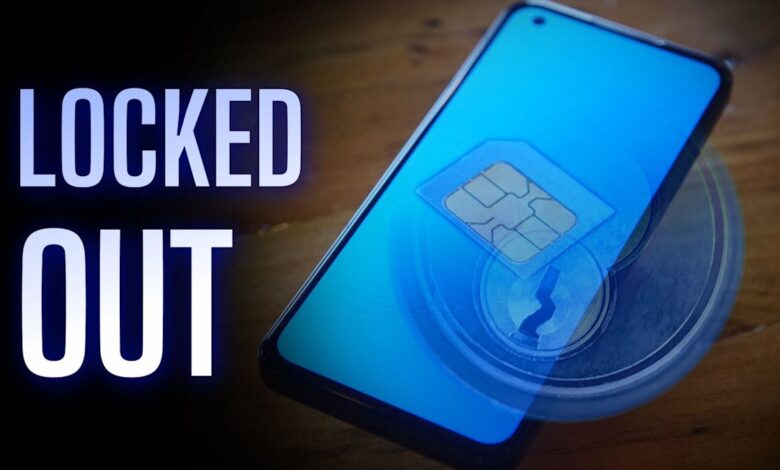
One useful feature available on many smartphones is SIM Lock. Once enabled, the phone can ask for a SIM PIN when the device is restarted or when the SIM is placed in another compatible phone. Without the correct PIN, the SIM cannot be used normally.
This can be particularly useful if someone gets physical access to your SIM card. A screen lock protects access to the phone itself, but it does not provide the same protection for a SIM that is removed and inserted into another device. Using both types of protection can therefore provide an additional security layer.
The exact steps for enabling SIM Lock depend on the phone and its software. On many Android devices, users can look under Settings and then check Security, Privacy or SIM related options. The name and location of the feature can differ between smartphone brands.


On an iPhone, the feature can generally be accessed through Settings, followed by Cellular or Mobile Service and then SIM PIN. When enabling the feature for the first time, the existing SIM PIN may be required.
The default SIM PIN is not necessarily the same for every mobile network. Users should therefore avoid entering random numbers if they do not know the existing PIN. The correct information can usually be obtained from the telecom operator or the SIM documentation.
Forgetting the SIM PIN can create another problem. Entering an incorrect PIN repeatedly may cause the SIM to become blocked. In such a situation, a PUK code may be required to restore access.
Users should not keep guessing the PIN if they are unsure about it. Repeated incorrect attempts can make the recovery process more complicated and may require assistance from the telecom operator.
It is also important to understand that SIM Lock is not a complete solution against online fraud. It mainly adds protection to the SIM itself. It cannot prevent scams in which a person voluntarily shares sensitive information with a fraudster.
Banking passwords, UPI PINs and OTPs should never be shared with unknown people. Users should also be cautious about suspicious calls, messages and links that ask for banking or account information.
If a phone or SIM card is lost or stolen, users should contact their telecom operator as soon as possible. Banks and other important service providers should also be informed when there is a risk that the mobile number or related accounts could be misused.
A SIM PIN is therefore best viewed as one part of a wider security routine. Keeping the phone protected with a screen lock, using strong account passwords and refusing to share confidential banking information can provide broader protection.
For people whose mobile number is connected to several important services, enabling SIM Lock is a simple step worth considering. It does not eliminate every type of cyber fraud, but it can make unauthorised use of the physical SIM more difficult.