KETO Motors Unveils Ethanol Powered Mobile EV Charging Technology in India
KETO Motors has introduced an ethanol powered mobile EV charging solution that generates electricity without relying on the grid offering flexible charging for highways remote regions emergencies fleet operations nationwide.

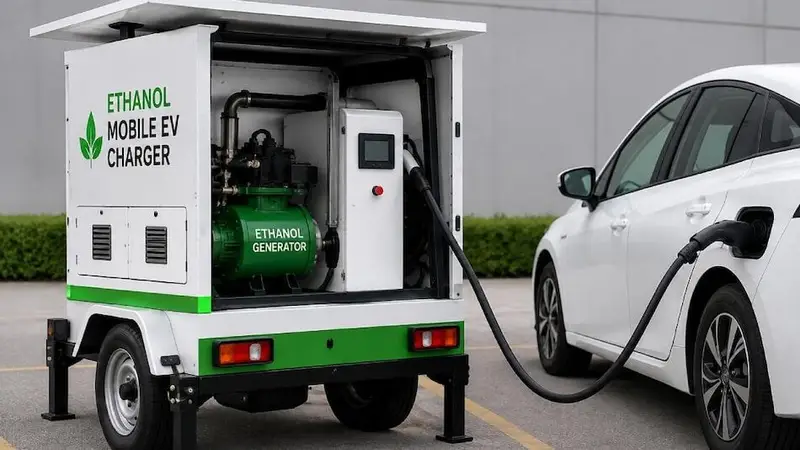
India’s electric mobility ecosystem has received a fresh boost with the introduction of an innovative ethanol based mobile EV charging system designed to reduce dependence on conventional power infrastructure. The new technology, unveiled by KETO Motors in Hyderabad, aims to provide electric vehicle charging even in locations where access to the electricity grid is limited or unavailable. Alongside the charging solution, the company also showcased its newly developed nine metre commercial electric bus, highlighting its broader plans for the country’s clean mobility sector.
The newly introduced charging technology works differently from conventional charging stations. Instead of drawing electricity from the power grid, the system uses ethanol as a fuel source to generate electricity inside a specially designed mobile charging unit. The electricity produced is then supplied to electric vehicles through a DC fast charger. This means the vehicle itself is not powered directly by ethanol. Instead, ethanol is used to produce the electrical energy required to recharge the battery.
As India continues to witness steady growth in electric vehicle adoption, charging infrastructure remains one of the biggest challenges, especially in rural areas and regions where grid connectivity is either weak or unavailable. KETO Motors believes its mobile charging system can help bridge this gap by bringing charging facilities directly to vehicles rather than requiring drivers to travel long distances in search of charging stations.
One of the biggest advantages of the technology is its flexibility. The mobile charging unit can be transported wherever it is needed, making it useful for highways, temporary public events, industrial sites, construction projects, disaster affected areas and remote regions. Fleet operators can also deploy the system to recharge multiple vehicles without investing in permanent charging infrastructure.


Industry experts believe such portable charging solutions could complement the existing network of public charging stations instead of replacing them. In areas where installing a permanent charging facility is expensive or impractical, a mobile charging system could serve as a practical alternative. It could also help during emergency situations where regular electricity supply is disrupted.
The technology is also expected to reduce dependence on large scale electrical infrastructure. Setting up traditional EV charging stations often requires dedicated power connections, transformers and extensive wiring. With an ethanol powered mobile unit, much of this infrastructure may not be necessary in certain use cases. This can potentially lower deployment costs and improve accessibility in underserved locations.
Another key highlight of the technology is its use of ethanol, which is widely regarded as a cleaner alternative to conventional fossil fuels. Since ethanol is a biofuel produced from agricultural feedstock, it generally has a lower carbon footprint than diesel generators that are often used as temporary power sources. While emissions are not completely eliminated, the use of ethanol may contribute to cleaner mobile charging operations compared to traditional fuel powered generators.
The system effectively functions as a portable power station capable of generating electricity whenever required. This approach offers greater operational flexibility for organisations managing large EV fleets or operating in regions where grid availability cannot always be guaranteed. Companies involved in logistics, public transportation and industrial operations could potentially benefit from such mobile charging solutions.
During the launch event, KETO Motors also introduced its first nine metre commercial electric bus. According to the company, the vehicle has been developed with seating capacity for around thirty five passengers and is intended primarily for employee transportation and other commercial mobility requirements. The bus reflects the company’s effort to expand beyond charging technology into electric public transport solutions.
Although the launch has generated considerable interest, several technical details about the charging system have not yet been disclosed. The company has not revealed the exact charging output, charging speed, maximum number of vehicles that can be supported simultaneously or the overall operating capacity of the mobile unit. Information regarding pricing, commercial rollout timelines and large scale deployment plans is also awaited.
Industry observers believe these details will play an important role in determining how widely the technology can be adopted. Factors such as operational costs, charging efficiency, fuel consumption and maintenance requirements will influence its commercial success. Customers and fleet operators are expected to closely monitor future announcements before making investment decisions.
The concept of ethanol powered mobile charging is not entirely new, as similar demonstrations have previously been showcased in India. However, KETO Motors’ latest launch indicates growing interest in alternative charging solutions that can support the country’s expanding electric mobility market. With electric vehicle ownership increasing rapidly, innovative approaches such as portable charging systems may become valuable additions to the existing charging ecosystem.
Government initiatives promoting cleaner fuels and domestic ethanol production could also strengthen the prospects of such technologies. India has already been encouraging greater ethanol blending in conventional fuels, and extending the use of ethanol to power mobile charging systems may create additional opportunities for renewable energy integration within the transportation sector.
As the country’s EV market continues to evolve, charging accessibility remains a critical factor influencing customer confidence. Technologies capable of delivering reliable charging services beyond urban centres may help accelerate electric vehicle adoption by addressing one of the industry’s most significant infrastructure challenges.
While the long term commercial viability of ethanol powered mobile charging will depend on operational performance and economic feasibility, the launch represents another step toward diversifying India’s EV charging landscape. More detailed specifications and deployment plans are expected in the coming months, which will provide a clearer picture of how this technology could contribute to the future of electric mobility.