Karnataka Rain Deaths Fall This Year as Lightning Remains Major Cause
Karnataka has recorded fewer rain related deaths this monsoon than recent years, but lightning remains a major cause, with authorities expanding early warning systems across the state.

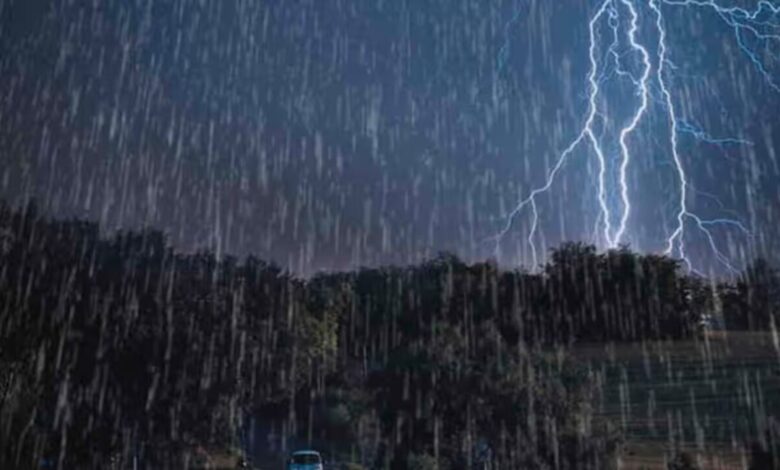
Karnataka has recorded a lower number of deaths linked to rain and natural disasters this monsoon compared with several recent years, according to figures cited in reports based on state disaster management data.
So far this monsoon, 70 people have reportedly died in rain related incidents across the state. Lightning accounts for more than half of those deaths, with 36 fatalities reported from lightning strikes.
The remaining deaths have been linked to different weather related incidents. Seventeen people reportedly died after houses or walls collapsed, while 11 deaths were associated with heavy rain, flooding and trees falling during strong winds. Three people died in landslides and another three lost their lives after drowning in water bodies.
The figures show that lightning continues to be one of the most serious weather related hazards in Karnataka, particularly for people working outdoors.


State disaster management data cited in recent reports indicate that 779 people have died in rain related incidents since 2022 to 2023, with 340 of those deaths attributed to lightning. The longer term figures are also significant, with state monitoring data recording a large number of lightning related fatalities over the past decade.
Official Karnataka disaster management information confirms that the state has developed dedicated systems to monitor lightning activity and issue location specific warnings. The Karnataka State Natural Disaster Monitoring Centre operates 11 lightning detection sensor stations across the state.
Lightning remains a particular concern for farming communities. People working in agricultural fields can be exposed to thunderstorms with little immediate shelter nearby. A national disaster management audit has noted that a very large share of lightning related deaths occurs among people working in fields, particularly farmers.
Belagavi has historically recorded a high number of lightning related deaths in Karnataka. Other districts that have featured prominently in long term state data include Kalaburagi, Vijayapura, Bidar, Hassan, Koppal, Haveri, Yadgir, Tumakuru, Gadag and Raichur.
The risk is not limited to one particular part of the state. Lightning incidents can occur during sudden thunderstorms in both rural and urban areas. Recent incidents in Kalaburagi and Belagavi districts have again highlighted the danger to people outdoors during storm activity.
Karnataka has been using technology to improve the time available for people to respond to lightning warnings. The state developed the Sidilu mobile application to provide location specific information about lightning activity and safety measures.
According to the Karnataka government, the Sidilu system can issue warnings roughly 30 to 45 minutes before a lightning strike, using information collected through the states lightning detection network. The system also provides safety advisories and location based alerts.
The Sidilu service is supported by real time lightning data collected through ground based sensors. The information is processed by KSNDMC and used to generate warnings for areas where dangerous lightning activity is detected.
Warnings are not restricted to the mobile application. Karnataka also uses SMS based alerts and the Varuna Mitra service to distribute weather information and warnings. Government information says the system has a database covering millions of farmers and members of the public at the gram panchayat level.
However, getting a warning to people in the field remains a challenge. Mobile network availability can vary in rural agricultural areas, and some farmers may not have their phones with them while working. These practical difficulties can reduce the effectiveness of even an advanced warning system.
The importance of timely warnings has become clearer as sudden thunderstorms continue to cause fatalities. Recent reports have documented lightning deaths in different parts of Karnataka during periods of heavy rain and thunderstorms.
The state has also been working on improving public awareness because technology alone cannot eliminate lightning related deaths. Official guidance encourages people to use weather warning applications and seek safer locations when lightning activity is expected.
The current monsoon figures are lower than the previous year cited in the source data. During 2025 to 2026, 147 people reportedly died in rain related incidents, including 64 lightning fatalities. This years reported total of 70 deaths is therefore considerably lower so far.
The lower death toll does not mean the danger has disappeared. Lightning can develop quickly during thunderstorms, and recent incidents show that fatalities can still occur when people are caught outdoors.
For Karnataka, the continuing challenge is to ensure that warnings reach people quickly and that communities know how to respond when an alert arrives. This is particularly important in agricultural areas, where people may be working outdoors when thunderstorms suddenly develop.
With the states network of lightning sensors, Sidilu alerts and SMS based warnings already in place, authorities have several tools available to reduce the risk. The effectiveness of these systems will depend not only on accurate detection but also on how quickly warnings reach vulnerable communities.