

India Launches Its First Hydrogen Powered Train in Haryana With a Major Push for Clean Rail Technology
India has launched its first hydrogen powered train introducing cleaner railway technology that reduces emissions lowers noise and supports sustainable transportation through advanced fuel cell powered operations nationwide.

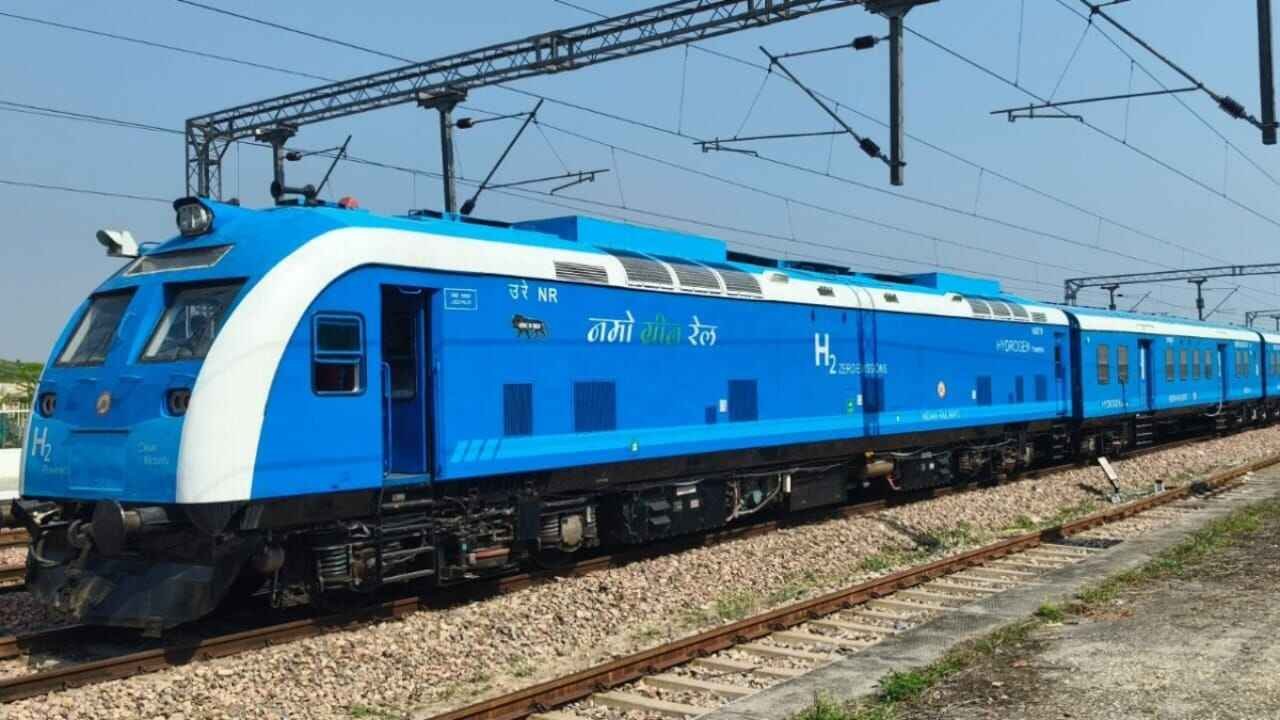
India has taken a significant step towards sustainable transportation with the launch of its first hydrogen powered train in Haryana. The new service marks the country’s entry into an exclusive group of nations that have adopted hydrogen fuel cell technology for railway operations. The initiative is being viewed as an important milestone in India’s clean energy journey and reflects the government’s growing focus on reducing dependence on conventional fossil fuels.
Unlike traditional diesel powered trains, hydrogen trains generate electricity through a fuel cell system instead of burning fuel directly. This technology produces minimal environmental impact while delivering reliable performance, making it one of the most promising alternatives for future railway transportation. The project also supports broader national goals of promoting green mobility, energy independence and modern infrastructure.
The introduction of the hydrogen train is expected to contribute to cleaner public transport while reducing pollution and operational noise. Railway experts believe that hydrogen technology has the potential to transform rail networks, particularly on routes where electrification is difficult or expensive. As countries around the world continue investing in low carbon transport solutions, India has now joined the global effort by bringing this advanced technology into its railway system.
The heart of the hydrogen train is its fuel cell based propulsion system. Instead of relying on diesel engines, the train stores hydrogen gas inside specially designed high pressure tanks. During operation, the hydrogen is supplied to a fuel cell, where it reacts with oxygen drawn from the surrounding air. This electrochemical process generates electricity without combustion, making it far cleaner than conventional fuel based systems.


The electricity produced by the fuel cell powers the train’s electric motors while also charging the traction batteries used during operation. Since the system does not burn fuel in the traditional sense, there is no release of harmful exhaust gases such as carbon dioxide from the train’s tailpipe. The only byproduct generated during the process is water vapour, making hydrogen powered trains one of the cleanest transportation technologies currently available.
This environmentally friendly operation is one of the biggest reasons hydrogen trains are attracting global attention. As governments worldwide seek to reduce greenhouse gas emissions and improve air quality, hydrogen powered rail systems offer a practical solution that combines clean energy with reliable long distance transportation.
Another major advantage of hydrogen trains is their quiet operation. Diesel locomotives generate considerable engine noise and vibration during travel, especially while accelerating or climbing gradients. Hydrogen fuel cell systems operate much more smoothly, resulting in significantly lower noise levels. This not only improves passenger comfort but also reduces noise pollution for communities living close to railway tracks.
Passengers travelling on hydrogen powered trains are also expected to experience a more comfortable journey because the reduced vibration creates a smoother ride. Lower mechanical stress on components may also contribute to improved maintenance efficiency over the long term.
One of the strongest benefits of hydrogen technology is its ability to cover longer distances before refuelling. While battery electric trains depend entirely on stored electrical energy and often require large battery packs, hydrogen trains can travel much farther after a single refuelling session. This makes them particularly suitable for regional and intercity rail routes where continuous charging infrastructure may not be available.
Refuelling hydrogen tanks also takes considerably less time than recharging very large battery systems used in electric trains. Faster turnaround times can improve operational efficiency and allow railway operators to maintain regular schedules with fewer delays related to energy replenishment.
The launch of the hydrogen train is also expected to encourage technological innovation within India’s railway sector. Developing expertise in hydrogen storage, fuel cell manufacturing, safety systems and maintenance could create new opportunities for domestic industries while supporting the country’s long term clean energy ambitions.
Experts note that hydrogen powered trains are especially useful on railway lines that have not yet been electrified. Instead of investing heavily in overhead electric infrastructure across every route, railway authorities can use hydrogen technology to provide environmentally friendly transportation without requiring continuous electrical supply along the tracks.
Although hydrogen powered trains offer numerous environmental advantages, successful expansion will depend on building hydrogen production facilities, storage infrastructure and refuelling stations. Producing green hydrogen using renewable energy sources will further increase the environmental benefits by ensuring that the entire energy cycle remains clean and sustainable.
Countries across Europe and Asia have already begun introducing hydrogen trains as part of their efforts to reduce carbon emissions from public transport. India’s entry into this field demonstrates its intention to remain aligned with global advances in sustainable mobility while strengthening domestic capabilities in advanced railway technology.
The new train also supports broader national initiatives focused on clean energy, self reliance and infrastructure modernization. Railway officials believe hydrogen powered transport can complement electrification projects and provide an additional solution for reducing dependence on imported fossil fuels.
As the technology matures and supporting infrastructure expands, hydrogen powered trains could gradually become a familiar sight across more railway routes in the country. Their combination of zero tailpipe emissions, quieter operation, faster refuelling and long range capability makes them a promising alternative for the future of rail transportation.
The successful introduction of India’s first hydrogen powered train marks more than just a technological achievement. It represents a significant move towards cleaner mobility, environmental responsibility and innovation in one of the world’s largest railway networks, opening the door for a new era of sustainable transportation.