Karnataka Bans Plaster of Paris Ganesh Idols in Village Panchayat Areas Ahead of Festival
Ahead of the Gauri Ganesh festival Karnataka has tightened environmental rules by restricting Plaster of Paris Ganesh idols in village panchayat areas to protect water bodies and public health

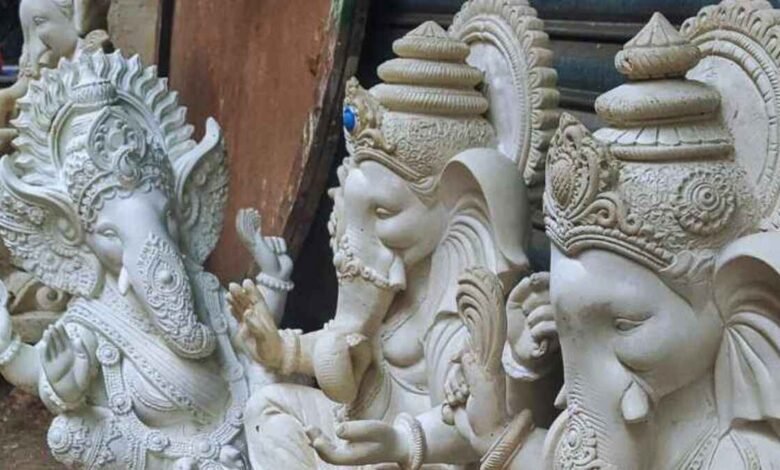
The Karnataka government has announced strict measures to prevent water pollution during the upcoming Gauri and Ganesh festival celebrations by prohibiting the installation, manufacture, storage, transportation and immersion of Plaster of Paris Ganesh idols within all Gram Panchayat limits across the state. The decision has been taken with the objective of protecting lakes, rivers, ponds, wells and other natural water sources from harmful contamination during the festive season.
With preparations for the festival already underway across Karnataka, authorities have begun issuing fresh instructions to local bodies to ensure that only environmentally friendly idols are used in rural areas. Officials believe the move will significantly reduce pollution caused by chemical based idols while encouraging communities to return to traditional clay idols that naturally dissolve in water without causing long term ecological damage.
The latest directive was issued by Forest Environment and Ecology Minister Eshwar Khandre, who instructed the Rural Development Department to strictly enforce the existing government orders banning Plaster of Paris idols. The minister also directed officials to coordinate with the Karnataka State Pollution Control Board to prevent the manufacture, storage, transport and sale of prohibited idols before the festival begins.
According to the government, Plaster of Paris idols pose a serious threat to the environment because they are manufactured using calcium sulfate hemihydrate and are often coated with chemical paints containing hazardous heavy metals. These paints may contain substances such as mercury, cadmium, lead and other toxic compounds that can enter lakes and rivers after idol immersion. Once these chemicals mix with water they can affect aquatic life, contaminate drinking water sources and create long term environmental damage.


Officials explained that immersion of such idols also affects fish and other aquatic organisms by reducing water quality and increasing chemical pollution. Since many rural communities depend directly on ponds, lakes and wells for drinking water, irrigation and livestock needs, protecting these water bodies has become a major priority for the state government.
The government has reminded all Gram Panchayats that the restriction is not a newly introduced rule. A government order issued in September 2023 had already prohibited the manufacture, sale, transportation and immersion of Plaster of Paris idols across the state. Authorities said the Karnataka High Court had also directed strict implementation of the order, making it necessary for all departments to ensure complete compliance during the upcoming festival season.
As part of the latest enforcement drive, Gram Panchayats have been instructed to launch awareness campaigns among residents, idol makers, festival committees and local organizations. The objective is to educate people about the harmful environmental impact of chemical based idols while encouraging the use of eco friendly alternatives made from natural clay and biodegradable materials.
Officials have clarified that the restrictions are not intended to interfere with religious practices. Instead, the government has emphasized that the focus is on protecting natural resources while allowing people to celebrate the festival with equal devotion using environmentally safe idols. Clay idols are considered a sustainable alternative because they dissolve naturally without releasing harmful chemicals into rivers or lakes.
The government also believes that promoting eco friendly celebrations reflects the cultural significance of Lord Ganesha, who is traditionally associated with nature and harmony. By encouraging idols made from natural materials, authorities hope to preserve both religious traditions and environmental balance.
District administrations, Panchayat Development Officers and local enforcement teams have been directed to monitor compliance closely. Officials may conduct inspections at manufacturing units, storage facilities and transport checkpoints to ensure banned idols are not distributed within village panchayat limits. Necessary action may also be initiated against those found violating the government orders.
The Karnataka State Pollution Control Board will play a key role in assisting local authorities by providing technical guidance and helping monitor compliance during the festival period. Environmental experts have repeatedly warned that increasing use of chemical based idols has contributed to rising pollution levels in water bodies over the past several years.
Apart from enforcement, the government wants communities to actively participate in making this year’s celebrations greener. Residents are being encouraged to purchase idols made from clay, natural colors and biodegradable materials. Festival organizers have also been advised to create separate arrangements for eco friendly idol immersion wherever required.
Environmental groups have welcomed the government’s decision, stating that reducing chemical pollution during major festivals can significantly improve the health of lakes and rivers across Karnataka. They believe greater public awareness and community participation will be essential for the success of the initiative.
Authorities have appealed to citizens to cooperate with local administrations and follow the guidelines in the larger interest of environmental conservation. They have also urged festival committees to ensure that celebrations remain peaceful, respectful of religious sentiments and environmentally responsible.
With Gauri and Ganesh festivities expected to attract large gatherings across Karnataka, the government hopes that widespread adoption of eco friendly idols will help protect water resources for future generations while allowing devotees to celebrate one of the state’s most cherished festivals responsibly. The administration has made it clear that environmental protection and religious celebrations can go hand in hand when sustainable practices are embraced by the public.