Uniform Civil Code Only Way to Ensure Equal Rights for Women: Supreme Court

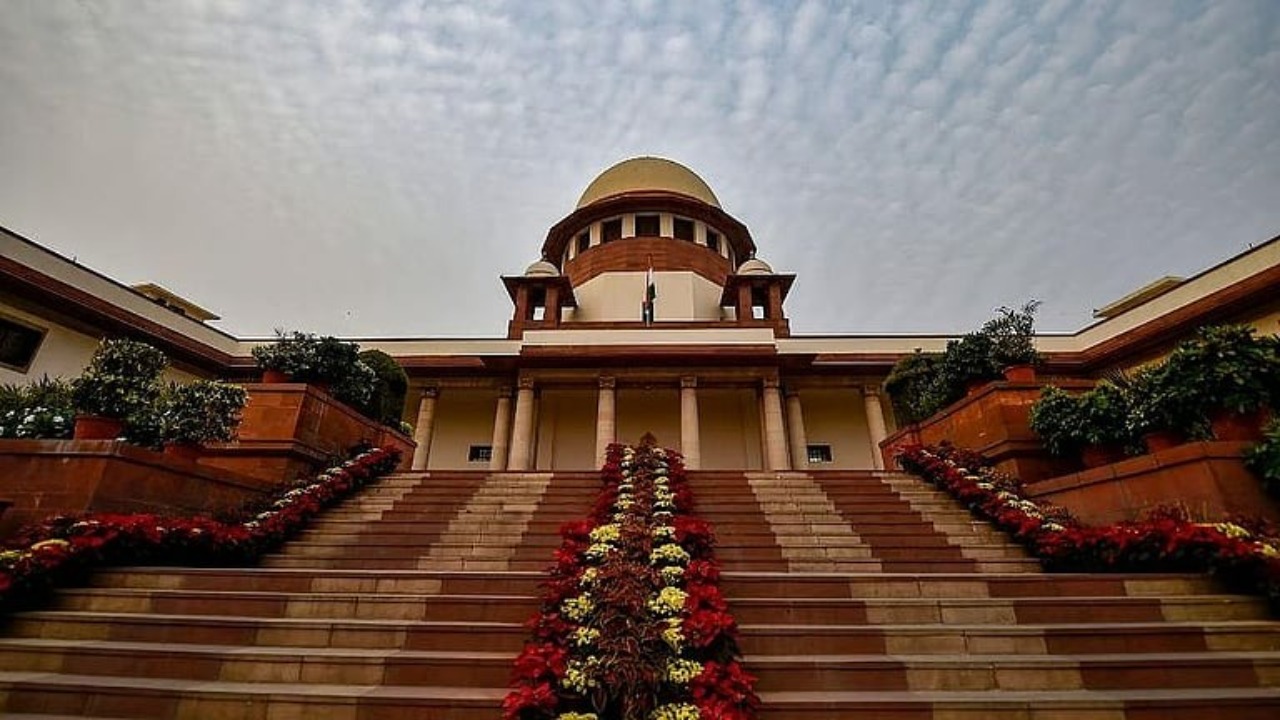
New Delhi: The debate over the implementation of the Uniform Civil Code (UCC) resurfaced in the Supreme Court of India on Tuesday, with the top court observing that a uniform civil law across the country could be the only effective way to ensure equal rights for women of all communities.
The observation came during the hearing of a batch of petitions alleging violation of women’s rights under Muslim personal law, particularly in matters of inheritance governed by Shariat principles. A bench headed by Chief Justice of India Surya Kant and comprising Justices R. Mahadevan and Joymalya Bagchi heard the matter and raised key questions on legal uniformity and gender justice.
During the proceedings, the bench noted that a significant section of Muslim women may be deprived of equal inheritance rights under the existing personal law system. The court asked what legal framework would govern inheritance if provisions under Sharia law were set aside. In response to the broader issue of ensuring equal rights for women, the bench remarked that implementing a Uniform Civil Code across India could be a viable solution.
Senior advocate Prashant Bhushan, appearing for the petitioners, argued that personal laws governing inheritance cannot be protected under Article 25 of the Constitution, which guarantees freedom of religion. According to him, inheritance is a civil right and not an essential religious practice. He pointed out that after the landmark Shayara Bano case verdict, the legal landscape has evolved, and the issue of gender equality within personal laws requires fresh examination.


Bhushan also submitted that Muslim women do not enjoy the same inheritance rights as Muslim men under the current legal framework. The petitioners argued that such disparities contradict constitutional guarantees of equality and justice.
However, the Supreme Court also acknowledged that several social and legal disparities exist across different communities in India, including among tribal groups that follow distinct customary laws. The bench questioned whether all such inequalities could be addressed solely through judicial intervention.
During the hearing, the court also touched upon issues such as polygamy, noting that not all communities uniformly follow the principle of monogamy. At the same time, the judges clarified that declaring all instances of polygamy unconstitutional may not fall entirely within the judiciary’s domain.
Justice Bagchi observed that implementing Directive Principles such as a Uniform Civil Code ultimately lies within the authority of the legislature. He also noted that the Supreme Court has previously recommended the implementation of the UCC in several judgments.
At the end of the hearing, the bench directed the petitioners to amend their plea and include suggestions on what legal framework should govern inheritance if Sharia provisions are struck down. After Bhushan agreed to modify the petition accordingly, the court adjourned the matter for further hearing on a later date.