Supreme court allows class 10 admit card, certificate as supporting documents for voter roll revision

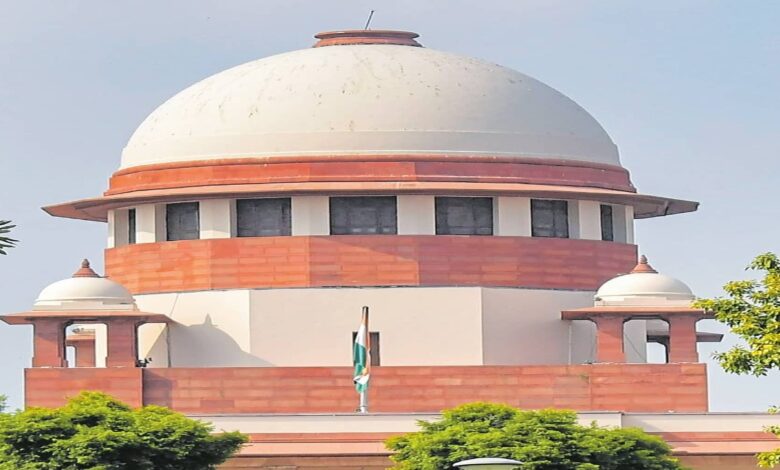
New Delhi : The Supreme Court of India has clarified that Class 10 examination admit cards and passing certificates can be submitted as supporting identity documents during the Special Intensive Revision (SIR) of electoral rolls in West Bengal. However, the court made it clear that such documents would only serve as supplementary proof and not as standalone identity documents.
The clarification came after senior advocate D.S. Naidu raised concerns regarding the admissibility of Class 10 admit cards as independent identity proof during the revision process. Responding to the concerns, a bench led by Chief Justice Surya Kant, along with Justices Joymalya Bagchi and Vipul Pancholi, reiterated that the admit cards and passing certificates can be accepted only as supporting documents alongside other valid identification records.
The bench emphasised that the earlier order dated February 3, 2026, had already outlined the list of acceptable supporting documents. It noted that applicants whose documents had not yet been uploaded must ensure compliance within the stipulated deadlines. The court directed that all applications received until February 15 must be verified and submitted before judicial officers by Thursday evening.


The court further clarified that while a Class 10 admit card alone may not suffice as independent identity proof, it can be used in conjunction with a passing certificate to establish identity and eligibility during voter roll verification. This clarification is expected to benefit thousands of voters who may not possess standard identity documents but have academic records available.
Additional judges deployed to address voter objections
In a significant move to ensure transparency and efficiency in the voter list revision process, the Supreme Court has approved the deployment of additional judicial officers to handle objections and grievances. Around 250 judges from West Bengal have been assigned to review complaints related to the revision exercise.
Additionally, judicial officers from neighbouring states including Jharkhand and Odisha have been deployed to assist in the process. This step aims to address the large volume of objections arising from reports that nearly 8 million voter entries may have been removed during the revision exercise.
The court stressed the importance of ensuring that no eligible voter is unfairly excluded from the electoral rolls and underscored the need for due process and proper verification.
The Special Intensive Revision exercise in West Bengal has drawn significant public and legal attention, with concerns raised over document verification procedures and the potential exclusion of genuine voters.
The Supreme Court’s clarification is expected to streamline the verification process and provide relief to voters who can now use educational records as supporting identity proof, while maintaining the integrity and accuracy of electoral rolls.