Nirmala Sitharaman’s Husband Joins Anti-BJP Campaign Ahead Of Tamil Nadu Polls

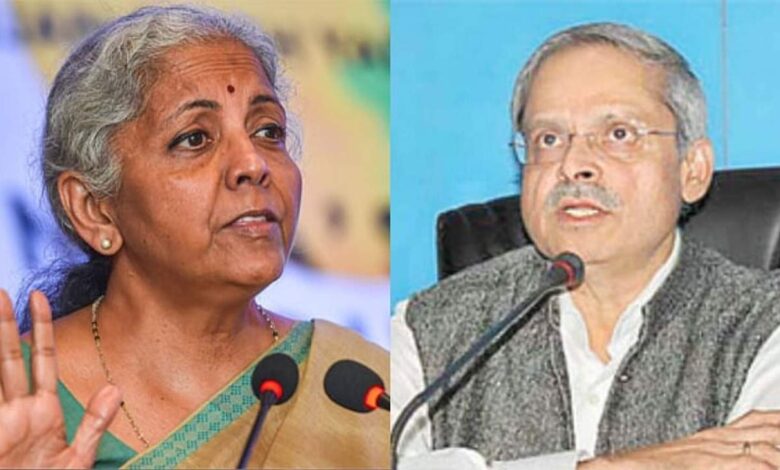
Chennai: As Tamil Nadu gears up for a high-stakes four-cornered contest in the 2026 Assembly elections, a political development involving Union Finance Minister Nirmala Sitharaman’s husband has stirred significant debate. Economist Parakala Prabhakar has reportedly taken part in an anti-BJP campaign, drawing attention across political circles.
The campaign, dubbed the “Zero BJP Movement,” aims to prevent the Bharatiya Janata Party from securing even a single seat in the upcoming Assembly elections. The initiative is being viewed as an ideological push rooted in the state’s long-standing Dravidian political framework and regional identity.
Parakala Prabhakar’s involvement has added weight to the campaign, as he is seen actively supporting efforts to consolidate anti-BJP sentiment. His participation is being widely discussed, given his proximity to a senior Union Cabinet minister, making it a politically sensitive development.
Sources associated with the campaign indicate that the movement is focused on grassroots mobilisation rather than large-scale political machinery. It is said to be gaining traction particularly among educated youth and social media influencers, who are amplifying its messaging online.


The core strategy of the campaign revolves around ensuring that BJP candidates are defeated in constituencies where they are perceived to have electoral prospects. This may involve consolidating anti-BJP votes or tactically influencing voting patterns to avoid vote splitting among opposition groups.
Observers note that Tamil Nadu’s political landscape has traditionally been shaped by Dravidian ideologies and a strong emphasis on linguistic and cultural identity. In this context, the “Zero BJP Movement” is being positioned as an effort to safeguard these principles while countering the BJP’s attempts to expand its footprint in the state.
The campaign has also raised concerns about what it describes as the broader influence of central institutions. It calls upon voters to remain vigilant and exercise their franchise carefully, framing the electoral battle as not just political but also institutional.
While the BJP has been attempting to strengthen its presence in Tamil Nadu in recent years, it has faced challenges in breaking into a state dominated by regional parties. The emergence of such campaigns is likely to add another layer of complexity to the already competitive electoral scenario.
Political analysts believe that developments like these could influence voter perception and campaign narratives in the run-up to the elections. However, it remains to be seen how much impact grassroots initiatives like the “Zero BJP Movement” will have on actual electoral outcomes.
With the 2026 elections approaching, Tamil Nadu is witnessing heightened political activity, and the entry of influential voices into campaign narratives is expected to intensify the contest further.