Crispy Onion Pakoda Secrets Three Simple Kitchen Tricks for Perfect Street Style Crunch at Home in Cold Weather
Learn how to make perfectly crispy onion pakoda at home using simple steps cutting techniques spice balance and frying tips that guarantee crunchy street style taste every time

Cold weather often brings a craving for something hot, crispy and freshly fried, and onion pakoda easily becomes the first choice in many homes. While it may look simple, achieving that perfect crunch like street side stalls depends on a few small but important kitchen techniques that many people tend to overlook.
The key to great pakoda starts even before mixing the batter. The way onions are cut plays a major role in texture and taste. Instead of slicing them too thin, slightly thicker cuts help maintain structure during frying and prevent them from turning soggy or bitter. This small adjustment alone can change the final outcome significantly.
Once the onions are ready, they are mixed with chopped green chilies, curry leaves, coriander, and basic spices like chili powder, coriander powder, salt, and ajwain. This stage is important because gentle mixing helps the onions release their natural moisture, which becomes the base for binding the batter without adding extra water immediately.
Another important step is flour balance, which many home cooks miss. Gram flour forms the base, but adding a small portion of rice flour makes a big difference in crispiness. This combination gives pakodas their light crunch and helps them stay crispy even after cooling for a while.


After the mixture is ready, it is left for a few minutes so the onions release more moisture. This natural water content is enough to bind everything together. Only if necessary, a few drops of water can be added, but the batter should remain thick and lightly coated rather than runny.
Frying technique is the final and most crucial stage. Oil should be heated properly before adding small portions of the mixture. Dropping them gently into hot oil ensures even cooking and prevents clumping. Slow frying over medium heat helps develop a deep golden color and perfect crisp texture.
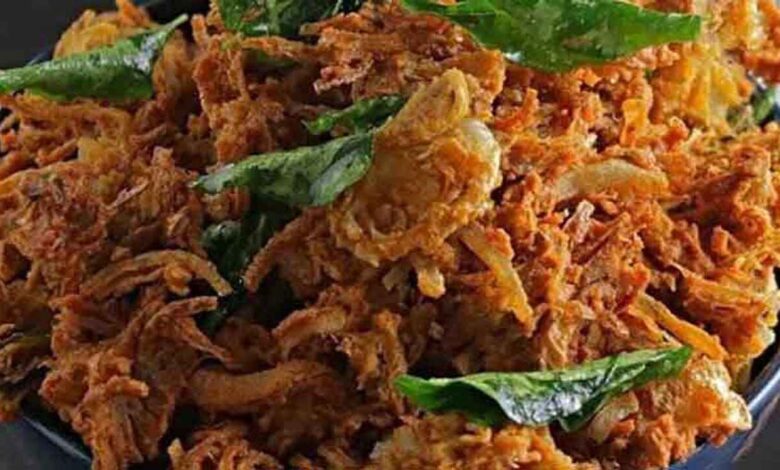
For better flavor, finishing touches can make a difference. Adding a few fried curry leaves on top enhances aroma and taste. Once the pakodas turn golden and crunchy, they should be removed and placed on absorbent paper to remove excess oil before serving.
In the end, making perfect onion pakoda at home is not about complexity but about attention to small details. With the right cutting style, balanced flour mix, and proper frying method, anyone can enjoy
Cold weather often brings a craving for something hot, crispy and freshly fried, and onion pakoda easily becomes the first choice in many homes. While it may look simple, achieving that perfect crunch like street side stalls depends on a few small but important kitchen techniques that many people tend to overlook.
The key to great pakoda starts even before mixing the batter. The way onions are cut plays a major role in texture and taste. Instead of slicing them too thin, slightly thicker cuts help maintain structure during frying and prevent them from turning soggy or bitter. This small adjustment alone can change the final outcome significantly.
Once the onions are ready, they are mixed with chopped green chilies, curry leaves, coriander, and basic spices like chili powder, coriander powder, salt, and ajwain. This stage is important because gentle mixing helps the onions release their natural moisture, which becomes the base for binding the batter without adding extra water immediately.
Another important step is flour balance, which many home cooks miss. Gram flour forms the base, but adding a small portion of rice flour makes a big difference in crispiness. This combination gives pakodas their light crunch and helps them stay crispy even after cooling for a while.
After the mixture is ready, it is left for a few minutes so the onions release more moisture. This natural water content is enough to bind everything together. Only if necessary, a few drops of water can be added, but the batter should remain thick and lightly coated rather than runny.
Frying technique is the final and most crucial stage. Oil should be heated properly before adding small portions of the mixture. Dropping them gently into hot oil ensures even cooking and prevents clumping. Slow frying over medium heat helps develop a deep golden color and perfect crisp texture.
For better flavor, finishing touches can make a difference. Adding a few fried curry leaves on top enhances aroma and taste. Once the pakodas turn golden and crunchy, they should be removed and placed on absorbent paper to remove excess oil before serving.
In the end, making perfect onion pakoda at home is not about complexity but about attention to small details. With the right cutting style, balanced flour mix, and proper frying method, anyone can enjoy restaurant style crispy pakodas fresh from their own kitchen.