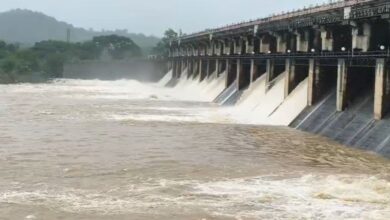
Relentless Rain Triggers Flood Fears Across Chikkamagaluru as Tunga and Bhadra Rivers Overflow
Heavy rainfall across Malnad has flooded rivers, farms and villages, disrupted transport and electricity, damaged plantations, while residents anxiously await relief and improved weather conditions ahead.

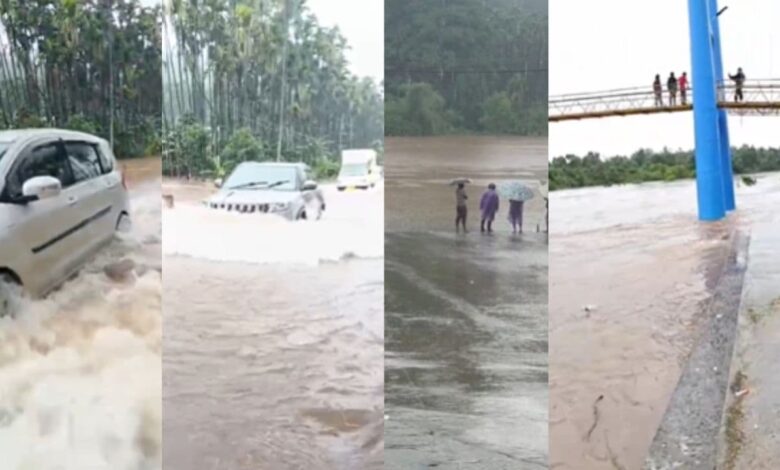
Heavy rainfall has once again tightened its grip over Karnataka’s Malnad region, leaving several parts of Chikkamagaluru district struggling with floods, damaged plantations and disrupted daily life. Rivers Tunga and Bhadra have swelled dramatically following continuous downpours over the past few days, raising concerns among residents living along riverbanks and low lying areas.
The sudden spell of intense rain has transformed what was once a period of concern over inadequate rainfall into an emergency situation. Just days ago, farmers were anxiously watching the skies hoping for showers that could save their crops. Today, the same communities are battling overflowing rivers, submerged farmland and mounting financial losses caused by excessive rainfall.
Authorities have been monitoring the rising water levels closely as both the Tunga and Bhadra rivers continue to receive heavy inflows from the surrounding catchment areas. Several stretches near riverbanks have already been inundated, while officials have advised residents to remain alert as additional rainfall could worsen the situation.
One of the worst affected locations has been the Malnad coffee belt, where plantations growing coffee, arecanut, pepper and banana have suffered extensive damage. Floodwaters have spread across agricultural fields, destroying standing crops that represented months of investment and hard work for local farmers.

Among those facing severe losses is Ashok, a farmer from Hosamatha village near Sunkasale in Kalasa taluk. After borrowing money through the Dharmasthala rural development network to cultivate his mixed plantation, he now finds most of his crops lying underwater. Coffee plants, pepper vines, banana crops and arecanut trees have all been affected as floodwaters from the Bhadra river entered his property.
The flooding did not stop at agricultural land. Water also entered Ashok’s house, damaging household belongings and adding to the family’s financial burden. Like many others in the region, he has appealed to the Karnataka government to conduct an immediate assessment and provide adequate compensation for the losses suffered.
Shringeri, one of Karnataka’s most important pilgrimage destinations, has also witnessed the impact of the rising Tunga river. Water levels crossed the danger mark, creating concern among temple authorities, devotees and local residents.
The famous Gandhi Maidan in Shringeri remained submerged after continuous rainfall, while roads leading to important locations were affected by floodwater. Access to the parking area near the renowned Sharadamba Temple became difficult as water covered sections of the approach road, forcing motorists to exercise extreme caution.
Rainwater also entered the basement and dining hall of the Sharadamba Temple complex, creating inconvenience for devotees visiting the religious center. Pilgrims found themselves navigating flooded pathways as authorities monitored the situation and worked to ensure public safety.
Police have urged both tourists and local residents to avoid venturing near riverbanks where water currents have become extremely strong. Officials warned that even a brief rise in rainfall intensity could significantly increase river flow, making already dangerous conditions even more risky.
Road connectivity has suffered in several parts of Chikkamagaluru district due to the relentless weather. At Sirimane Falls, a massive tree collapsed across the road, temporarily blocking traffic and disrupting access to one of the area’s popular tourist attractions.
Despite the difficult weather, local residents came together to remove the fallen tree and restore movement for stranded travelers. Their quick response helped reopen the route, although authorities continue to advise caution while travelling through forested stretches where additional trees could fall because of saturated soil and strong winds.
In Koppa taluk, flooding has affected several villages including Menasinahadya and Kogre, where bridges were submerged after rivers and streams overflowed. Residents experienced difficulty moving between villages as transportation routes became unsafe or completely inaccessible.
Power supply has also been affected across several remote settlements. Falling trees damaged electricity lines in forest fringe villages, leaving many households without electricity. Utility workers have faced considerable challenges in restoring supply because continuous rainfall has slowed repair operations.
The heavy rain has once again highlighted the vulnerability of Malnad’s infrastructure during the monsoon season. Flooded roads, submerged bridges and repeated power interruptions have affected schools, businesses and daily routines across multiple taluks.
Agricultural experts say the situation presents a complicated challenge for farmers. Although rainfall is essential for crops such as coffee, pepper and arecanut, prolonged flooding can severely damage plantations by weakening root systems, causing soil erosion and increasing the risk of plant diseases.
Many growers are particularly worried because this year’s rainfall pattern has remained highly unpredictable. The region initially witnessed below normal rainfall, causing anxiety over water availability for crops. However, the sudden shift to intense downpours has created an entirely different set of problems, threatening both agricultural productivity and rural livelihoods.
Residents note that the current rainfall has not followed the steady seasonal pattern typically expected during the monsoon. Instead, short periods of extremely heavy rain have caused rapid flooding before the landscape has had enough time to absorb the water.
Disaster management teams and district authorities continue monitoring vulnerable locations while keeping emergency response units on standby. Officials are expected to assess crop losses, damaged infrastructure and affected households once weather conditions improve sufficiently for detailed field inspections.
Farmers and plantation owners hope the rainfall intensity will decrease over the coming days, allowing floodwaters to recede before additional damage occurs. Many believe timely government assistance will be essential to help restore agricultural activity and compensate families whose crops and property have been affected.
For now, however, uncertainty remains the dominant emotion across Chikkamagaluru’s Malnad region. While abundant rainfall has replenished rivers and reservoirs, it has simultaneously brought flood fears, financial losses and disruption to thousands of residents whose lives depend on the fragile balance of the monsoon.
As weather forecasts continue to predict intermittent showers, communities across the district remain on alert, hoping that conditions stabilize soon before the ongoing spell of rain causes even greater hardship.