Record 17th budget by siddaramaiah: Focus on agriculture, welfare and infrastructure

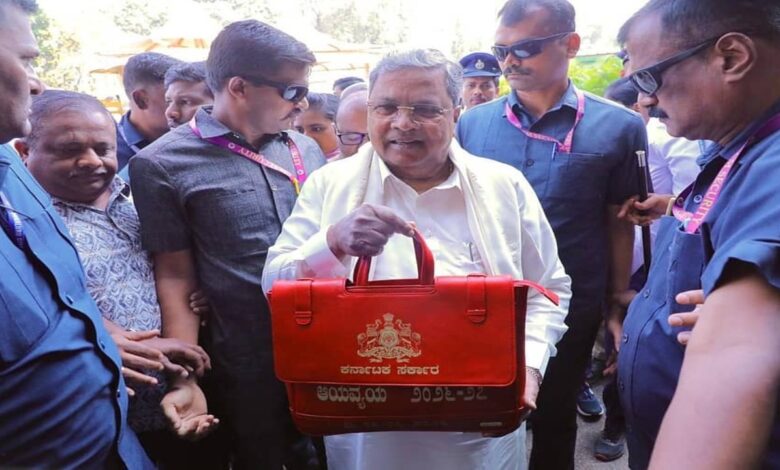
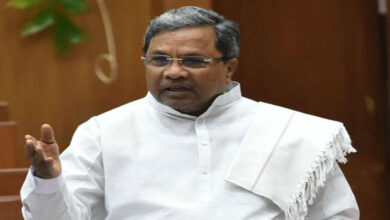
Bengaluru: Chief Minister and Finance Minister Siddaramaiah on Friday presented his record 17th state budget, outlining a wide range of development initiatives focusing on agriculture, infrastructure, education, healthcare and welfare programmes across Karnataka. The budget emphasised inclusive growth, strengthening of the rural economy and continued support to the government’s flagship guarantee schemes.
Presenting the budget in the Assembly, Siddaramaiah said the state economy has recorded a real growth rate of 8.1 percent, reflecting balanced development across agriculture, industry and services sectors. He also highlighted that Karnataka continues to remain among the leading states in tax collection and technological innovation, particularly in emerging areas such as artificial intelligence.
agriculture and rural development focus
A major thrust of the budget is on agriculture and allied sectors. The government announced the ‘Chief Minister Krishi Vistara’ scheme, which will be implemented over the next three years with an outlay of ₹100 crore to enhance farmers’ income and promote modern farming practices.

To encourage sustainable agriculture, the government will launch the ‘Vasudhamrutha’ programme, aimed at promoting eco-friendly farming methods. In addition, the ‘Sasya Sanjeevini’ scheme will be introduced to protect crops from pests and diseases.
The agriculture department’s Raitha Call Centres will be upgraded with artificial intelligence technology to provide real-time assistance to farmers. A pilot project called ‘Raitha Mall’ will also be launched in every taluk of Kolar district, enabling farmers to purchase seeds, fertilizers, pesticides and farm machinery under one roof.
horticulture, sericulture and fisheries
The horticulture sector will see new investments through public-private partnerships to develop high-value orchards and post-harvest infrastructure. Two cold storage facilities with a combined capacity of 12,000 metric tonnes will be established in Davanagere and Vijayapura districts.
In the sericulture sector, the government announced the establishment of Silk Parks in Ramanagara, Shidlaghatta, Haveri, Mysuru and Kalaburagi. Transportation subsidy for cocoon farmers in North Karnataka has also been increased.
For fishermen, the government doubled the value of free fishing equipment kits from ₹10,000 to ₹20,000 and announced a Centre of Excellence for marine biotechnology and technology development at the Fisheries College in Mangaluru.
irrigation and water resources
The government reiterated its commitment to major irrigation projects, including the long-pending Mekedatu project, for which a revised detailed project report will be submitted to the Union government for approval.
Additionally, 75 irrigation works worth ₹8,045 crore will be implemented across river basins such as the Krishna, Cauvery and Godavari. Several lake-filling projects and water storage initiatives have also been proposed to improve irrigation coverage.
education and health initiatives
Under the ‘Uttama Kalike Ujjwala Bhavishya’ programme, the government plans to upgrade 800 schools into Karnataka Public Schools with an allocation of ₹3,900 crore. Around 15,000 vacant teaching posts in schools and colleges will also be filled in the coming year.
In the health sector, the government earmarked ₹900 crore for infrastructure development and announced the establishment of super-speciality hospitals in Karwar and Yadgir. The hospital at Mysuru’s Jayadeva Institute will also be upgraded to a 600-bed facility.
welfare and housing
The government reaffirmed its commitment to welfare schemes and announced several initiatives for women, children and marginalised communities. Plans were also unveiled to complete three lakh houses under housing programmes during the current financial year.
Overall, the budget seeks to balance economic growth with welfare measures while strengthening Karnataka’s position as a leading state in technology, agriculture and social development.