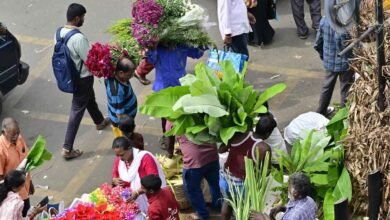
Mahalingapur Jaggery Market Faces a Bitter Decline After Years of Glory
Once a major jaggery trading hub with exports reaching foreign markets, Mahalingapur is now struggling with falling trade, fewer trucks, and growing concerns among workers.

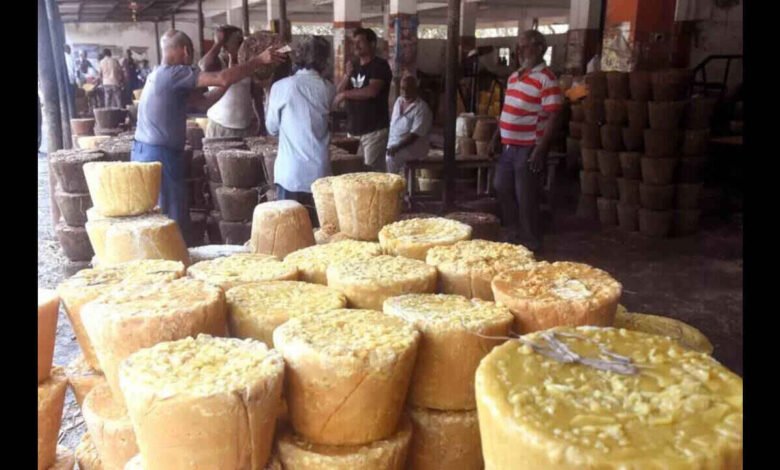
Mahalingapur jaggery market is losing its old business strength as traders, loaders, and local workers face declining arrivals and shrinking opportunities.
Mahalingapur jaggery market has seen a sharp decline.
Jaggery traders are facing weaker business.
Loaders are struggling with fewer shipments.

Mahalingapur’s Famous Jaggery Market Faces a Crisis
Mahalingapur in Bagalkot district was once widely known for its jaggery trade. The market built a strong reputation across Karnataka and beyond, with its products reaching several parts of India and overseas destinations.
The situation, however, has changed significantly in recent years. What was once a busy trading centre has seen a steep reduction in the movement of jaggery. Traders now say the market is operating at only a fraction of its earlier capacity.
At its peak, around 40 to 50 trucks carrying nearly 400 to 500 tonnes of jaggery reportedly moved out of the market every day. Today, the number has fallen to roughly four or five trucks, with daily shipments estimated at only 40 to 50 tonnes.
The decline has affected more than just traders. Hundreds of loaders who depended on the market for their livelihood are also finding it increasingly difficult to get regular work. With fewer trucks arriving, loading and unloading activities have dropped sharply.
The impact is also being felt across the local jaggery supply chain. Traders point to changes in agricultural marketing rules introduced in 2021 as one of the factors that disrupted the traditional market system. Although those changes were later rolled back, the Mahalingapur market has not returned to its earlier level of activity.
Another major concern raised by traders is the alleged loss of market cess. They claim that some jaggery is being sold outside the regulated market without the required cess being paid. According to traders, this reduces revenue for the market while also weakening the established trading network.
Competition from sugar factories has added another layer of pressure. Traders say the changing business environment has made it harder for smaller jaggery dealers to remain competitive. As a result, several traders have reportedly moved towards other occupations, leaving only a limited number still active in the traditional market.
For the loaders, the decline has become a direct livelihood issue. Many families had depended on regular work at the jaggery market for years. With business slowing down, workers are now being forced to look for alternative sources of income.
Mahalingapur’s decline is therefore not simply a story about falling jaggery sales. It is also about a local economy built around farmers, traders, transporters and loaders that has gradually weakened.
The market still has a strong legacy and an established identity, but restoring its earlier position will require attention to trading practices, market revenue, supply chains and the concerns of people who depend on it.
For a place once celebrated as the jaggery hub of the region, bringing Mahalingapur back to life could mean restoring livelihoods as much as reviving a historic market.