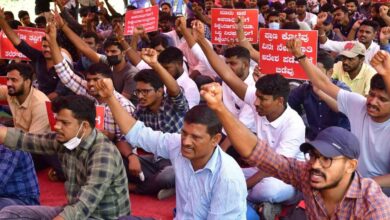
Karnataka Assembly Holds Detailed Debate on Kasturirangan Report
Karnataka lawmakers held a detailed debate on the Kasturirangan Report, discussing its possible impact on Western Ghats communities, farming, development and the state government response.


The Kasturirangan Report took centre stage on the opening day of Karnataka’s special legislature session, with lawmakers from both the ruling party and opposition discussing the possible impact of the Centre’s latest draft notification on the Western Ghats.
The debate comes after the Union government issued its seventh draft notification on July 27, 2026, based on the Kasturirangan committee recommendations. Karnataka has been given a limited period to submit its objections and suggestions, with the deadline approaching on September 27.
The latest proposal covers 20,668 square kilometres across 10 Karnataka districts. The notification identifies areas in Belagavi, Chamarajanagar, Chikkamagaluru, Kodagu, Hassan, Uttara Kannada, Dakshina Kannada, Mysuru, Shivamogga and Udupi for possible inclusion under the Eco Sensitive Area framework.
During the Assembly discussion, Chief Minister D K Shivakumar said the issue should not be turned into a political dispute. He stressed the need to protect the interests of farmers and residents in the Malnad and Western Ghats regions while also asking opposition members to provide their suggestions.


Shivakumar also proposed taking the issue forward through a collective approach. The government has indicated that an all party delegation could present Karnataka’s concerns before the Centre after discussions within the legislature.
The opposition also placed several suggestions before the government. Leader of Opposition R Ashoka called for a physical survey of the affected areas, referring to the approach followed in Kerala. He also suggested preparing a strong legal strategy to challenge the implementation of the recommendations and said the opposition would be willing to join an all party delegation to the Centre.
The demand for a ground level assessment has become an important part of the debate. The state government has argued that a more detailed understanding of land use is necessary because several villages and agricultural areas are located within the proposed Eco Sensitive Area.
The government has previously raised objections to the Kasturirangan recommendations. Officials have pointed to concerns over the possible effect of restrictions on agriculture, infrastructure and the livelihoods of people living in the Western Ghats. The seventh draft notification followed the expiry of six earlier draft notifications.
The scale of the proposed area has also added to the concern. Different official and media reports have cited varying village counts depending on how the affected areas are calculated, while the latest notification has been reported as covering 1,449 villages across 39 taluks in Karnataka.
The debate also became politically heated inside the Assembly. BJP state president B Y Vijayendra accused the government of using the Kasturirangan issue for political purposes and alleged that ministers and legislators were creating unnecessary public tension.
Shivakumar rejected the allegation and responded that the government was not attempting to create a political confrontation over the issue. The exchange between the two leaders added a political dimension to an otherwise detailed discussion about environmental protection, agriculture and development.
At the centre of the disagreement is the question of how conservation measures should be balanced with the needs of people already living and working in the Western Ghats. Farmers and residents in the affected areas have expressed concerns about possible restrictions, while the broader policy debate involves protection of an ecologically important region.
The Karnataka government has also been considering more detailed mapping and physical surveys. Recent discussions have included the use of technology and plot level mapping to distinguish forest areas from agricultural and inhabited land.
For the state government, the immediate task is to prepare its response before the Centre’s September 27 deadline. The special legislative session gives the government and opposition an opportunity to record their positions and discuss the concerns raised by people living in the affected districts.
The Kasturirangan issue is expected to remain a major topic in the Assembly as lawmakers continue their discussion. With both sides raising concerns and suggestions, the coming days will focus on Karnataka’s formal response to the latest draft notification and the next steps before the Centre.