Growing Demand for Complete Ban on Corporal Punishment in Karnataka Schools
Education experts and child rights advocates have urged Karnataka authorities to introduce stricter rules against corporal punishment and mental harassment to ensure every student learns in a safe environment.

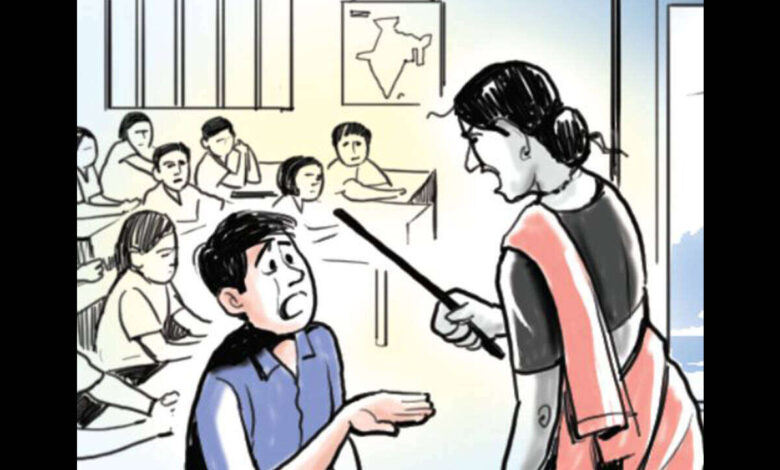
Fresh calls for stronger action against corporal punishment in schools have gained momentum in Karnataka following a series of incidents involving students. Child rights advocates, education experts and parent groups are urging the School Education Department to issue strict directions prohibiting every form of physical punishment, mental harassment and humiliating disciplinary practices in both government and private schools.
The demand comes amid growing concern over reports of students allegedly facing physical abuse and emotional distress in educational institutions. Experts argue that schools should remain spaces where children feel secure, respected and encouraged to learn rather than environments where fear influences discipline.
Former Karnataka State Commission for Protection of Child Rights Chairperson Shashidhar Kosumbe has written to the Commissioner of the School Education Department, requesting clear and comprehensive guidelines for all schools. The letter urges the department to reaffirm that any form of corporal punishment, insulting treatment or psychological abuse must be completely prohibited and that institutions should be held accountable for violations.
Supporters of stricter regulations point out that the legal framework already exists. Section 17 of the Right of Children to Free and Compulsory Education Act of 2009 clearly prohibits both physical punishment and mental harassment of students. However, recurring allegations from some schools have raised concerns that the law is not being implemented consistently, prompting demands for renewed enforcement and regular monitoring.


Officials from the School Education Department have acknowledged the concerns. Commissioner Vikas Kishore Suralkar has stated that student safety remains a priority and assured that appropriate measures would be considered to strengthen child protection in educational institutions.
Public concern has intensified following several recent incidents involving school students. Reports of a Class 7 student allegedly attempting suicide after being punished at a school in Bengaluru and another case involving the suspicious death of a student in Yelahanka have triggered widespread debate about student welfare and disciplinary practices. Although each case is subject to its own investigation, they have collectively renewed discussions about the responsibilities of schools toward children.
Parent organizations have also joined the demand for stricter action. The State Parents Coordination Committee has urged the government to impose strong legal consequences on schools and teachers found responsible for physical or psychological abuse. Some members have even suggested that institutions repeatedly violating child protection norms should face suspension or cancellation of their recognition.
Education specialists believe that modern disciplinary methods should focus on counseling, communication and positive behavioural guidance instead of punishment. They argue that children perform better academically and emotionally when they are treated with dignity and encouraged through supportive teaching practices.
Mental health professionals have echoed similar views, stressing that repeated humiliation or harsh punishment can have long lasting emotional effects on children. They say creating a positive classroom atmosphere not only improves learning outcomes but also strengthens trust between students, teachers and parents.
With increasing pressure from child rights groups, parents and education experts, expectations are rising that the Karnataka School Education Department could soon introduce more detailed guidelines and stricter enforcement measures. Any new policy is likely to focus on protecting children’s rights while ensuring that schools maintain discipline through safe, respectful and legally compliant practices.