Bengaluru Parking Rules 2026: New Charges Proposed for Roadside Parking
Bengaluru may soon move away from free roadside parking as the proposed policy introduces location based charges, parking categories and stricter rules for vehicles across the city.

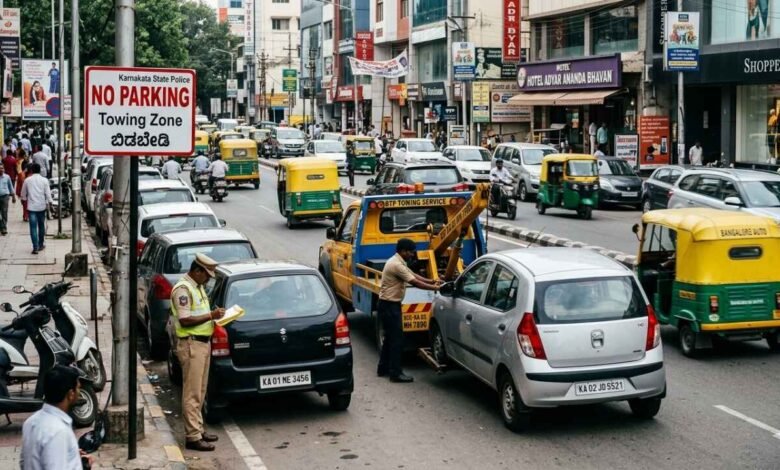
Bengaluru vehicle owners may soon have to rethink where they leave their cars and two wheelers. The Karnataka government has issued a draft of the Greater Bengaluru Area Parking Rules 2026, proposing a new system of paid parking across the city. The draft is open for public objections and suggestions for 30 days, so the proposed charges are not final yet.
The Greater Bengaluru Authority plans to classify roads and introduce different parking charges depending on the location. The broader idea is to discourage long duration roadside parking and encourage people to use designated off street parking facilities.
Under the proposed system, roads would be placed in A, B and C categories. On street parking would carry higher charges, while off street parking would be comparatively cheaper.
For on street parking, the proposed hourly charge for two wheelers ranges from Rs 20 to Rs 40 depending on the road category. Cars and other light vehicles could be charged between Rs 40 and Rs 80 an hour.

Off street parking would have lower proposed rates. Two wheelers could pay between Rs 10 and Rs 20 an hour, while light vehicles could be charged between Rs 20 and Rs 40 an hour, depending on the category of the parking area.
The draft also looks at longer duration parking. Residential roadside parking could attract an annual charge of up to Rs 25,000 for cars under the proposed rules. The higher cost is intended to discourage people from treating public roads as permanent parking spaces.
Certain locations would remain off limits for parking to keep traffic moving. These include areas around Metro stations and major bus stops, arterial roads, locations within 50 metres of traffic signals and stretches close to junctions of important roads.
The proposal also allows for selected locations to provide overnight parking between 8 pm and 8 am. Bicycle parking and designated auto rickshaw stands are expected to receive exemptions from parking charges under the proposal.
Another important part of the draft concerns residential properties. The policy seeks to encourage vehicle owners to use parking spaces provided within their buildings instead of occupying public roads. The proposed framework could also place greater responsibility on property owners to ensure appropriate parking arrangements for residents and tenants.
The government is also considering ways to increase the supply of parking spaces. Vacant plots could potentially be used for public parking, with incentives proposed for owners who make suitable private land available for this purpose.
The Greater Bengaluru Authority has been working towards more organised parking systems as roadside parking continues to contribute to congestion in several parts of the city. Official GBA information identifies parking management among its wider urban governance and mobility responsibilities.
For now, Bengaluru motorists do not need to immediately start paying the proposed rates. These are draft rules, and the government is inviting public feedback before deciding on the final framework.