
SC ruled no SC/ST status after conversion to other than Hinduism,Buddhism and Sikh

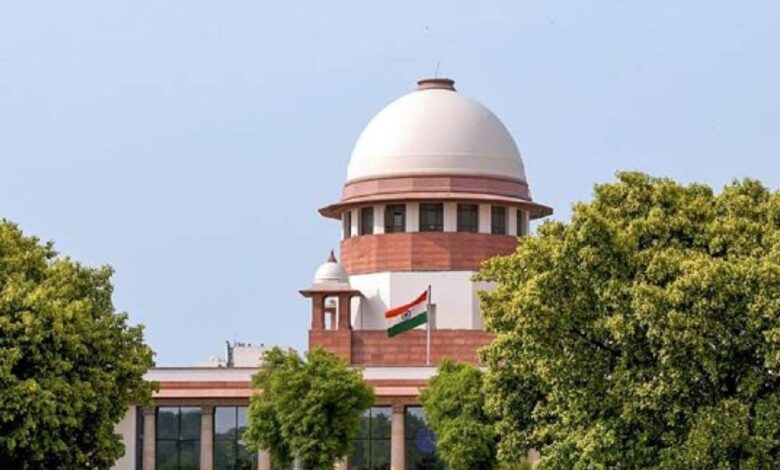
New Delhi : The Supreme Court of India on Tuesday ruled that individuals who convert to religions outside Hinduism, Sikhism, or Buddhism lose their Scheduled Caste (SC) status and cannot claim benefits or legal protection under the SC/ST framework.
A bench comprising Justices P.K. Mishra and Manmohan observed that Scheduled Caste status is confined to persons belonging to Hinduism, Sikhism, or Buddhism. The court clarified that once a person converts to Christianity or any other religion, they cease to be recognized as a member of the Scheduled Caste category under existing legal provisions.
The judgment came in connection with an appeal filed by Chintada Anand, a pastor who had challenged a decision of the Andhra Pradesh High Court. Anand had alleged that he faced caste-based discrimination and harassment from Akkala Ramireddy and others. Based on his complaint, police had registered an FIR under the Scheduled Castes and Scheduled Tribes (Prevention of Atrocities) Act.
Ramireddy had approached the High Court seeking quashing of the FIR, arguing that Anand had converted to Christianity and therefore no longer retained SC status. Accepting this argument, the High Court had earlier quashed the FIR, stating that Anand was not entitled to invoke protections under the SC/ST Act after conversion.


Dissatisfied with the High Court ruling, Anand appealed to the Supreme Court. However, the apex court upheld the principle that conversion to a religion outside Hinduism, Sikhism, or Buddhism results in the loss of Scheduled Caste status, thereby limiting access to protections under the SC/ST Act.
The ruling reinforces the legal interpretation of caste identity in relation to religious affiliation and clarifies eligibility criteria for availing benefits under affirmative action and protective legislation. It is expected to have wider implications in cases where individuals who have converted to other religions seek remedies under SC/ST laws.
Legal observers note that the judgment aligns with established statutory provisions governing Scheduled Caste classification and may influence the outcome of similar pending and future disputes across the country.



