Mekedatu Project Faces Fresh Setback as Central Water Commission Returns Karnataka DPR
Karnataka faces another setback in the Cauvery dispute after the Central Water Commission returned the revised Mekedatu project report seeking clarifications over compliance with tribunal and Supreme Court directions.

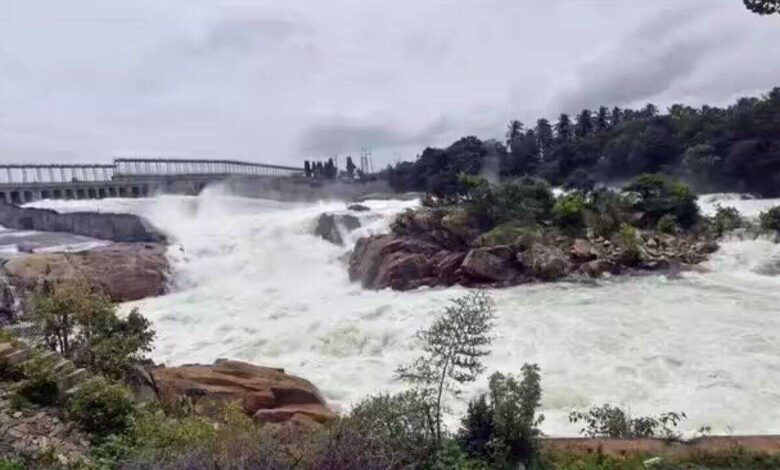
The long pending Mekedatu balancing reservoir project has encountered another major hurdle after the Central Water Commission returned Karnataka’s revised Detailed Project Report for further corrections. The development comes at a sensitive time when the state is already dealing with concerns over Cauvery water releases during a challenging monsoon period. The latest decision has added fresh uncertainty to one of Karnataka’s most significant water infrastructure proposals.
The revised project report submitted by the Karnataka government has been sent back after the Commission raised questions over whether the proposal fully complies with the Cauvery Water Disputes Tribunal award and the Supreme Court judgment delivered in 2018. Instead of moving forward for the next stage of approval, the state has now been asked to make changes and provide additional explanations before resubmitting the document.
The Mekedatu project has remained a politically and legally sensitive issue for years because it directly involves the sharing of Cauvery river waters between Karnataka and Tamil Nadu. While Karnataka has consistently maintained that the project is mainly intended to strengthen drinking water supply for Bengaluru and nearby regions, Tamil Nadu has repeatedly expressed concerns about its possible impact on downstream water availability.
Earlier, Karnataka had received encouragement after the Union Ministry of Jal Shakti stated that the state was not required to obtain consent from neighbouring states such as Tamil Nadu, Kerala and Puducherry before preparing the project proposal. That clarification was viewed as a positive step for Karnataka’s ambitions to move the project forward. However, the latest action by the Central Water Commission has slowed that momentum.

According to the observations made by the Commission, the revised proposal differs from the framework accepted earlier. Officials have reportedly pointed out that several aspects require clarification to ensure that the project remains within the legal boundaries established by previous judicial and tribunal decisions governing the Cauvery river dispute.
One of the major issues relates to Karnataka’s revised estimate for drinking water requirements. In its latest proposal, the state has sought permission to utilise 6.95 TMC of water for Bengaluru’s drinking needs. This marks a notable increase from the earlier proposal submitted several years ago. The Commission has sought detailed justification for this higher allocation before considering the report further.
Back in 2018, Karnataka had submitted a Detailed Project Report proposing the use of 4.75 TMC of water for drinking purposes while planning a reservoir with a storage capacity of approximately 23.75 TMC. At that stage, the proposal had received preliminary approval in principle. However, the revised report submitted in April 2026 increased the projected drinking water requirement to 6.95 TMC, prompting fresh scrutiny from the Commission.
The revised DPR has also reportedly included a new hydropower component linked to the Shivanasamudra river flow project. According to the Commission, this addition was made without obtaining prior approval, making it another point that requires clarification before the proposal can proceed.
Another concern raised involves the population and water demand projections used by Karnataka while preparing the revised report. The state has estimated that Bengaluru will require nearly 64 TMC of water by the year 2044. However, the Commission noted that these projections appear to rely on older demographic data rather than updated figures.
The Supreme Court, in its 2018 judgment, had already specified the allocation for drinking water requirements, limiting Karnataka’s overall drinking water requirement to 33 TMC, including 24 TMC specifically for Bengaluru. The Commission has therefore asked the state to explain how the revised calculations align with the judicial framework already in place.
The Commission has further questioned the justification for constructing a reservoir with a proposed storage capacity of nearly 59.46 TMC. According to its observations, the supporting data presented by Karnataka does not sufficiently establish the need for such a large storage structure using current statistics and updated assessments.
Officials have now instructed Karnataka to revise the report by addressing all the issues raised and submit a modified Detailed Project Report for fresh examination. Only after these concerns are resolved can the proposal move forward for additional technical and administrative evaluation.
The latest development represents another delay for a project that has remained at the centre of interstate discussions for years. Karnataka continues to argue that the Mekedatu reservoir is essential to meet the growing drinking water requirements of Bengaluru, one of India’s fastest expanding metropolitan regions. Supporters of the project believe it would also help regulate water storage during periods of heavy rainfall.
However, the project continues to attract legal, environmental and interstate scrutiny, making every stage of approval highly significant. As Karnataka prepares to revise its proposal once again, the future of the Mekedatu project will largely depend on whether the updated report successfully addresses the concerns highlighted by the Central Water Commission while remaining consistent with existing tribunal awards and Supreme Court directions.