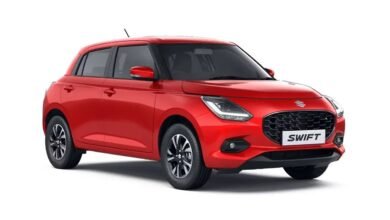
Electric vehicles to cost same as petrol cars within six months, says Nitin Gadkari


Electric vehicles: Union Minister for Road Transport and Highways Nitin Gadkari has predicted that the price of electric vehicles (EVs) in India will match that of petrol vehicles within the next four to six months a milestone he described as a “major leap” towards clean and sustainable mobility in the country.
Speaking at the 20th FICCI Higher Education Summit 2025 held in New Delhi on Monday, Gadkari highlighted the rapid growth of India’s automobile industry and reaffirmed the government’s commitment to making India the world’s number one automobile manufacturing hub within the next five years.
“When I became the transport minister, the automobile industry was valued at Rs 14 lakh crore. Today, it has grown to Rs 22 lakh crore. Our vision for the sector is taking shape, and in the coming five years, we aim to make India the global leader,” Gadkari stated.
He noted that India has already surpassed Japan to become the world’s third-largest automobile market, behind only the United States (Rs 78 lakh crore) and China (Rs 47 lakh crore). With a valuation of Rs 22 lakh crore, India is steadily closing the gap with the top two markets.
Gadkari also emphasized the importance of reducing India’s dependency on imported fossil fuels, which cost the nation around Rs 22 lakh crore annually. Promoting green energy and ethanol-based fuels, he said ethanol production has already boosted rural incomes.
“Farmers have earned nearly Rs 45,000 crore by producing ethanol from maize, which not only strengthens rural economies but also reduces our crude oil imports,” he explained.
The minister further discussed the government’s PM e-Drive initiative launched by Prime Minister Narendra Modi in October 2024 aimed at promoting EV adoption and infrastructure. Under the scheme, the Center plans to set up around 72,000 public EV charging stations across India, backed by an allocation of Rs 2,000 crore.
These charging points will be strategically located along 50 national highway corridors, metro cities, toll plazas, railway stations, airports, and fuel outlets.
The PM e-Drive (Electric Drive Revolution on Innovative Vehicle Enhancement) scheme also earmarks Rs 10,900 crore in subsidies to encourage EV purchases and reduce dependence on fossil fuels. Additionally, the government has introduced a new incentive program for electric trucks (e-trucks), offering up to Rs 9.6 lakh per vehicle as financial support.
Under the FAME-II (Faster Adoption and Manufacturing of Hybrid and Electric Vehicles) scheme, the government sanctioned Rs 873.5 crore for the establishment of 8,932 EV public charging stations in partnership with IOCL, BPCL, and HPCL.
Although the FAME-II scheme, launched in April 2019, concluded in March 2024, its impact has paved the way for further EV expansion through PM e-Drive. Highlighting the role of education and innovation, Gadkari said India’s young, skilled engineers represent a major competitive advantage.
He urged industry leaders and researchers to collaborate under the theme “From Waste to Wealth, and Knowledge to Prosperity,” contributing to India’s self-reliance and technological leadership in green mobility.
Gadkari’s bold prediction of price parity between EVs and petrol cars marks a defining moment in India’s transition towards cleaner, affordable, and sustainable transport solutions.
Also Read: Bengaluru traffic woes: plans to revive bus lane on Outer Ring Road to ease congestion