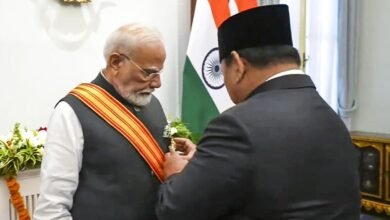
UAE President’s India Visit Deals Strategic Blow to Pakistan


Abu Dhabi: The unexpected visit of United Arab Emirates President Sheikh Mohammed bin Zayed Al Nahyan to India is set to alter South Asia’s geopolitical and strategic landscape, indirectly putting Pakistan at a disadvantage.
Following the three-hour meeting between Sheikh Nahyan and Prime Minister Narendra Modi, the UAE decided to halt its plans to manage Islamabad International Airport, a project initially agreed upon in August 2025. The Express Tribune of Pakistan confirmed this development.
According to reports, the UAE lost interest in the Islamabad airport project after failing to identify suitable local partners for operations. While officials clarified that the decision was not politically motivated, rising tensions between the UAE and Saudi Arabia have been cited as a contributing factor.
Gulf allies Riyadh and Abu Dhabi have reportedly clashed over support for rival groups in Yemen, further complicating regional dynamics. Pakistan recently signed a defense agreement with Saudi Arabia while seeking to form a so-called “Islamic NATO” with Turkey.


In contrast, the UAE has strengthened its defense and security partnership with India, signaling a shift in regional alliances and increasing India’s strategic leverage in South Asia. Historically, the UAE was one of Pakistan’s largest trade partners, with thousands of Pakistanis employed across various sectors.
The two countries collaborated extensively in defense, energy, and investment projects. However, over time, political interference, poor governance, and mismanagement in Pakistan’s state-owned enterprises have strained bilateral relations, according to recent analyses.
Pakistan’s privatization of Pakistan International Airlines last year and its challenging operational environment along the Afghan border have compounded the country’s vulnerabilities. The UAE’s withdrawal from the airport management project is expected to further weaken Islamabad’s economic and technological confidence.
Analysts suggest that this decision underscores the importance of India-UAE ties and signals a reorientation of regional strategic priorities in India’s favor.
With this shift, India is likely to consolidate its influence in the Gulf while Pakistan faces both a strategic and economic setback. Observers say the UAE’s engagement with India may accelerate defense cooperation, investment flows, and geopolitical alignment, creating new opportunities for India in South Asia’s evolving power balance.
Also Read: How Rajeev Gowda was tracked and arrested at the Kerala border