ED Conducts Searches At 30 Locations Across South India In Drug Money Laundering Cases
The Enforcement Directorate has searched 30 locations across Kerala, Karnataka, Tamil Nadu and Telangana as part of investigations into suspected drug trafficking and illegal money movement.

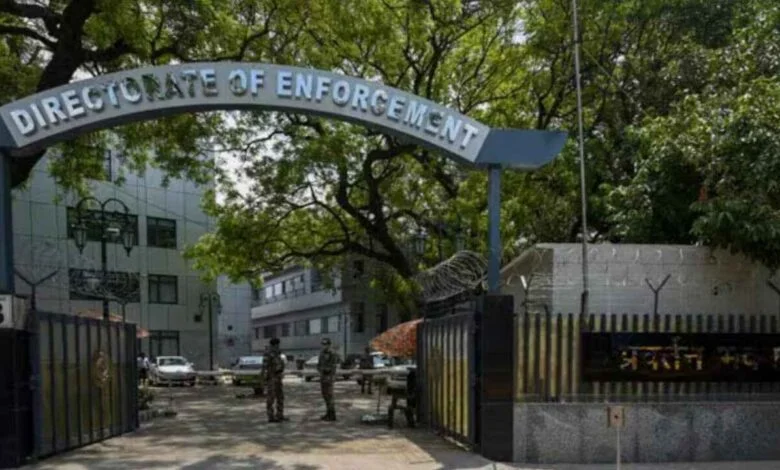
The Enforcement Directorate has launched a large search operation across South India as part of the central government’s campaign against illegal drugs. Officials said searches were carried out at 30 locations in Kerala, Karnataka, Tamil Nadu and Telangana in connection with several drug related cases.
The operation was conducted under the provisions of the Prevention of Money Laundering Act. The agency is examining suspected financial networks connected with people accused or suspected of having links to drug trafficking cases registered by state agencies and the Narcotics Control Bureau.
Officials said the searches relate to eight separate cases currently being investigated under PMLA. Four of these cases are connected to Tamil Nadu, two are linked to Kerala, while Karnataka and Telangana account for one case each.
The operation began early Thursday with the assistance of security personnel and police teams from the respective states. The searches covered locations allegedly connected to individuals who came under investigation in drug cases.


Tamil Nadu accounted for a significant portion of the operation. Searches were conducted at seven locations in Chennai, two in Ramanathapuram, six in Nagapattinam and Velankanni, and another location in Tirunelveli. In Karnataka, the operation covered three locations in Kolar, Malur and Hoskote. Searches were also conducted in parts of Telangana, while four locations each in Kochi, Kozhikode and nearby areas of Kerala were reportedly covered.
The investigation includes cases involving methamphetamine and suspected financial transactions linked to its alleged movement. One Tamil Nadu case dates back to June 2024, when the NCB intercepted Sri Lankan nationals N Ajandan and K Madhushan at the Mandapam refugee camp in Ramanathapuram. Authorities reportedly recovered 1.470 kilograms of methamphetamine from them.
A separate action followed in Chennai three days later. The NCB reportedly intercepted K Krishna Kumari while she was receiving money from Mohammed Rizaluddin at a shop. Investigators seized Rs 1.29 lakh in Indian currency, USD 30,000 and Sri Lankan currency worth 5,030 Sri Lankan rupees.
Investigators suspect that the shop was being operated by Rizaluddin on behalf of S Nisardeen, who was based in Dubai. The location was allegedly being used for hawala transactions. Authorities suspect that some of the money was connected to proceeds from methamphetamine sales allegedly intended for movement towards Sri Lanka.
The ED is examining more than the movement of drugs in this case. Its investigation is also focused on how money allegedly generated from the activity was received, transferred and potentially used to acquire assets. Officials are looking at the roles played by different individuals in arranging the alleged drug purchases, transportation and financial transactions.
Investigators have also examined a WhatsApp group reportedly called SACHA, which was allegedly used to communicate instructions remotely. According to the investigation, money transfers were coordinated using tokens linked to currency notes. The agency is also looking into claims concerning properties allegedly acquired or managed using funds suspected to have originated from criminal activity.
Another important case involves an NCB operation conducted near a bus stand in Chennai on July 24, 2024. During that action, authorities reportedly seized 5.970 kilograms of methamphetamine from Baisul Rahman. Investigators suspected that the consignment was intended to be transported to Sri Lanka.
The probe in that case allegedly uncovered links between several people involved in arranging the suspected drug movement and its financing. Authorities also reported the seizure of Rs 39.38 lakh in cash, 586 grams of gold and one kilogram of silver during the investigation.
The ED has been examining alleged hawala channels used to settle payments connected to previous or planned drug consignments. Mobile communications and interactions between people in different locations are also being examined as investigators try to understand how the suspected network operated.
An earlier case dates back to December 10, 2023, when the NCB searched room number 109 at Hotel White Palace in Chennai’s Mandi area. The room was reportedly occupied by Sri Lankan national S Uday Kumar. The search resulted in the seizure of two kilograms of methamphetamine.
According to the investigation, Uday Kumar had travelled from Colombo to Chennai after allegedly receiving instructions from a person identified as Rajan. He was reportedly supposed to collect the methamphetamine and wait for further instructions regarding its movement to Sri Lanka.
Investigators alleged that Akbar Ali acted as an intermediary between Rajan and a local supplier identified as Raghuraj K. The probe also examined the alleged role of Syed Ibrahim, who worked at an electronics shop in Chennai’s Burma Bazaar and was allegedly involved in financial arrangements connected to the network.
The ED has further alleged that Rs 8 lakh was sent through a hawala channel as an advance payment for the two kilogram methamphetamine consignment. Investigators are examining whether the money was subsequently handed over to the supplier through the people involved in the alleged arrangement.
The agency is also looking into other cases in which people from India and abroad have allegedly been connected with drug trafficking and related illegal financial activities. Some of the individuals under investigation are reportedly linked to foreign locations, including Muscat.
The latest searches are part of the ED’s wider effort to trace the financial side of drug trafficking. Instead of focusing only on the seized narcotics, investigators are examining the flow of money, suspected hawala channels, property transactions, communications and the individual roles within the alleged networks.
The searches remain part of an ongoing investigation, and the agency is expected to examine the material and financial records collected during the operation before determining further action against those under investigation.