Bengaluru Draft Parking Rules Propose Higher Fees And More Off Street Parking
Bengaluru has proposed comprehensive parking rules to control roadside parking, encourage private facilities and make public transport more economical, with public feedback invited until September 10.

The Karnataka government has released a draft framework aimed at changing how parking is managed across Bengaluru and has invited residents, businesses and other stakeholders to submit their suggestions and objections before September 10.
The proposed rules focus on reducing roadside parking, expanding off street parking facilities and improving the overall use of public road space. The government has also linked the parking plan with a wider objective of making public transport a more affordable and practical choice compared with private vehicles.
The scale of the parking challenge is significant. Government figures indicate that Bengaluru has more than 1.28 crore registered vehicles. When vehicles entering the city from other districts and states are included, the number of vehicles using the city’s roads is estimated to be around 1.5 crore.
A major concern highlighted in the draft is that vehicles remain parked for most of the day. According to the government’s figures, around 95 percent of the time vehicles are parked near homes, offices or other locations rather than being used on the road.


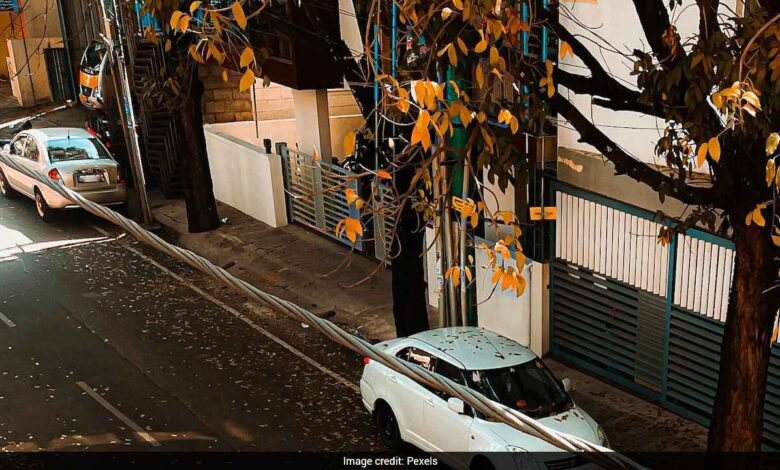
The government argues that this creates pressure on Bengaluru’s already limited road space. Narrow roads combined with the growing number of vehicles have contributed to congestion, while roadside parking can occupy a substantial portion of available road width.
The impact is not limited to motorists. The draft points out that pedestrians can face particular difficulties when parked vehicles reduce usable road and footpath space. Children, senior citizens, women and economically vulnerable groups can be especially affected by poor pedestrian conditions.
The proposed framework takes the position that public roads and public land are limited resources shared by everyone. It states that vehicle owners should primarily be responsible for arranging parking for their private vehicles, rather than expecting public spaces to accommodate them without appropriate regulation.
Traffic speeds have also become a concern. The government says average peak hour speeds on major roads have fallen to around 15 kilometres per hour, while buses operate at roughly 10 kilometres per hour in such conditions. The issue of parking regulation was discussed at a meeting held on March 19, 2026, attended by elected representatives from Bengaluru and chaired by the then Deputy Chief Minister. The need to regulate parking was reportedly agreed upon during the meeting.
The new draft is intended to put the Bengaluru Parking Policy approved in February 2021 into practice. The Directorate of Urban Land Transport had earlier prepared area parking plans in August 2022 after discussions with the then BBMP, Regional Transport Offices and traffic police. Smart parking tenders were subsequently introduced in September and December 2022.
The latest framework has been prepared following consultations with agencies including the Greater Bengaluru Authority, Directorate of Urban Land Transport, Town and Country Planning Department, Bangalore Development Authority, Bengaluru Metro Rail Corporation, Bangalore Metropolitan Transport Corporation and K RIDE.
One of the notable proposals is to encourage more off street parking. Vacant properties that provide multi level or mechanised parking could receive a full exemption from property tax and service charges under the proposed framework. Properties used for regular surface parking could receive a 50 percent property tax exemption.
Parking charges would not necessarily remain the same across the city. The draft proposes that fees should be determined scientifically according to the type of road and the location. The government also wants the pricing structure to ensure that public transport remains cheaper and more attractive than travelling in private vehicles.
Monthly passes could be introduced for regular users of public off street parking facilities. At the same time, parking could be prohibited on roads with heavy traffic and around designated multi level parking facilities.
Peak hour parking restrictions could also be introduced on major roads. Vehicles that occupy valuable road space for longer periods could face higher charges under the proposed system. The intention is to discourage long duration parking in locations where road space is already under pressure.
Enforcement would involve police and city corporation officials. The draft also proposes action against building owners who do not have mandatory parking facilities or who convert designated parking spaces for commercial or other uses.
The government has proposed that revenue collected through parking should be disclosed periodically. The money would be directed towards traffic and junction improvements as well as repairs to roads and footpaths.
Officials have argued that Bengaluru cannot continue with the existing approach to parking while the number of vehicles and pressure on road space continue to increase. The draft therefore attempts to move the city towards a more regulated parking system rather than allowing parking practices to develop without consistent rules.
The proposals are not yet final. Residents and other interested parties have been given time until September 10 to submit their feedback. Suggestions and objections can be sent by email to acsuddoffice@gmail.com, through post or directly to the Additional Chief Secretary, Urban Development Department, Vikas Soudha, Bengaluru.
The government is expected to examine the responses before finalising the rules. The final framework could therefore change depending on the feedback received from the public and other stakeholders.