Karnataka Dam Water Levels on August 15: Alamatti Near Full Capacity
Karnataka dams show mixed water levels today, with Alamatti nearly full while Kabini releases exceed inflow and Linganamakki remains below last year’s storage level.

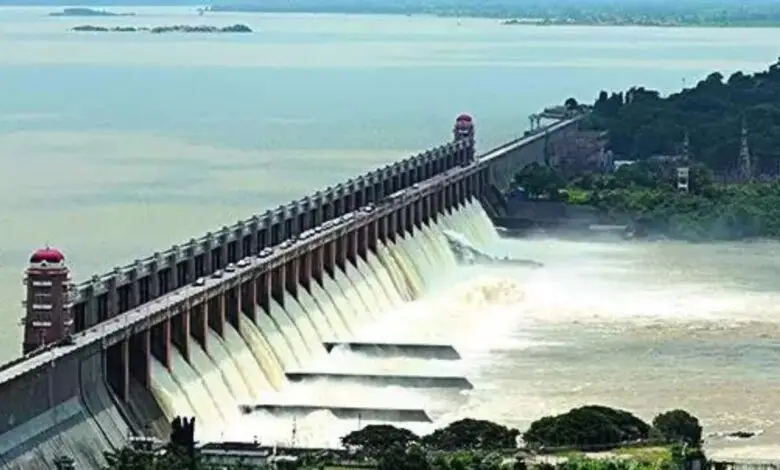
Water levels across Karnataka’s major reservoirs are showing a mixed picture on August 15. While Alamatti in the Krishna basin is almost at its maximum level, other reservoirs including Kabini, KRS, Bhadra and Linganamakki are recording different inflow and release patterns.
The Alamatti reservoir in Vijayapura district has received a strong inflow and is now close to its maximum storage level. The reservoir level stands at 519.51 metres against the full level of 519.60 metres. Inflow is reported at 33,891 cusecs, while the outflow is 22,155 cusecs.
Kabini is also drawing attention because its outflow is higher than the water entering the reservoir. The reservoir is at 81.63 feet against its maximum level of 84 feet. Its current storage is reported at 18.01 TMC out of a total capacity of 19.52 TMC.
Kabini is receiving around 8,701 cusecs, while the reported outflow is 11,896 cusecs. Of this, around 3,168 cusecs is being released into the river. The higher release has also raised questions about water releases towards Tamil Nadu and compliance with directions from the Cauvery Water Management Authority.


At the Krishna basin, Alamatti’s near full level provides a contrasting picture. With the reservoir only a fraction below its maximum level, the strong inflow has allowed continued releases while keeping the storage close to capacity.
The Krishnaraja Sagar reservoir is currently at 109.75 feet, compared with its maximum level of 124.80 feet. The reported storage stands at 31.471 TMC against a maximum capacity of 49.452 TMC. KRS is receiving about 2,274 cusecs, while the reported outflow is 2,699 cusecs.
There have also been allegations that official details regarding the KRS outflow are not being made public. Reports indicate that water is being released into the river in addition to supplies through canals. The claims have led to renewed discussion about transparency around reservoir operations.
The Bhadra reservoir is at 172.09 feet, while its full reservoir level is listed at 186 feet. Its current storage is reported at 55.871 TMC out of a total capacity of 71.535 TMC.
Bhadra is receiving around 4,438 cusecs of water. The reported outflow is much lower at 202 cusecs, including 100 cusecs through the river sluice and around 102 cusecs attributed to evaporation.
Linganamakki presents a different situation when compared with the same period last year. The Sharavathi river reservoir currently stands at 1,794.05 feet against its maximum level of 1,819 feet, with reported storage at 54.15 percent. The water level has risen by 0.45 feet today, while inflow is around 13,921 cusecs.
On August 15 last year, Linganamakki stood at 1,812.05 feet and had around 85.25 percent storage. This means the reservoir is significantly lower this year despite the recent rise in its water level.
The latest figures show why Karnataka’s reservoir situation cannot be judged by a single dam. Some reservoirs are close to their limits, while others continue to hold considerably less water than they did during the same period last year. Inflow, rainfall and release decisions will remain important factors in the coming days.