
Bengaluru Metro Pink and Blue Lines Get Major CBTC Approval
Bengaluru Metro passengers receive major boost as Railway Board approves advanced CBTC systems for Pink and Blue Lines, paving way for testing, safety certification and commercial operations in Bengaluru soon.

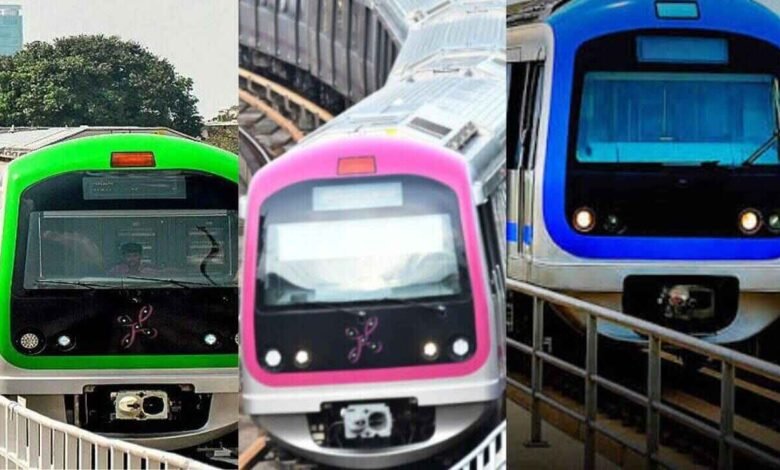
Bengaluru is moving closer to another major expansion of its metro network after the Railway Board gave in principle approval for the advanced Communication Based Train Control system planned for the Pink Line and Blue Line. The approval is considered an important step because the signalling and train control system plays a key role in ensuring safe and efficient metro operations.
The development is particularly significant for commuters waiting for the new routes to become operational. The Pink Line, which will connect Kalena Agrahara with Tavarekere, is already approaching the final stages before commercial services can begin. The approval for the CBTC system is expected to help the Bengaluru Metro Rail Corporation Limited move ahead with the remaining technical and safety procedures.
The Blue Line is also a major project for Bengaluru because it is designed to provide a direct metro connection between the Central Silk Board area and Kempegowda International Airport. The route is expected to improve public transport access to the airport and provide another important connection across the city. The latest technical approval means that the required signalling framework has received an important clearance even before the full line begins passenger operations.
CBTC technology is being adopted to provide modern train control and signalling capabilities. Instead of depending only on conventional signalling methods, the system allows trains and control centres to exchange information continuously. This can help metro authorities monitor train movements more efficiently and maintain safe distances between trains.


For passengers, the impact of such a system may not always be visible, but it is an important part of a modern metro network. Reliable signalling can support smoother train operations, better control of services and efficient management of traffic on busy corridors.
The Pink Line has received particular attention because commercial operations on the Kalena Agrahara to Tavarekere section are approaching the final preparation stage. Before passengers can use the route, several mandatory procedures need to be completed. These include speed certification, detailed safety inspection and trial operations.
The Research Designs and Standards Organisation is expected to play a role in the intermediate speed certification process. After this stage, the Chief Commissioner of Railway Safety will carry out the necessary inspection of the metro infrastructure and trains. Trial runs will then help authorities assess the operational readiness of the corridor before passenger services are permitted.
The latest approval therefore does not mean that passengers can immediately board trains on the new routes. Several technical and regulatory steps still have to be completed. However, the clearance removes an important hurdle and gives the metro authorities a clearer path toward the final stages of preparation.
The Pink Line is expected to become operational before the Blue Line, provided the remaining tests and safety clearances are completed according to schedule. There is growing expectation that commercial services on the Pink Line could begin in the coming months. The Blue Line, because of its much larger airport connectivity project, is expected to take longer and could become operational at a later stage.
The airport metro corridor is being closely watched because Bengaluru has long faced heavy road traffic on routes leading toward Kempegowda International Airport. A dedicated metro connection could offer commuters another transport option and reduce dependence on road based travel for airport journeys.
The Railway Board approval also highlights the growing importance of advanced technology in Bengaluru Metro projects. As the network expands, modern signalling systems will become increasingly important for managing more trains and passengers across different corridors.
For Bengaluru residents, the Pink Line and Blue Line are more than infrastructure projects. They are expected to influence daily commuting patterns by creating new connections between residential areas, business districts, transport hubs and the airport. The expansion could also reduce pressure on some of the city’s busiest roads if a significant number of commuters shift from private vehicles to metro services.
The Pink Line is expected to benefit people travelling through the southern parts of Bengaluru, particularly those living and working around the Bannerghatta Road region. The connection from Kalena Agrahara to Tavarekere will add another important public transport option for commuters in these areas.
The Blue Line, meanwhile, has a much wider role in the city’s future transport network. Its connection between Central Silk Board and the airport is expected to support passengers travelling across several important parts of Bengaluru. The corridor could become particularly useful for airport employees, business travellers and residents who regularly travel toward the airport.
With the Railway Board now giving in principle approval for the CBTC signalling and train control system, the focus will shift toward testing, inspections and final certification. BMRCL will have to coordinate multiple agencies before the routes can be opened to the public.
Authorities are expected to concentrate on completing the remaining work without compromising safety standards. Trial operations will be especially important because they provide an opportunity to identify and address technical issues before regular passenger services begin.
The development comes at a time when Bengaluru continues to struggle with increasing road congestion. The city’s growing population and rising number of private vehicles have placed significant pressure on existing transport infrastructure. Expanding the metro network is therefore being viewed as one of the important long term solutions for improving urban mobility.
Once the new routes become operational, passengers are likely to gain more choices for travelling across the city. The airport connection could be particularly important for creating a stronger link between Bengaluru’s public transport network and one of the city’s busiest transport hubs.
For now, passengers will have to wait for the completion of safety checks, trial runs and other mandatory approvals. The Railway Board’s latest decision is nevertheless a significant development for both projects. If the remaining procedures progress as expected, Bengaluru could soon see another major addition to its rapidly expanding metro network.
The approval of the CBTC system marks another step toward making the Pink and Blue Lines ready for regular operations. While the exact opening dates depend on the completion of technical and safety procedures, the latest progress has increased expectations among Bengaluru commuters who have been waiting for these new metro connections.