Bengaluru Police Overhaul Proposal Seeks Five New Commissionerates and Thousands of Additional Posts
A major restructuring proposal aims to improve policing across Bengaluru through five commissionerates thousands of new posts better traffic management stronger law enforcement and faster public services for residents.

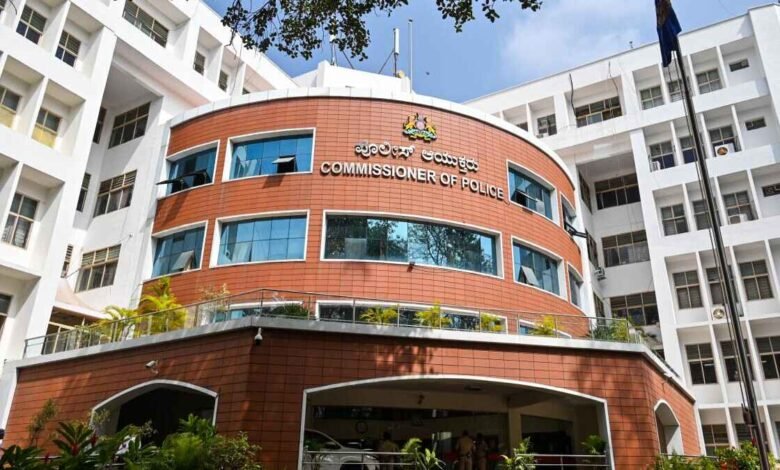
Bengaluru could soon witness one of the biggest changes in its policing structure if the Karnataka government approves a major proposal submitted by the city police. The plan recommends dividing the existing Bengaluru Police Commissionerate into five separate commissionerates while creating 6633 new police posts to strengthen law enforcement across the rapidly expanding city. The proposal comes as Bengaluru continues to experience sharp population growth urban expansion and increasing pressure on its policing system.
According to the proposal submitted by Bengaluru Police Commissioner Seemanth Kumar Singh the current commissionerate model has become increasingly difficult to manage because of the city’s growing size and administrative demands. Officials believe that splitting the existing setup into smaller administrative regions will improve policing efficiency reduce response times and help officers focus more effectively on local law and order challenges.
If the proposal is approved the present Bengaluru Police Commissioner will head the system as the Chief Commissioner. Under this arrangement five separate commissionerates will be established namely Central East West North and South. Each commissionerate will function independently under its own leadership while remaining connected through the office of the Chief Commissioner for overall coordination and policy implementation.
The restructuring plan also includes a request for the creation of 6633 new posts across different ranks within the police department. These additional personnel are expected to strengthen field operations traffic management investigation units and administrative functions. Officials believe the increased workforce will allow better policing in newly developed residential areas commercial hubs and rapidly expanding suburbs that currently face manpower shortages.
The proposed transformation is expected to involve an estimated expenditure of around Rs 7648 crore. The financial commitment reflects the large scale of the administrative restructuring along with the establishment of new offices infrastructure equipment and manpower required for the expanded police network. Government officials are expected to carefully evaluate both the financial and operational aspects before taking a final decision.
Sources indicate that the proposal will undergo detailed discussions between senior government officials and the Home Department before receiving final approval. The matter is expected to be reviewed with Home Minister Priyank Kharge and other senior officials. After evaluating the advantages and administrative implications the state leadership will take the final call on implementing the new policing framework.
The Central Commissionerate is expected to play a crucial role under the proposed system. Apart from handling regular law and order responsibilities it will oversee several of Bengaluru’s most sensitive government and public institutions. Important locations including Vidhana Soudha Vikasa Soudha Lok Bhavan the High Court judicial complexes Chinnaswamy Stadium Kanteerava Stadium Freedom Park metro stations Baiyappanahalli Metro Depot KSR Bengaluru Railway Station and Majestic Bus Station are expected to come under its jurisdiction.
The proposal also recommends strengthening the Central Commissionerate with multiple Deputy Commissioners of Police responsible for traffic headquarters armed reserve and law and order functions. New law and order divisions are proposed for areas such as Gandhinagar and Indiranagar to improve policing in busy commercial and residential zones.
The North Commissionerate will include the existing North and Northeast divisions while introducing a newly proposed Yeshwanthpur division. Traffic and reserve police wings will also become part of this commissionerate. In addition new subdivisions such as Amruthahalli are proposed while Yelahanka and KG Halli are expected to be included under the expanded northern jurisdiction. Officials believe this arrangement will provide more focused policing in fast growing northern Bengaluru.
Significant changes have also been proposed for the East Commissionerate. The existing Whitefield and East divisions will be brought together with dedicated traffic and armed reserve police units. New police stations are also expected to be established to meet the growing demands of residential layouts technology parks and commercial developments across eastern Bengaluru where population growth has accelerated over the past decade.
The South Commissionerate will cover the existing South Southeast and Electronic City divisions along with traffic and reserve police units. One of the most notable aspects of the proposal is the inclusion of Anekal subdivision from Bengaluru Rural district. Police stations at Sarjapur Suryanagar Attibele Bannerghatta Anekal Jigani and Kaggalipura are proposed to become part of the South Commissionerate creating a more integrated policing structure for areas witnessing rapid urban development.
The West Commissionerate will include Kengeri Peenya traffic units and reserve police divisions. The proposal also recommends establishing new police stations at Tavarekere Andrahalli and Kadabagere to improve police presence in expanding western suburbs. These areas have experienced steady residential and industrial growth making stronger policing infrastructure an important requirement.
While major structural changes are proposed across the commissionerates the City Crime Branch is expected to continue functioning without any division. It will remain directly under the control of the Chief Commissioner ensuring centralized handling of serious criminal investigations and specialized operations. Similarly the city traffic administration is also proposed to remain under the direct supervision of the Chief Commissioner to maintain uniform traffic management policies across Bengaluru.
Officials believe that reorganizing the police system according to Bengaluru’s geographical and administrative growth will provide long term benefits. Smaller commissionerates can improve coordination between officers allow quicker decision making and ensure faster deployment of police personnel during emergencies. Residents may also benefit from quicker access to police services as administrative responsibilities become more localized.
The proposal has been prepared keeping in mind Bengaluru’s future expansion as one of India’s fastest growing metropolitan cities. Urban planners and law enforcement experts have often pointed out that policing systems must evolve alongside increasing population density infrastructure development and traffic congestion. By creating independent commissionerates authorities hope to deliver more efficient governance and stronger public safety.
Although the proposal has generated considerable interest its implementation will depend on government approval and budget allocation. If cleared it will represent one of the most significant reforms in Bengaluru’s policing history and could serve as a model for managing law enforcement in other rapidly growing metropolitan cities across the country.