How the US built a global military network of 750 bases across 80 countries

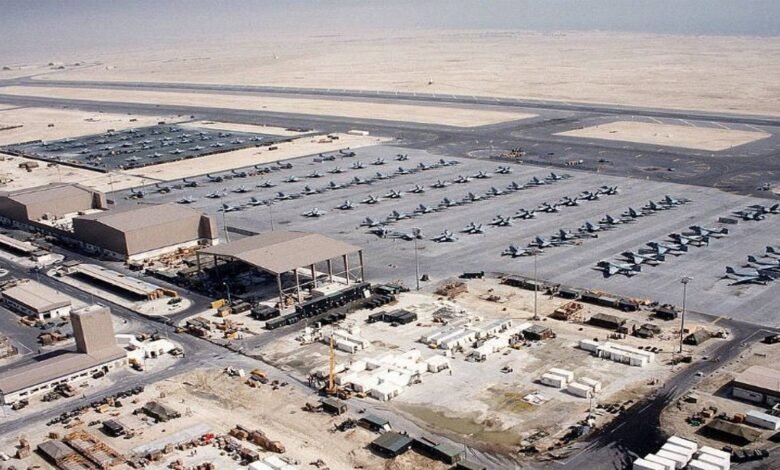
Washington ;The expansion of overseas military bases has been a key pillar of American global strategy since the end of World War II in 1945. Over the decades, the United States Department of Defense has built an extensive network of bases around the world, allowing the United States to maintain strategic influence and respond rapidly to conflicts across continents.
According to defence data available in 2026, the United States currently operates between 750 and 800 military bases spread across more than 80 countries. Studies indicate that nearly 90 to 95 percent of foreign military bases globally belong to the United States, making it the largest overseas military presence in the world.


The global network gained renewed attention recently after social media posts falsely claimed that the United States used Indian naval bases to launch attacks against Iran. However, India’s official fact-checking body, Press Information Bureau, dismissed the claim as false and baseless. The clarification helped calm speculation circulating online.
Although the claim about India was denied, it is widely known that the United States maintains multiple military installations across the Middle East and has used bases in countries such as Iraq and United Arab Emirates for regional security operations.
Global distribution of US military bases
The largest concentration of American military bases is found in the Asia-Pacific region and Europe.
In the Asia-Pacific region, the United States operates more than 100 military installations. Major bases are located in Japan, South Korea, Guam and Australia. These facilities play a critical role in monitoring maritime security and balancing the growing influence of China in the Indo-Pacific region.
Europe hosts over 80 American military bases, particularly in Germany, Italy, United Kingdom and Poland. These bases are essential for operations under the North Atlantic Treaty Organization (NATO) and help strengthen security across Eastern Europe.
In West Asia, the United States maintains more than 60 bases across countries such as Qatar, Bahrain, Kuwait and the UAE. These installations are used for counter-terrorism operations, intelligence monitoring and securing vital sea trade routes.
In Africa, the United States has around 15 military facilities located in countries including Djibouti, Kenya and Somalia. These bases primarily support anti-terror operations and regional stability missions.
Meanwhile, in the Americas, the United States operates bases in locations such as Honduras and Cuba, mainly for regional security and anti-narcotics operations.
Countries hosting the largest US bases
Despite suffering devastating atomic bomb attacks during World War II, Japan now hosts the largest number of American military bases. The cities of Hiroshima and Nagasaki were targeted by nuclear bombs in August 1945, killing more than 200,000 people. Yet today, Japan hosts around 120 US bases with more than 50,000 American troops stationed there.
Germany ranks second, hosting about 119 bases, including the strategically important Ramstein Air Base. South Korea follows with around 73 bases, including Camp Humphreys, the largest overseas US military installation.
Following the September 11 attacks in 2001, the United States also established several military bases in Afghanistan, including facilities at Bagram Airfield and Kandahar. However, these bases were vacated in August 2021 after an agreement with the Taliban.
Types of US military bases
American overseas military bases are broadly classified into two categories. Major operational bases occupy large areas and typically house more than 200 personnel. These installations often include schools, hospitals and residential facilities, earning them the nickname “Little Americas.”
The second category consists of smaller “lily pad” bases. These are temporary or limited facilities used for drone operations, logistics support and rapid deployment missions.
Experts say the extensive network of bases allows the United States to maintain global influence, support allies, counter terrorism and ensure the safety of key international trade routes. At the same time, analysts believe the expansion of bases also reflects Washington’s strategy to monitor geopolitical rivals such as China and Russia.